

Navigating retirement income can feel overwhelming, but mastering your monthly benefits gives you lasting financial peace of mind. Making informed choices directly increases your monthly payout and protects your loved ones throughout retirement.
Understanding how Social Security works allows you to claim the maximum financial support you have earned. Clear rules help you avoid common claiming traps that permanently reduce your income.
Here are plain, straightforward answers to nine critical Social Security questions every older adult must know. These insights will help you make confident decisions about your financial future.

How Do You Qualify for Social Security Retirement Benefits?
Qualifying for retirement benefits requires you to accumulate work credits during your working years. Most American workers need 40 credits to qualify, representing roughly 10 years of covered employment.
The government ties credit thresholds directly to your annual wages. In 2025, you earn one credit for every $1,810 in taxable income, rising to $1,890 per credit in 2026.
You can earn a maximum of four credits in any calendar year. Earning at least $7,240 in 2025 secures your four credits for the year, regardless of when you work those hours.
These accumulated credits remain on your permanent record indefinitely. Taking years off for family caregiving or medical recovery will never erase the credits you already earned.
If you lack enough credits, you might qualify through a current or former spouse. You can explore assistance options through Benefits.gov to ensure you uncover every program available to you.
What Is the Best Age to Claim Your Benefits?
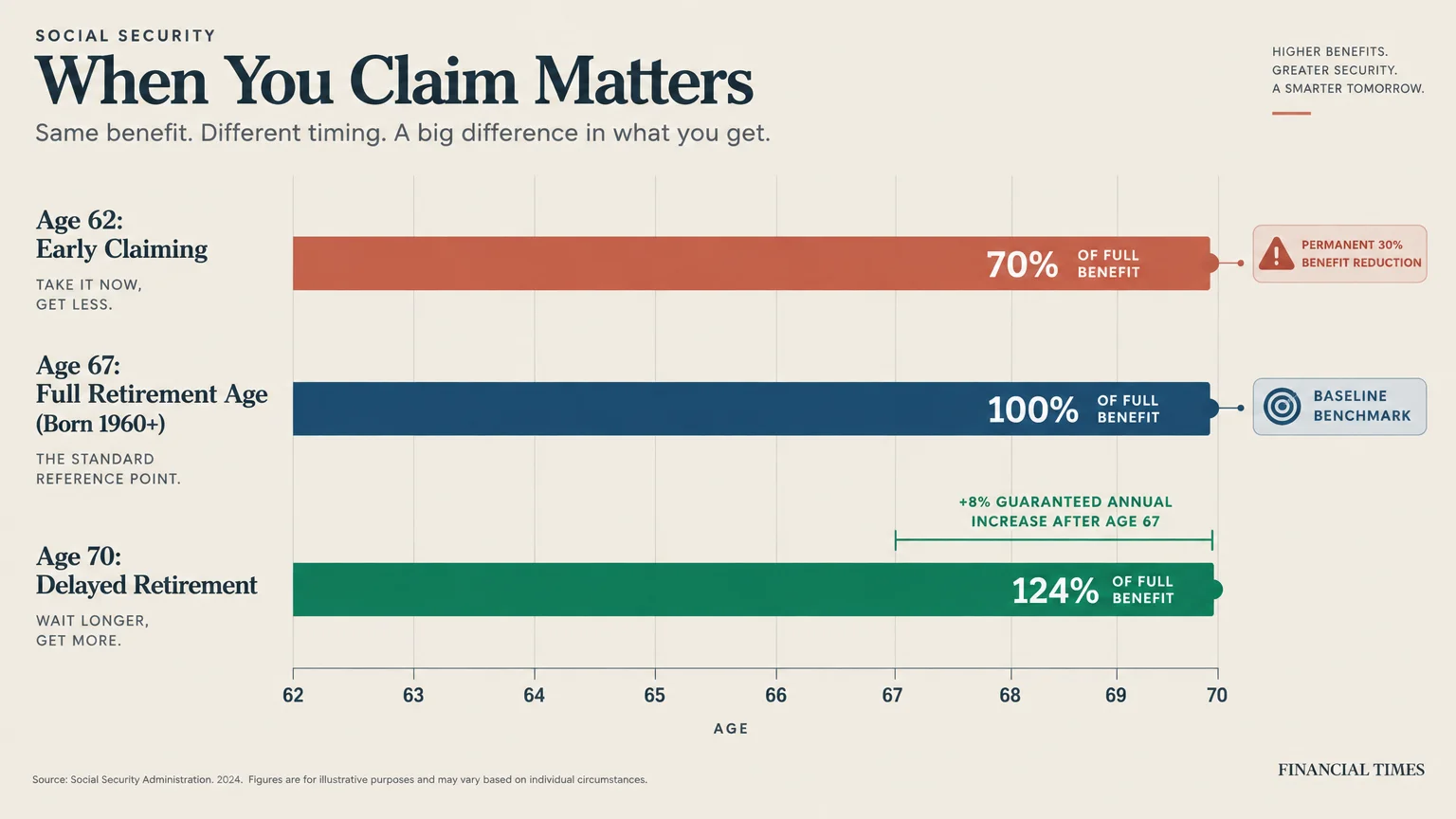
You can start claiming retirement benefits as early as age 62, but filing early locks in permanent reductions. Claiming at age 62 cuts your monthly check by up to 30% compared to your full retirement amount.
Your full retirement age represents the point where you receive 100% of your earned benefit. For anyone born in 1960 or later, your full retirement age is 67.
According to the Social Security Administration (SSA), delaying benefits beyond your full retirement age increases your payment by 8% per year until age 70.
This guaranteed growth means filing at age 70 delivers 124% of your full baseline monthly benefit. Delayed retirement credits stop accruing at age 70, so you should never delay filing beyond that milestone.
| Claiming Age | Percentage of Full Benefit | Long-Term Payment Impact |
|---|---|---|
| Age 62 | 70% | Permanent 30% reduction |
| Age 67 (Full Retirement Age) | 100% | Full standard monthly payment |
| Age 70 | 124% | Permanent 24% boost above standard |
The best age to file depends entirely on your health, family history, and personal savings. Healthy individuals with sufficient income often benefit substantially by delaying claims to secure larger lifetime checks.
How Is Your Monthly Social Security Benefit Calculated?
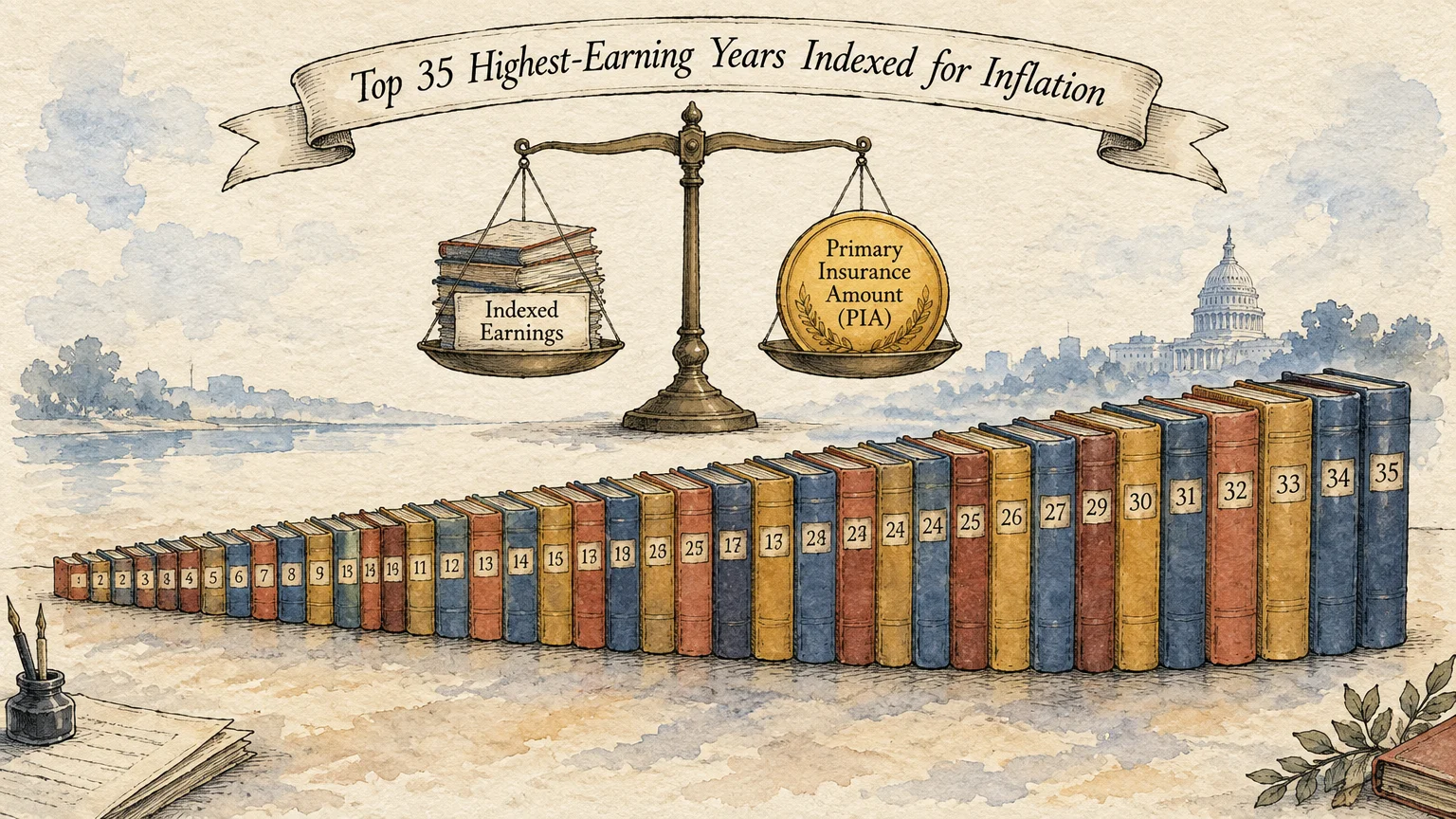
Your monthly payment reflects your 35 highest-earning career years. The government indexes those past wages for national wage inflation to keep your earnings aligned with modern economic conditions.
If you worked fewer than 35 years in covered employment, the agency records zero-income years. Each zero pulls down your 35-year wage average and reduces your final monthly check.
Replacing low-earning or zero-earning years with higher earnings later in life increases your payout. Working additional years past age 60 can actively boost your retirement base.
As of January 2025, the average monthly retirement benefit for retired workers reached $1,976. Consistently earning steady wages across 35 years helps you surpass that national benchmark.
The law also caps how much income faces retirement payroll taxes each calendar year. The maximum taxable earnings cap sits at $176,100 in 2025 and rises to $184,500 in 2026.

Can You Work While Collecting Social Security?
You can work while receiving benefits, but earnings limits apply if you claim before full retirement age. The retirement earnings test temporarily withholds checks if your wages surpass annual government limits.
In 2025, you can earn up to $23,400 per year ($1,950 per month) before triggering reductions. The agency temporarily withholds $1 of benefits for every $2 earned above that cap.
A more generous threshold applies in the calendar year you reach full retirement age. In 2025, you can earn up to $62,160 before your birth month, withholding $1 for every $3 above.
These earnings limits expand in 2026 to $24,480 for early retirees and $65,160 for workers reaching full retirement age. The earnings cap disappears entirely starting the month you reach full retirement age.
| Retirement Phase | 2025 Earnings Limit | Withholding Calculation |
|---|---|---|
| Under Full Retirement Age All Year | $23,400 annually ($1,950/month) | $1 withheld for every $2 over limit |
| Year Reaching Full Retirement Age | $62,160 before birthday month | $1 withheld for every $3 over limit |
| At Full Retirement Age or Older | No earnings limit | No withholdings applied |
Withheld funds are never lost permanently. When you reach full retirement age, the agency recalculates your payments upward to return those withheld amounts over your expected lifetime.
Will Your Social Security Benefits Be Taxed?
Many seniors are surprised to learn that Social Security checks can face federal income taxes. Your tax liability depends on your provisional income, which includes half your annual Social Security benefits.
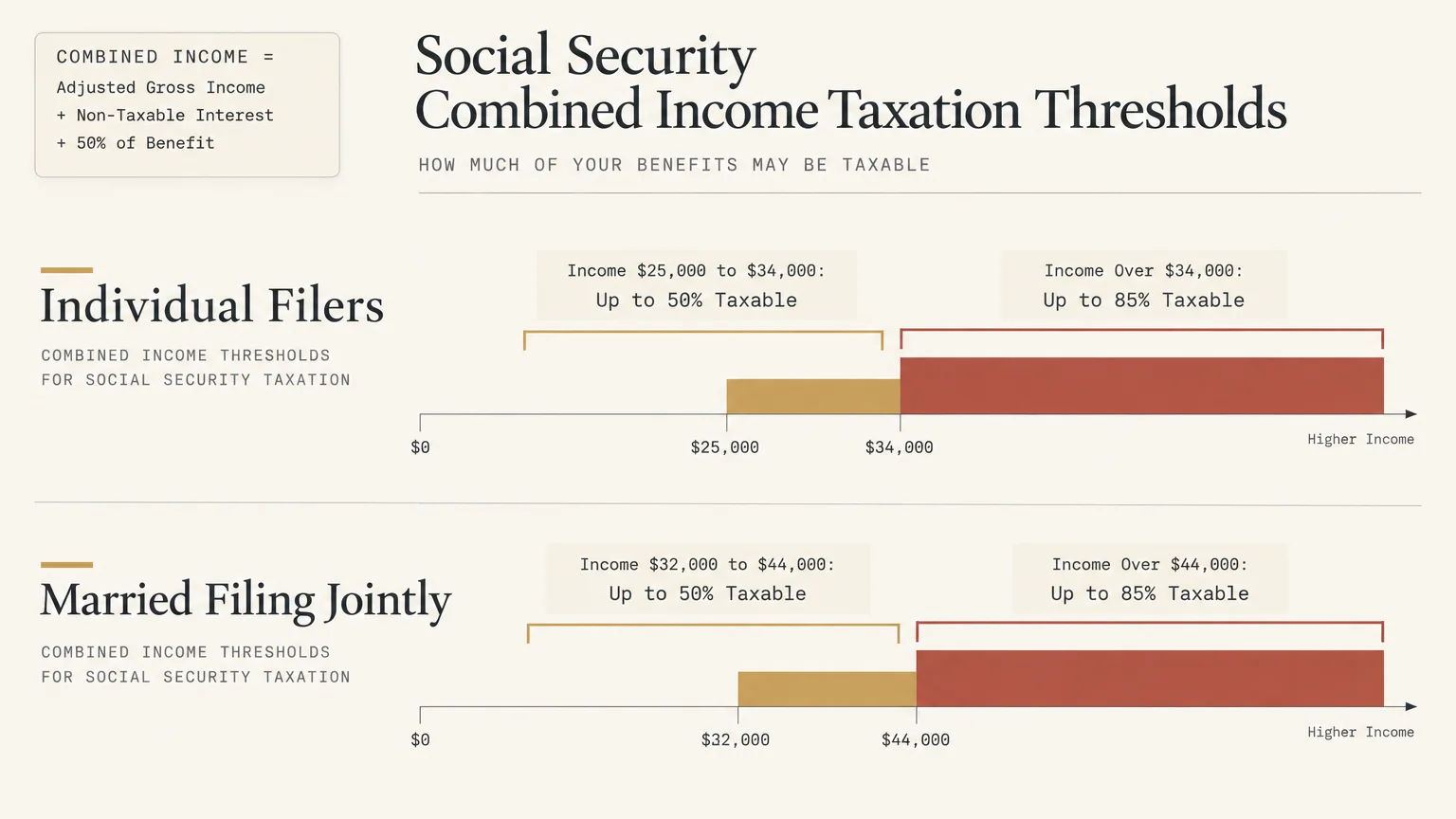
To determine provisional income, combine your adjusted gross income, nontaxable interest income, and 50% of your annual benefit total. If that sum exceeds set thresholds, a portion faces taxation.
Single filers with provisional income between $25,000 and $34,000 pay taxes on up to 50% of benefits. Exceeding $34,000 exposes up to 85% of your benefits to federal taxes.
For married couples filing jointly, provisional income between $32,000 and $44,000 triggers taxes on up to 50% of benefits. Income over $44,000 subjects up to 85% to taxation.
| Filing Status | Provisional Income Range | Taxable Portion of Benefit |
|---|---|---|
| Individual | Under $25,000 | 0% (Completely tax-free) |
| Individual | $25,000 to $34,000 | Up to 50% taxable |
| Individual | Over $34,000 | Up to 85% taxable |
| Married Filing Jointly | Under $32,000 | 0% (Completely tax-free) |
| Married Filing Jointly | $32,000 to $44,000 | Up to 50% taxable |
| Married Filing Jointly | Over $44,000 | Up to 85% taxable |
Because Congress established these tax brackets decades ago without inflation adjustments, more retirees face taxes each year. Careful withdrawals from retirement accounts can help keep your provisional income below these triggers.
How Do Spousal and Divorced Spouse Benefits Work?
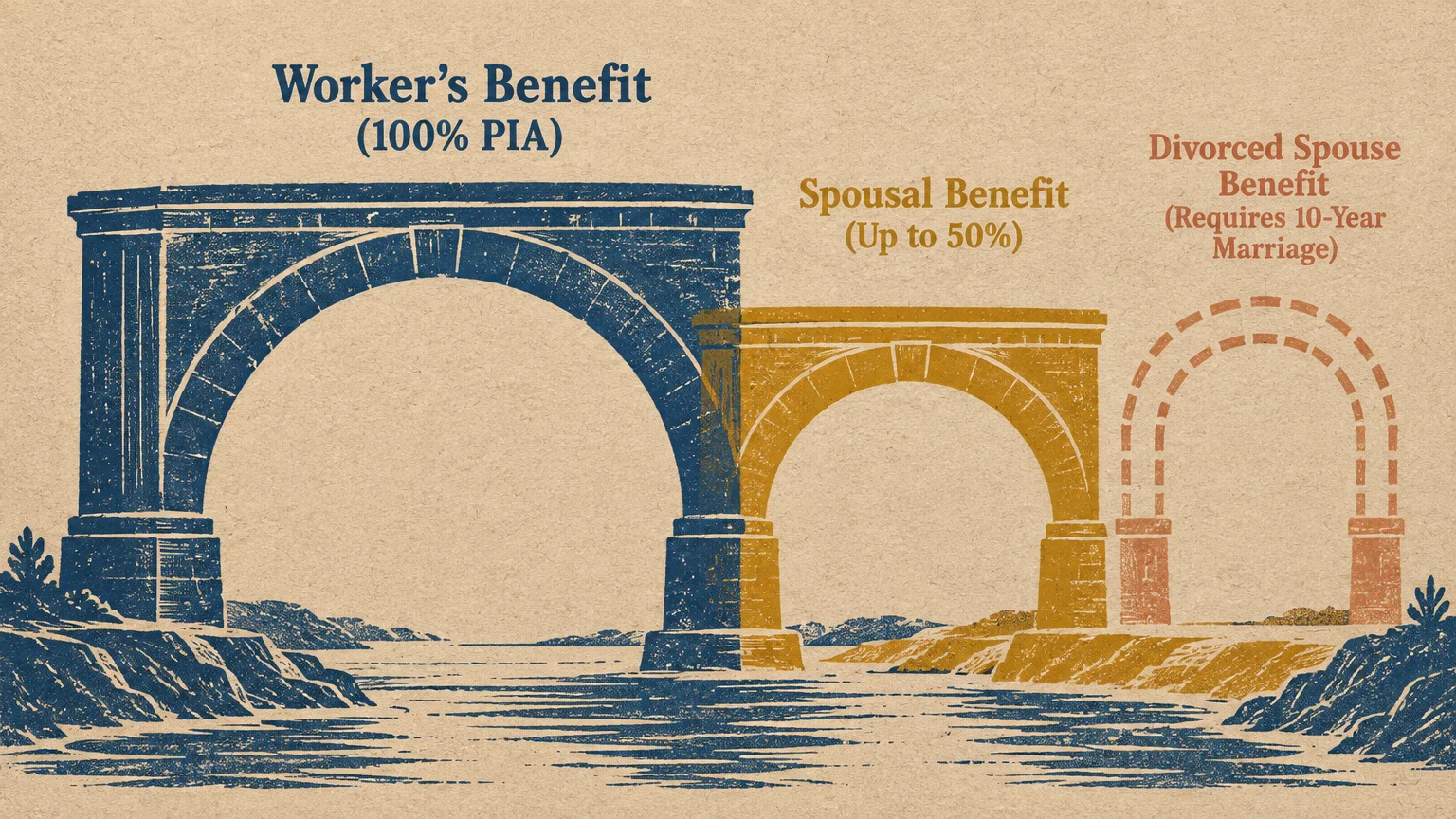
Spousal benefits allow lower-earning or non-working spouses to collect payments based on their partner’s career record. A spouse can receive up to 50% of the primary earner’s full retirement age amount.
To collect spousal benefits, the primary worker must already claim their own benefits, and the spouse must be at least 62. Claiming spousal benefits before your full retirement age creates permanent reductions.
Guidance from AARP emphasizes that coordinating spousal claims early prevents permanent reductions in household retirement income.
Divorced individuals can also claim on an ex-spouse’s work history without affecting the former partner’s payments. Your marriage must have lasted at least 10 consecutive years, and you must remain unmarried.
Your ex-spouse must be at least 62, but they do not need to be currently collecting their own benefits. Furthermore, the agency never notifies your ex-partner that you filed a claim on their record.

How Do Survivor Benefits Protect Your Family?
Survivor benefits provide critical financial support when a spouse passes away. A surviving spouse can inherit up to 100% of the deceased spouse’s actual monthly retirement check.
Surviving spouses can claim benefits as early as age 60, or age 50 if disabled. Filing for survivor benefits prior to reaching full retirement age results in a reduced monthly payment.
Survivor benefits allow for flexible claiming strategies that standard retirement claims do not permit. You can collect survivor benefits first while allowing your personal retirement credit to grow until age 70.
Remarrying after age 60 does not terminate your eligibility for survivor benefits from a prior marriage. This protection helps surviving spouses preserve their earned financial security as family situations evolve.
How Do Cost-of-Living Adjustments Protect Your Buying Power?
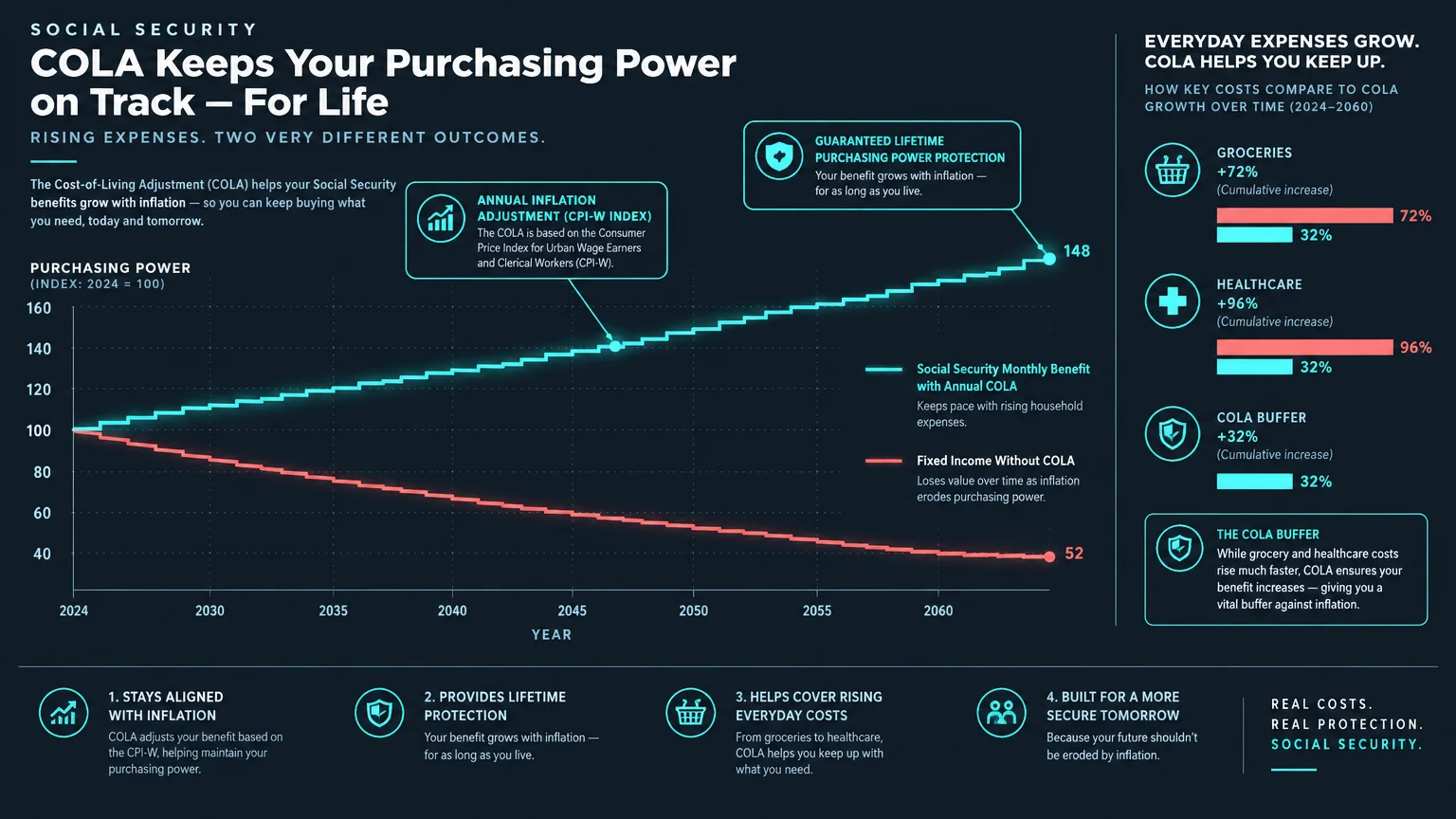
Cost-of-living adjustments, known as COLA, safeguard your monthly income against rising consumer prices. These adjustments ensure your purchasing power does not erode during extended retirement years.
In 2025, beneficiaries received a 2.5% increase across their monthly checks to counter inflation. The government calculates this adjustment using third-quarter consumer price data for urban wage earners.
The annual adjustment applies automatically every January to all retirement and survivor benefits. You never need to apply for these increases or submit paperwork to receive them.
While annual adjustments provide essential relief, rising Medicare Part B premiums can absorb a portion of the increase. Monitoring your annual notice each December helps you budget accurately for the coming year.
How Can You Avoid Costly Claiming Mistakes and Scams?
Making hasty filing decisions or falling prey to financial fraud can permanently damage your retirement security. Educating yourself on potential traps helps you protect your hard-earned benefits.
One common mistake involves filing early while continuing to earn a substantial salary. The retirement earnings test will withhold your monthly checks without delivering immediate lifestyle advantages.
Another costly error is failing to coordinate spousal and survivor claims with your partner. Claiming early permanently reduces the survivor benefit available to your surviving spouse later in life.
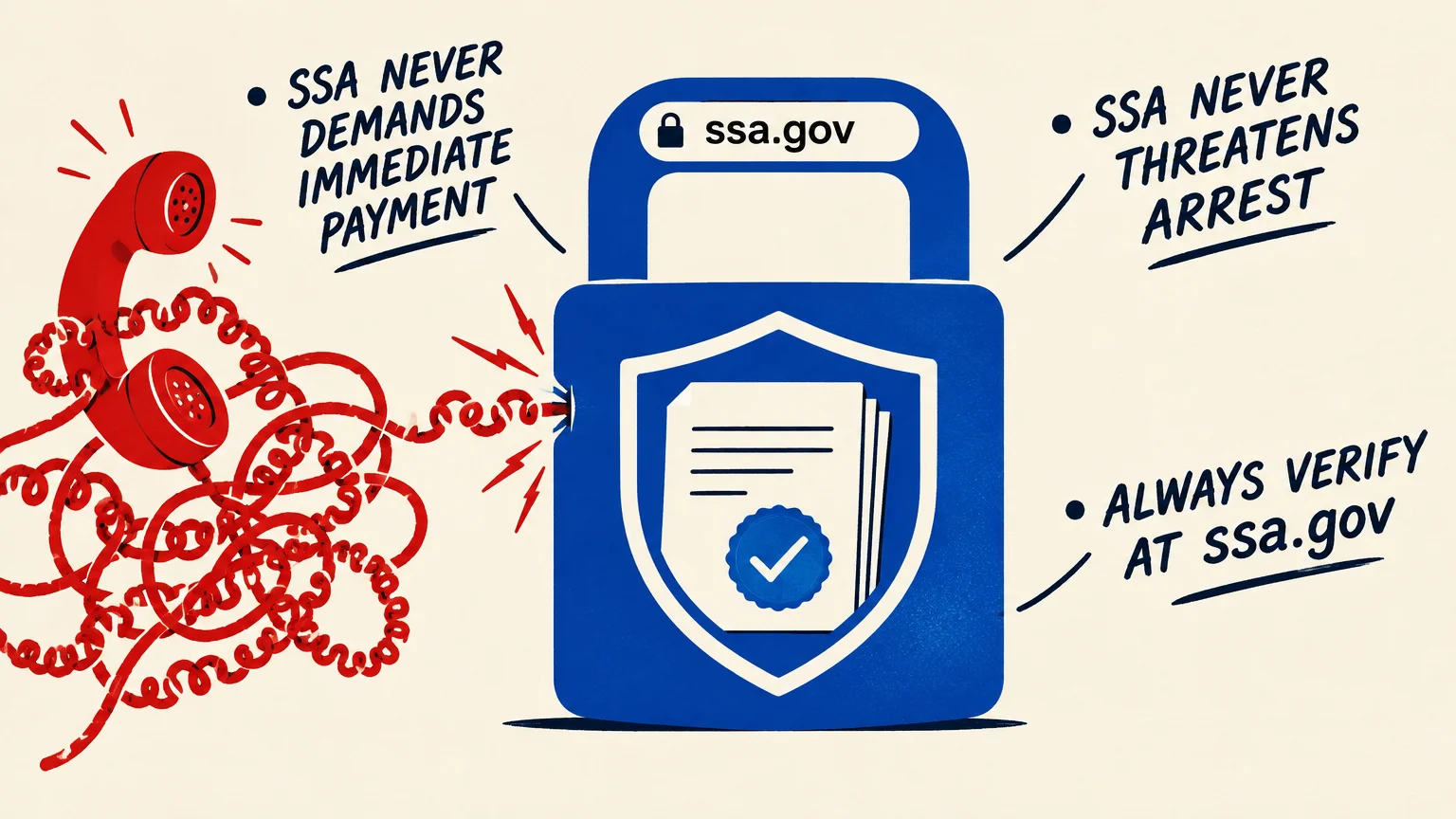
The Consumer Financial Protection Bureau (CFPB) warns retirees to never send money or wire transfers to callers claiming to represent the government.
Government imposters frequently contact seniors claiming their Social Security number has been suspended. Always protect your benefits by following standard safety precautions:
- Never disclose your Social Security number or banking details to unsolicited callers.
- Hang up immediately on any caller threatening arrest or demanding gift card payments.
- Set up an official personal online account to monitor your earnings record and prevent identity theft.
- Verify suspicious mail or calls by contacting the agency directly through verified local office numbers.
Frequently Asked Questions
Can you change your mind after claiming Social Security early?
Yes, you can cancel your application within 12 months of your initial approval date. You must repay all received funds, which resets your record for future growth.
Does a government pension reduce your Social Security payment?
Non-covered government pensions can reduce benefits under the Windfall Elimination Provision or Government Pension Offset. These rules adjust payouts if you did not pay payroll taxes on those earnings.
What happens to monthly benefits when a beneficiary passes away?
Eligibility ends in the month of death, and payments received for that month must be returned. Surviving spouses also receive a modest one-time death payment of $255.
Can private debt collectors take your Social Security benefits?
Federal law protects your monthly retirement checks from commercial creditors and private debt collectors. However, the federal government can garnish benefits for unpaid taxes, federal student loans, or child support.
How do you verify your official career earnings record?
You can create a free account on the official administration website to review your historical earnings. Reviewing this statement annually ensures past employers reported all your earnings accurately.
For additional senior resources, visit
National Institute of Mental Health (NIMH), National Institutes of Health (NIH), Centers for Medicare & Medicaid Services (CMS), Social Security Administration (SSA) and Consumer Financial Protection Bureau (CFPB).
Disclaimer: The information in this article is for educational purposes only and is not intended to be a substitute for professional financial, legal, or medical advice. Always consult with a qualified expert for advice tailored to your personal situation.









Leave a Reply