

Living on a fixed income requires you to maximize every dollar, and tapping into local community resources is a highly effective way to stretch your budget. Thousands of dollars in free, local services are available to seniors, covering everything from daily meals and transportation to expert legal and tax assistance. Relying strictly on your savings or Social Security checks can leave your budget vulnerable to inflation and unexpected out-of-pocket costs. By claiming these community benefits, you preserve your nest egg, lower your monthly overhead, and improve your overall daily quality of life. Understanding exactly where to find these eleven critical services ensures you get the exact support you need without spending a dime of your hard-earned retirement funds.
Essential Nutrition and Meal Delivery Programs
Grocery costs frequently consume a large portion of a fixed retirement budget. Fortunately, local communities offer robust nutrition programs designed specifically for seniors, ensuring you receive healthy, balanced meals without straining your wallet.
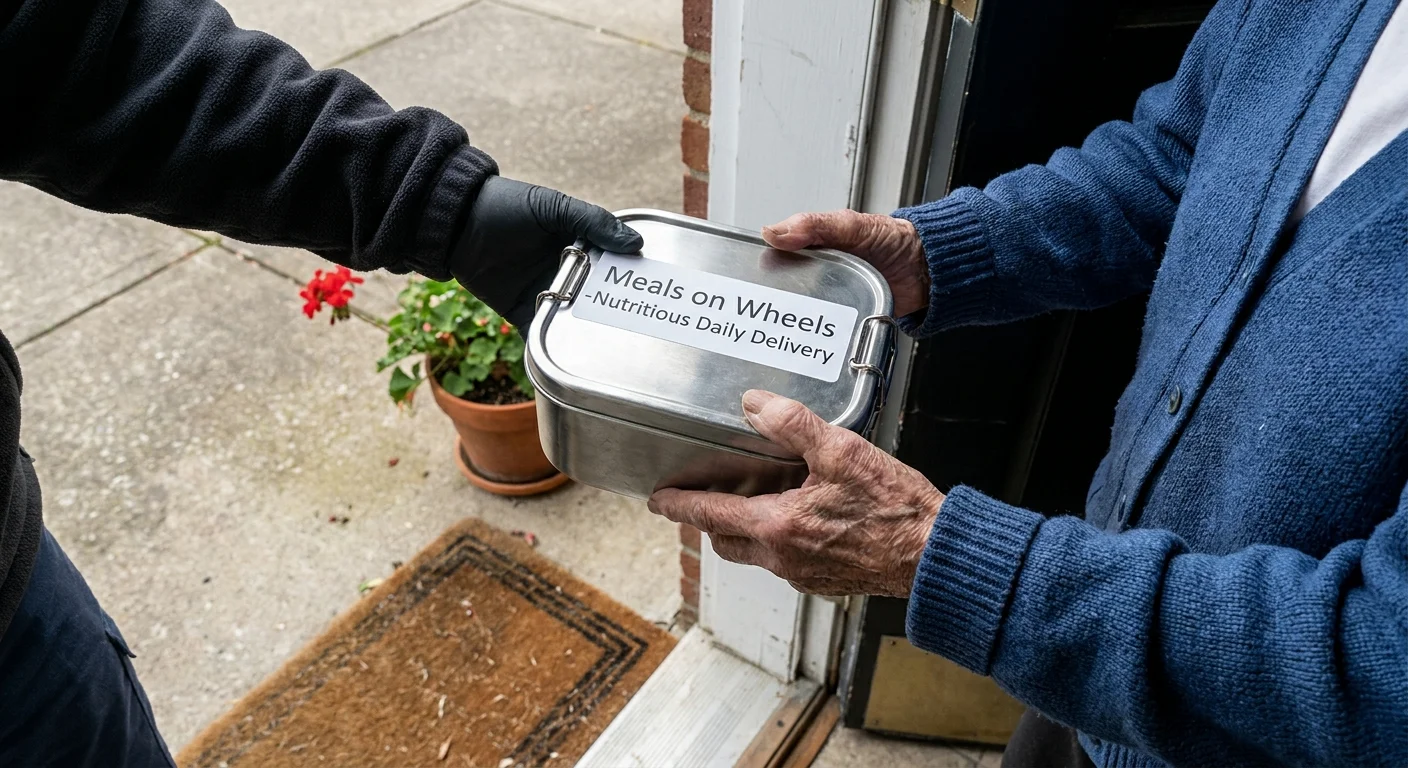
1. Home-Delivered Meals (Meals on Wheels)
If you face mobility issues or have difficulty cooking, home-delivered meal programs provide hot, nutritious food directly to your door. Local chapters of organizations like Meals on Wheels assess your eligibility based on age and mobility rather than just income. Receiving five meals a week can easily save you $100 to $150 a month on groceries, keeping those funds available for utilities or medical expenses. Beyond the financial savings, the volunteers who deliver these meals provide a brief daily safety check, offering peace of mind to you and your family.
2. Congregate Dining at Senior Centers
For seniors who are active and mobile, congregate meal programs serve hot lunches in group settings like local senior centers, churches, or community halls. According to the Administration for Community Living (ACL), these nutrition programs are funded by the Older Americans Act and are designed to promote health and reduce social isolation. These meals are entirely free, though a small voluntary donation is often suggested. Taking advantage of congregate dining three times a week can significantly lower your weekly grocery bill while keeping you engaged with your local community.
Reliable Transportation Services for Medical and Daily Needs
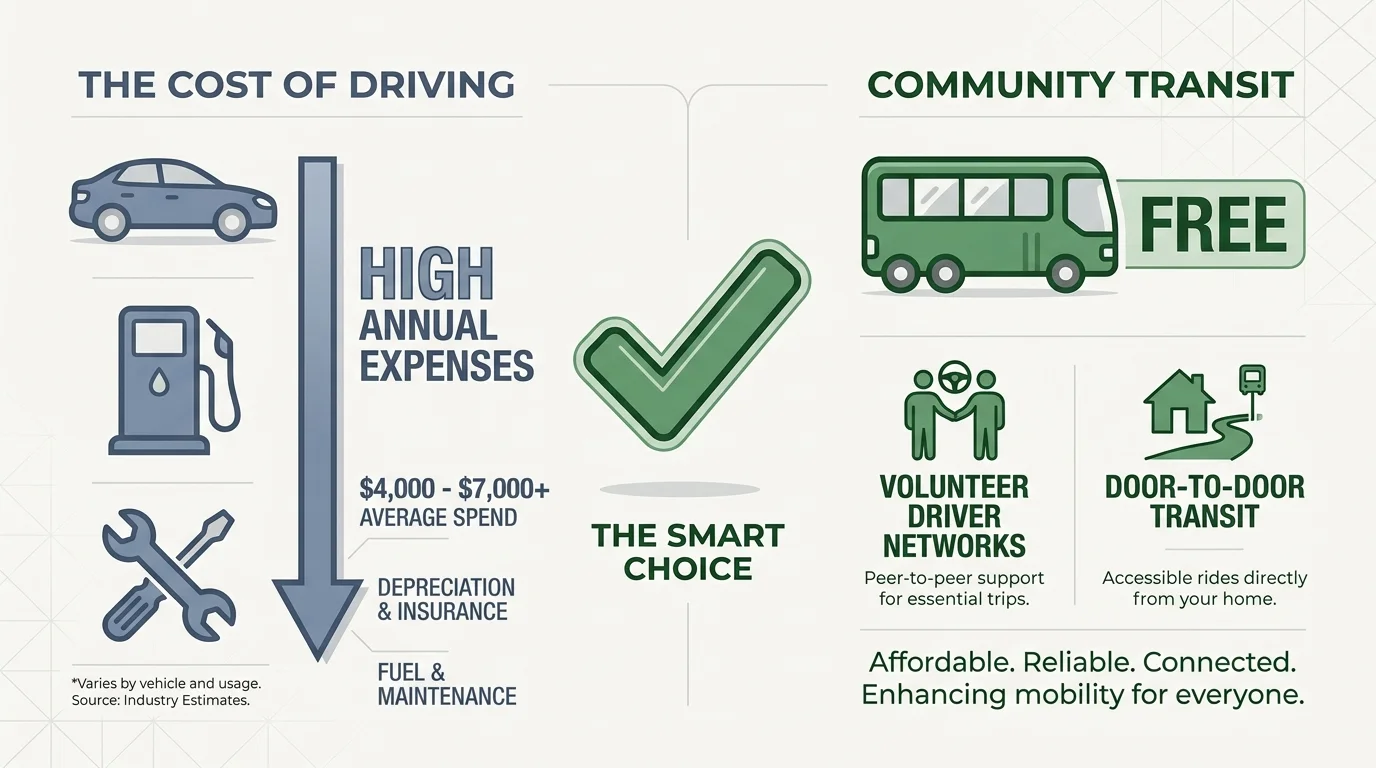
Maintaining a vehicle in retirement—factoring in insurance, gas, and repairs—costs thousands of dollars annually. When driving is no longer safe or cost-effective, local transportation services bridge the gap.
3. Door-to-Door Transit and Volunteer Driver Networks
Many counties operate free or heavily subsidized transportation services exclusively for residents aged 60 and older. These services typically include paratransit vans or volunteer driver networks that pick you up from your home and take you to medical appointments, grocery stores, or local pharmacies. Private ride-sharing services or taxis can easily cost $30 to $50 for a single round trip; using community transit eliminates this expense entirely.
To access these services, you usually need to register with your county’s transit authority or local Area Agency on Aging. You will likely need to book your rides 48 to 72 hours in advance. Planning your weekly errands around these free transit schedules allows you to cancel costly auto insurance policies and sell a vehicle you rarely use, injecting thousands of dollars directly into your retirement savings.
Professional Tax Preparation and Health Insurance Counseling
Navigating the complex rules of taxation and Medicare can result in expensive mistakes. Paying a professional to untangle these systems eats into your fixed income, but local communities provide highly trained experts for free.
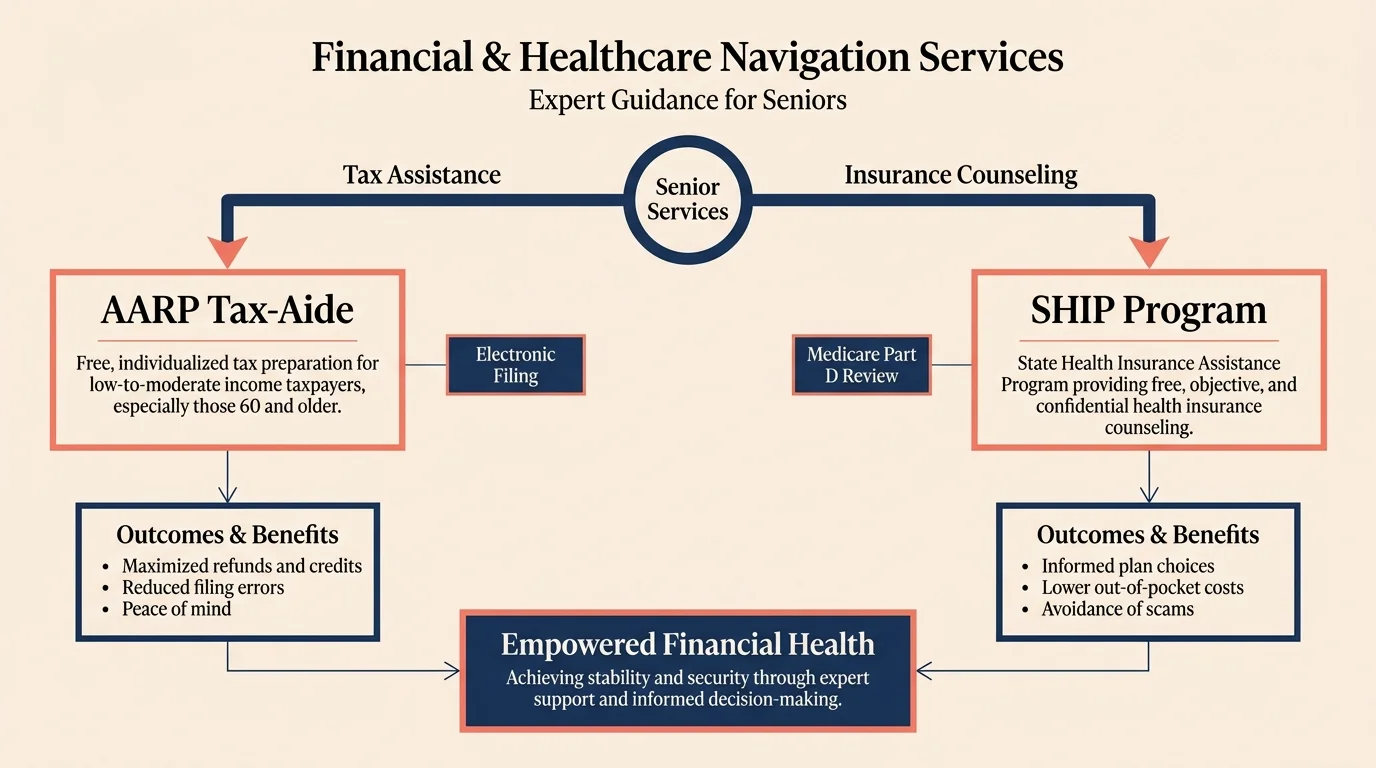
4. Tax Counseling for the Elderly (TCE)
Filing taxes in retirement requires understanding how pensions, retirement account withdrawals, and Social Security benefits are taxed. Hiring a private CPA often costs upwards of $250 per return. As outlined by IRS.gov, the Tax Counseling for the Elderly (TCE) program offers free tax help to individuals aged 60 and older. IRS-certified volunteers specialize in questions about pensions and retirement-related issues. You can find TCE clinics located conveniently in neighborhood libraries, community centers, and shopping malls during tax season.
5. State Health Insurance Assistance Program (SHIP)
Choosing the wrong Medicare Part D prescription drug plan or Medicare Advantage plan can cost you hundreds of dollars in unnecessary premiums or uncovered medications. SHIP is a free, unbiased counseling service available in every state. Local SHIP counselors sit down with you to review your specific medications, doctors, and health needs. They help you compare plans during the annual Open Enrollment period to ensure you select the most cost-effective coverage. Because these counselors do not work for insurance companies and do not earn commissions, their only goal is to save you money and protect your health.
Home Weatherization and Safety Modifications
Aging in place comfortably requires a safe and energy-efficient home. Drafty windows and failing insulation force your heating and cooling systems to work harder, resulting in utility bills that drain your monthly budget.
6. Home Weatherization Assistance
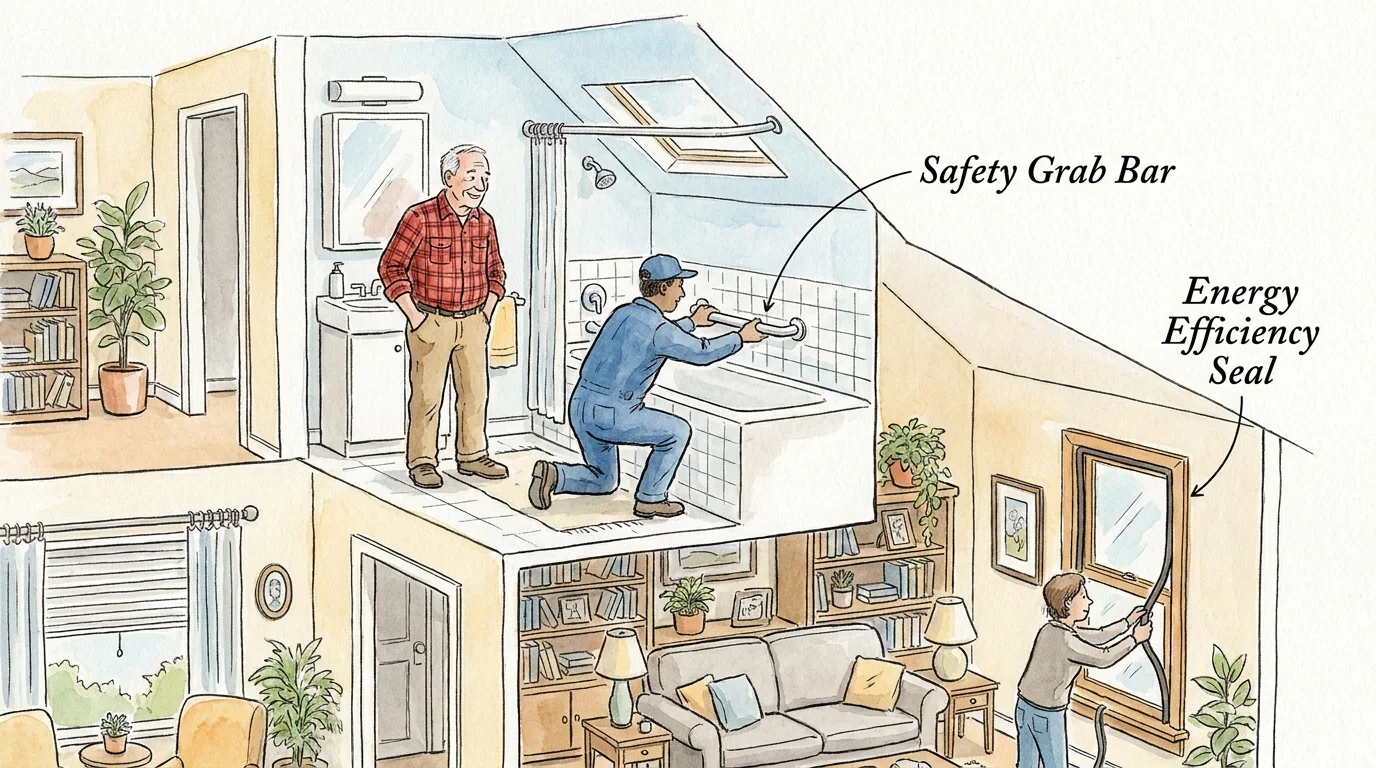
Many local community action agencies manage federally funded Weatherization Assistance Programs (WAP). If you meet specific income guidelines, local contractors will visit your home for free to improve its energy efficiency. Services often include adding attic insulation, sealing leaky doors and windows with weatherstripping, and even repairing or replacing inefficient heating and cooling units. The Department of Energy estimates that weatherization services save households an average of $372 per year on utility bills.
Alongside energy efficiency, many communities offer free home safety modifications. Local non-profits and municipal programs provide free installation of grab bars in bathrooms, wheelchair ramps, and specialized smoke detectors for the hearing impaired. Paying out of pocket for a contractor to install a wheelchair ramp could cost between $1,500 and $3,000; securing this through a community grant protects your emergency fund.
| Community Service | Estimated Monthly Savings | Estimated Annual Savings | Direct Financial Benefit |
|---|---|---|---|
| Meals on Wheels / Congregate Dining | $120 – $200 | $1,440 – $2,400 | Reduces grocery expenses and protects against food inflation. |
| Senior Transit Programs | $80 – $150 | $960 – $1,800 | Eliminates ride-share fees or the cost of maintaining a vehicle. |
| TCE Tax Preparation | N/A | $200 – $300 | Avoids out-of-pocket CPA fees and maximizes tax returns. |
| Weatherization Assistance | $25 – $40 | $300 – $480 | Lowers baseline utility bills and reduces HVAC repair costs. |

Preventative Healthcare and Community Fitness
Healthcare is statistically the largest expense you will face in retirement. Taking advantage of free local health resources prevents minor issues from escalating into costly medical emergencies.
7. Local Health Clinics and Preventative Screenings
County health departments frequently host free screening days at local community centers. These events provide crucial services such as blood pressure monitoring, cholesterol checks, diabetes screenings, and flu or pneumonia vaccinations. While Medicare covers many preventative services, local pop-up clinics eliminate the need to schedule formal doctor appointments, saving you the cost of transportation and potential co-pays for office visits.
8. Community Fitness and Wellness Classes
Staying physically active directly lowers your long-term healthcare costs by reducing the risk of falls, heart disease, and mobility loss. Paying for a private gym membership can cost $40 to $80 a month. Instead, check your local parks and recreation department or senior center. Most communities offer free or heavily subsidized classes tailored specifically for older adults, including water aerobics, chair yoga, and balance training. Additionally, checking Medicare.gov allows you to see if your specific Medicare Advantage or Medigap plan includes free access to fitness programs like SilverSneakers, which grants you entry to thousands of local gyms nationwide at no cost.

Legal Assistance and Estate Planning Basics
Proper legal planning protects your assets and dictates how your healthcare should be managed if you become incapacitated. Unfortunately, private attorneys charge anywhere from $250 to $500 an hour, causing many seniors to delay drawing up crucial documents.
9. Pro Bono Legal Aid for Seniors
Under the Older Americans Act, funds are allocated to provide free legal assistance to seniors. Local legal aid societies and specific senior law projects offer pro bono services for civil matters. These attorneys can help you draft essential estate planning documents—such as a basic will, a durable power of attorney, and an advance healthcare directive (living will).
Beyond estate planning, local legal aid protects you from financial exploitation. If you are facing an unlawful eviction, battling an unfair debt collection agency, or disputing a denied Medicare or Medicaid claim, these free lawyers serve as your advocates. By utilizing the Eldercare Locator, a public service of the U.S. Administration on Aging, you can easily find the exact legal aid office contracted to serve seniors in your zip code.
Technology Training and Caregiver Support
The modern world operates digitally, from accessing bank accounts to scheduling telehealth appointments. Local resources ensure you are not left behind by the digital divide, while also supporting those who help care for you.
10. Free Technology and Digital Literacy Classes
Public libraries and senior centers routinely offer free classes on how to use smartphones, tablets, and computers. These sessions teach you how to securely navigate online banking, set up automatic bill pay, and use video calling software to stay in touch with family. Learning to manage your finances online gives you tighter control over your budget; you can monitor your checking account for fraudulent charges in real time rather than waiting for a monthly paper statement.
11. Respite Care and Caregiver Support Services
If your spouse or a family member serves as your primary caregiver, they are likely managing high levels of physical and emotional stress. Many communities provide free or sliding-scale caregiver support services, including adult day care programs and temporary in-home respite care. These services offer your primary caregiver a few hours of much-needed rest. Taking advantage of free respite care prevents caregiver burnout, which in turn delays or entirely prevents the need for you to transition into an expensive assisted living facility.
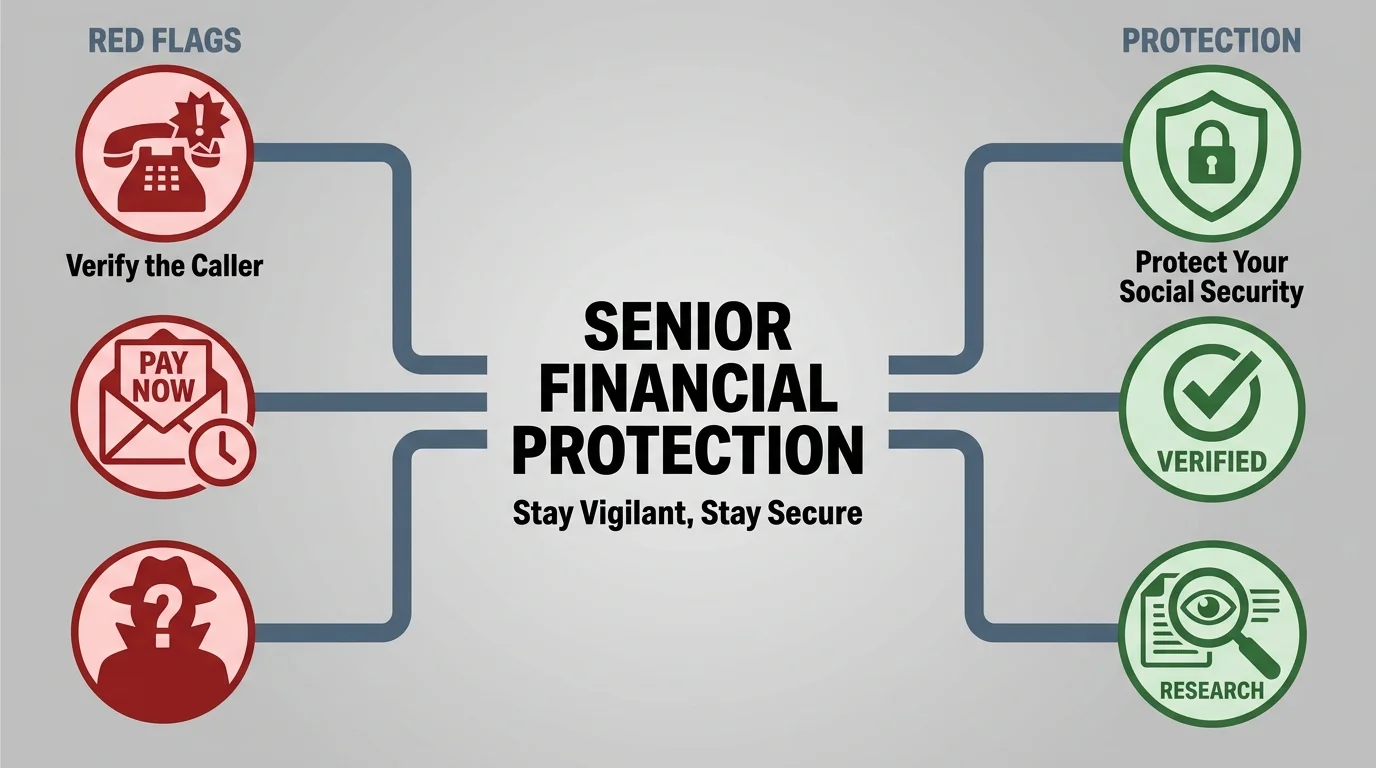
Scam Warnings and Financial Protection
While seeking out community assistance, you must remain vigilant. Scammers frequently target seniors by posing as government officials or charity workers offering “free” grants or services.
Never pay an upfront fee to access a free community program. If someone calls you claiming you qualify for home weatherization or free medical equipment but demands your credit card number or bank routing information for a “processing fee,” hang up immediately. Legitimate community organizations will never ask for payment over the phone to unlock a free service.
Be equally wary of individuals who show up unannounced at your front door offering free roof inspections or home repairs. These are often high-pressure sales tactics designed to lock you into expensive, unnecessary contracts. If you suspect you have been targeted by a fraudulent scheme, data from the Consumer Financial Protection Bureau (CFPB) advises seniors to report the incident directly to federal authorities and place a fraud alert on their credit reports to prevent further financial damage. Always initiate contact yourself by calling the official phone numbers listed on your local county or city government websites.
Frequently Asked Questions
Do I need to be considered “low-income” to qualify for these free services?
Not always. While some programs—like the Weatherization Assistance Program (WAP)—have strict income ceilings, many community services do not. Programs funded by the Older Americans Act, such as Meals on Wheels, congregate dining, and local transit, determine eligibility based primarily on age (usually 60+) and physical need, rather than your bank account balance.
Are the financial benefits from these free programs considered taxable income?
No. Receiving free meals, home weatherization upgrades, or pro bono legal aid is not considered taxable income by the IRS. You do not need to report the monetary value of these community services on your annual tax return.
How do I find the specific services available in my local area?
The most efficient starting point is your local Area Agency on Aging (AAA). Every county in the United States is served by an AAA. You can easily locate your specific agency by calling the federal Eldercare Locator hotline or searching their official database. Your local AAA acts as a central hub and can connect you directly with all eleven services mentioned in this guide.
Can volunteers at free tax clinics handle complex investment portfolios?
Tax Counseling for the Elderly (TCE) volunteers are highly trained in typical senior financial situations, including pensions, Social Security, and standard IRA distributions. However, if you own a small business, have complex rental property income, or engage in high-volume day trading, TCE clinics will likely advise you to hire a professional CPA, as those scenarios fall outside the scope of their free service.
Is it safe to give my personal information to these local agencies?
Yes, provided you verify the agency. Official Area Agencies on Aging, certified legal aid offices, and IRS-sponsored TCE clinics have strict confidentiality protocols to protect your identity. To guarantee safety, never give personal information to someone who calls you unprompted; always initiate the call yourself using verified phone numbers from official state or county websites.
For official financial guidance for seniors, visit
National Institute on Aging (NIA),
Administration for Community Living (ACL),
Eldercare Locator and
Social Security Administration (SSA).
Disclaimer: This article is for informational purposes and is not a substitute for professional financial or tax advice. Consult with a certified financial planner or tax professional for guidance on your specific situation.









Leave a Reply