
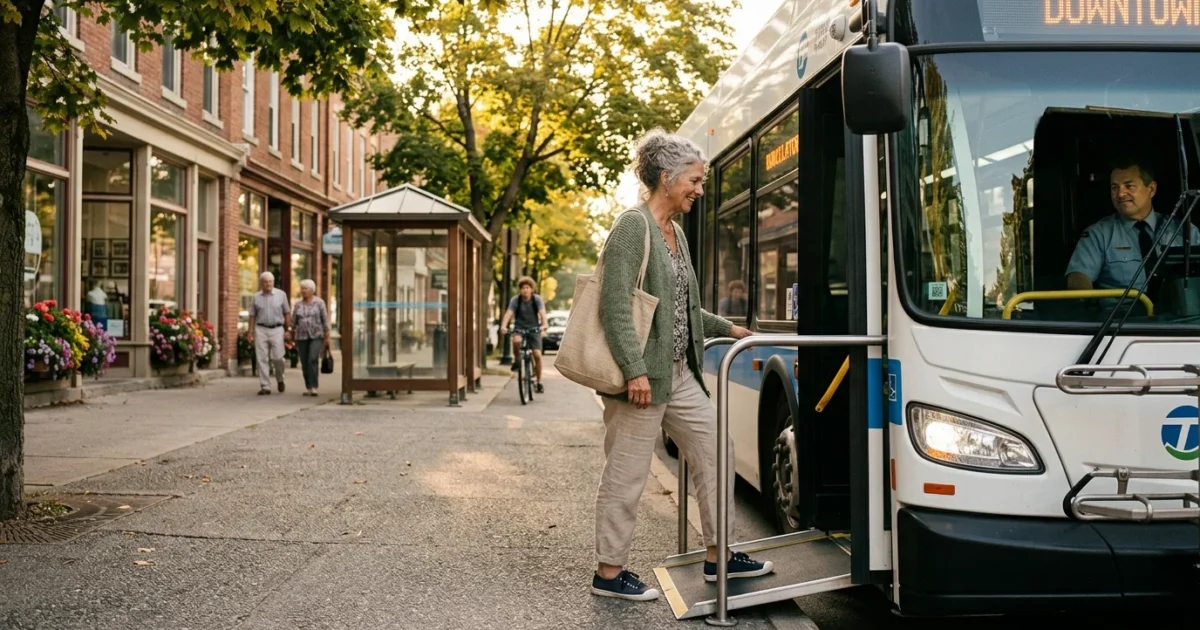
Giving up driving or trimming your retirement budget does not mean losing your independence. Choosing a retirement town with free or discounted public transit keeps you connected to your community without vehicle expenses.
Vehicle maintenance, insurance premiums, and fuel can quickly drain your fixed income. Fortunately, several forward-thinking towns and small cities across the country offer zero-fare or heavily subsidized transportation for older adults.
This comprehensive guide explores the best retirement destinations where you can ride affordably, safely, and conveniently every day.

Why Senior Transit Matters for Your Retirement Budget
Transportation represents one of the largest hidden expenses in retirement. Owning, insuring, and maintaining a personal vehicle often costs older adults over $9,000 annually.
Eliminating or reducing vehicle ownership protects your retirement savings from unpredictable repair bills. You can redirect those substantial funds toward healthcare, housing, travel, or leisure activities.
Accessible transit also supports healthy aging by keeping you engaged with friends, hobbies, and volunteer work. Reliable bus lines ensure that you never miss medical appointments or community events.
Research from the Centers for Disease Control and Prevention (CDC) highlights that remaining socially active reduces health risks like cognitive decline and depression.
Public transportation provides a safe alternative when driving in heavy traffic or bad weather becomes stressful. Modern transit vehicles feature low-floor entry ramps, wide aisles, and priority seating for older passengers.
Understanding Federal Transit Discount Rules and Rights
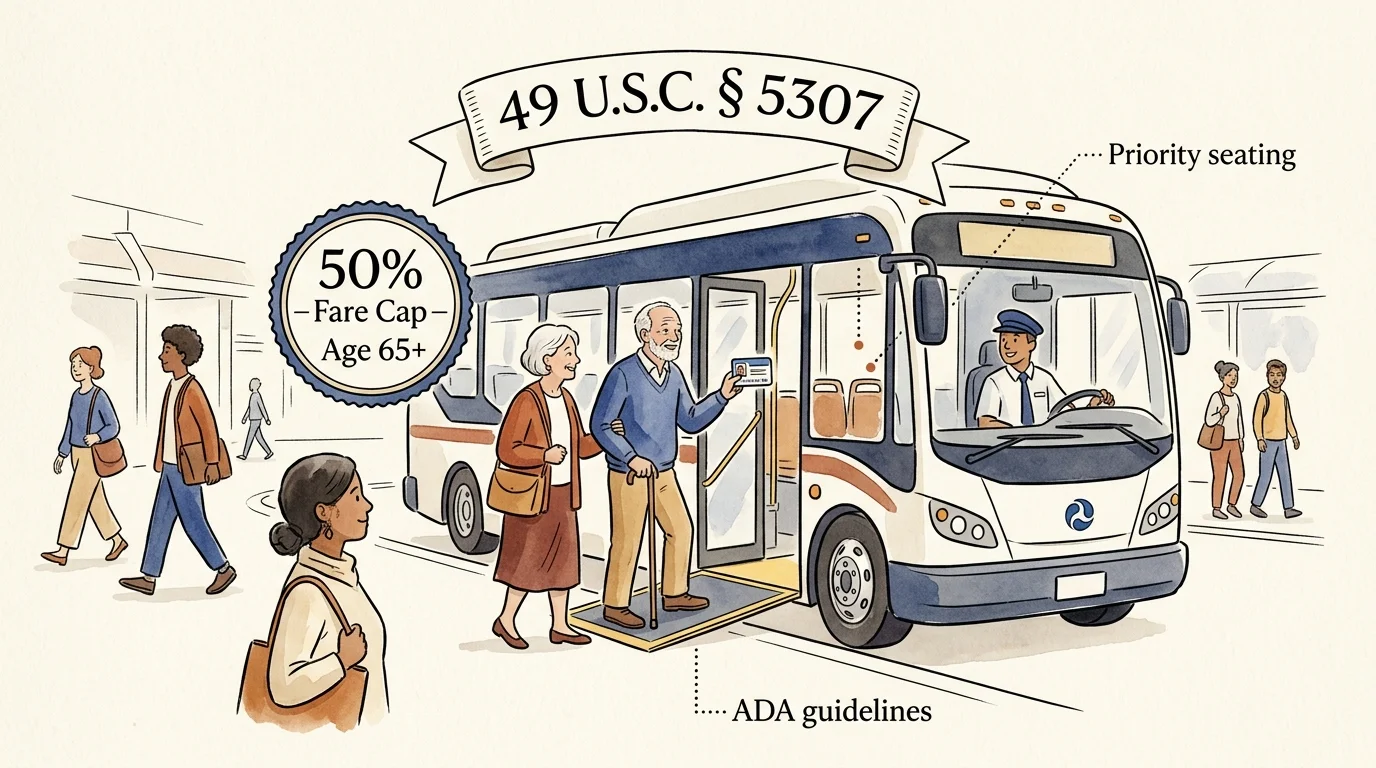
Federal law protects your right to affordable public transportation across the United States. Transit systems that receive federal funding must adhere to strict pricing caps for older passengers.
Under 49 U.S.C. § 5307 (Federal Transit Administration Section 5307), agencies receiving federal formula grants must cap senior fares. They cannot charge adults age 65 and older more than half of the peak fixed-route fare during off-peak hours.
Most transit agencies simplify this mandate by extending the 50% discount to all operating hours. This means you receive half-price fares whether you ride at morning rush hour or midday.
Federal guidelines also mandate complementary paratransit services under the Americans with Disabilities Act (ADA). These door-to-door shared rides support individuals who cannot independently access regular fixed-route buses.
As noted by transit studies from AARP, walkable communities with strong bus networks allow older adults to preserve wealth and live independently longer.
Top Retirement Towns With 100% Free Public Transit
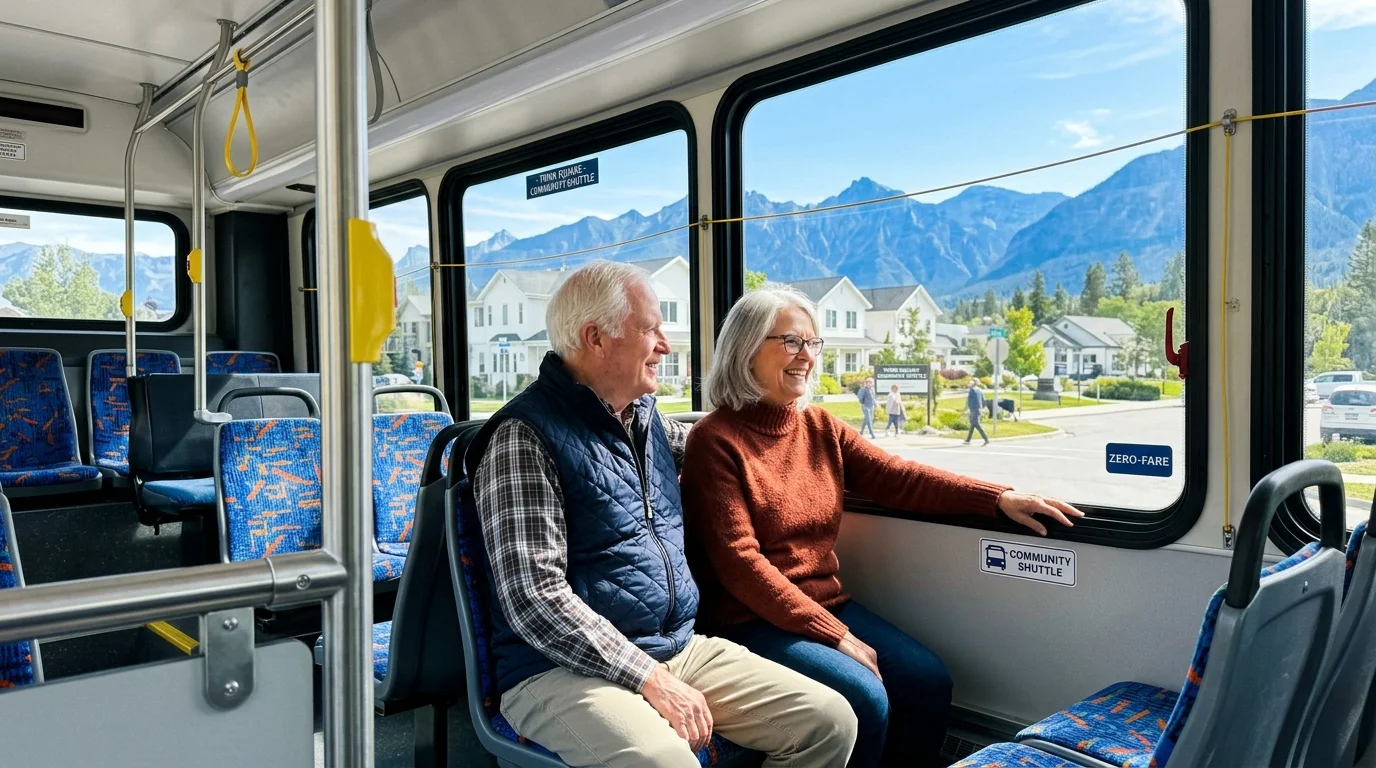
Some communities eliminate fares entirely for all riders. These towns recognize that zero-fare public transportation reduces traffic congestion, stimulates local business, and improves quality of life for retirees.
Chapel Hill and Carrboro, North Carolina
Chapel Hill and neighboring Carrboro operate Chapel Hill Transit, a completely fare-free municipal bus network. The system encompasses over 20 fixed routes connecting residential neighborhoods with downtown hubs.
This network provides direct, free transportation to the world-class University of North Carolina (UNC) Medical Center. Retirees enjoy easy access to top-tier healthcare, cultural lectures, library resources, and botanical gardens without paying a dime.
A joint partnership between the towns and the university funds the transit system. You simply step aboard without showing tickets, passes, or identification cards.
Corvallis, Oregon
Nestled in the scenic Willamette Valley, Corvallis offers the Corvallis Transit System (CTS). CTS provides 100% fareless fixed-route bus service throughout the entire city and into neighboring Philomath.
The city funds CTS through a dedicated municipal Transit Operations Fee rather than farebox collections. This community model ensures clean, reliable buses that run seven days a week.
Corvallis appeals to retirees who enjoy mild weather, abundant green spaces, and a vibrant college-town atmosphere. The transit system stops near major grocery stores, healthcare clinics, and community centers.
Olympia, Washington
Intercity Transit provides zero-fare public bus transportation throughout Olympia, Lacey, and Tumwater. Voters supported this initiative by approving a dedicated local sales tax measure to fund operations.
This fare-free network allows seniors to travel easily around Puget Sound without handling transit cards or coins. Buses feature accessible boarding ramps, automated stop announcements, and climate-controlled interiors.
Olympia combines coastal beauty with rich cultural amenities, farmer markets, and specialized healthcare facilities. The zero-fare transit network makes navigating the capital district stress-free.
Missoula, Montana
Missoula features Mountain Line, a zero-fare bus network serving the city and surrounding urban areas. Mountain Line operates high-frequency routes connecting residential areas to medical facilities and shopping districts.
The system provides free fixed-route bus service alongside zero-fare paratransit services for qualifying individuals. Local property taxes and federal grants support this award-winning transit system.
Missoula is ideal for active retirees who appreciate mountain views, arts festivals, and fly-fishing. Mountain Line buses carry exterior bike racks, allowing you to combine cycling and bus trips effortlessly.
Summit County and Park City, Colorado and Utah
Mountain retirement towns often prioritize free public transportation to keep mountain roads clear and accessible year-round. Summit County, Colorado, operates the Summit Stage, a zero-fare bus network linking Breckenridge, Frisco, Silverthorne, and Dillon.
Park City, Utah, runs Park City Transit, which provides zero-fare bus and trolley routes across the valley. These systems transport residents to grocery stores, recreation centers, ski resorts, and medical clinics for free.
Both regions offer clean, modern fleets equipped for winter weather. They provide excellent mobility for active seniors who love alpine scenery and outdoor recreation.
Tucson, Arizona
Tucson offers Sun Tran bus service and the Sun Link streetcar without charging fares. The city council maintains zero-fare transit to support economic vitality and expand mobility for all residents.
The Sun Link streetcar connects downtown dining, historic districts, and the University of Arizona medical campus. Sun Tran fixed-route buses extend across the wider desert basin.
Tucson remains a classic retirement destination due to its warm winter climate, low humidity, and mountain vistas. Free transit adds tremendous value for seniors living on fixed incomes.
Statewide Programs and Regional Transit Champions
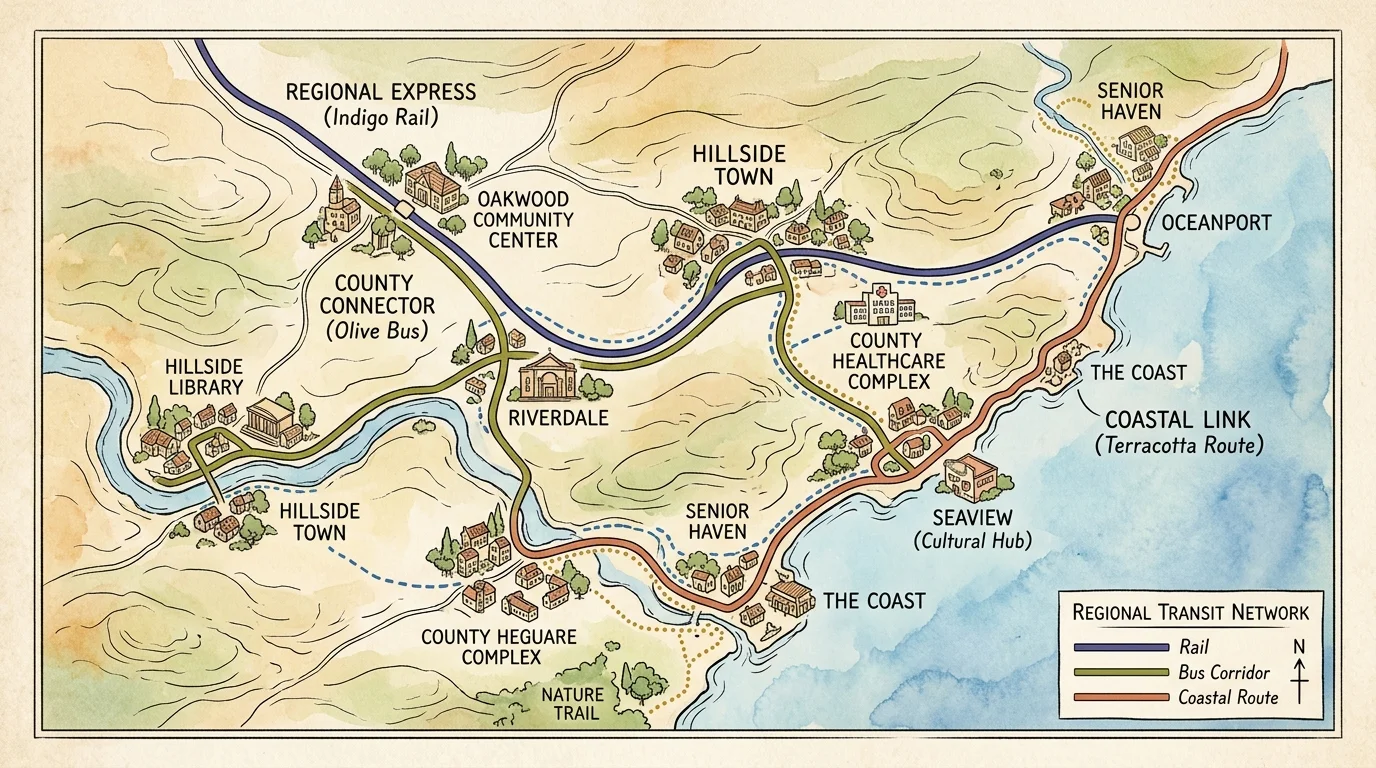
If you prefer regions with larger transit networks, several states and counties offer exceptional transit subsidies for seniors. These programs lower transportation barriers across multiple towns and rural counties.
Pennsylvania Senior Free Transit Program
Pennsylvania offers one of the most generous senior transit benefits in the nation. The program allows residents age 65 and older to ride local fixed-route transit systems statewide completely free.
The Pennsylvania Lottery funds this program, covering buses, trolleys, and light-rail lines across all 67 counties. You can ride free on large systems like SEPTA in Philadelphia and Pittsburgh Regional Transit (PRT).
The state also runs the Shared-Ride Lottery Program for older adults. This service provides door-to-door, demand-response van transit in every county with discounts up to 85% off standard rates.
Pinellas County and St. Petersburg, Florida
Pinellas County is home to popular retirement destinations like St. Petersburg, Clearwater, and Dunedin. The Pinellas Suncoast Transit Authority (PSTA) provides discounted transit options tailored to older residents.
Seniors age 65 and older receive a 50% discount on standard bus fares, paying just $1.10 per one-way trip. PSTA also offers deeply discounted monthly transit passes for unlimited regional travel.
PSTA operates specialized on-demand mobility programs that subsidize taxi and rideshare trips for seniors traveling to medical appointments. The county also offers the SunRunner rapid bus line, connecting downtown St. Petersburg directly to the Gulf beaches.

How to Apply for Senior Transit Programs and Passes
Accessing senior transit discounts is straightforward, but each agency requires basic verification steps. Following the correct process ensures you receive all eligible benefits without unexpected delays.
According to the Eldercare Locator, a public service of the U.S. Administration on Aging, local Area Agencies on Aging can guide you directly to transportation vouchers and specialized door-to-door services in your zip code.
You can also search for supplemental transit assistance through Benefits.gov to ensure you receive every local and state subsidy available.
Follow these essential steps to secure your senior transit credentials:
- Gather Government Identification: Prepare a valid driver’s license, state ID card, passport, or birth certificate to prove your age.
- Contact Your Local Transit Office: Visit the transit customer service desk or website to download their senior fare application form.
- Obtain a Senior Smart Card: Many modern transit agencies issue reloadable electronic smart cards with your photo printed directly on the front.
- Register for Paratransit If Needed: If mobility challenges prevent you from using regular buses, have your doctor complete an ADA paratransit verification form.
- Keep Backup Identification Handy: Always carry your transit ID card or Medicare card when boarding to present to bus operators upon request.
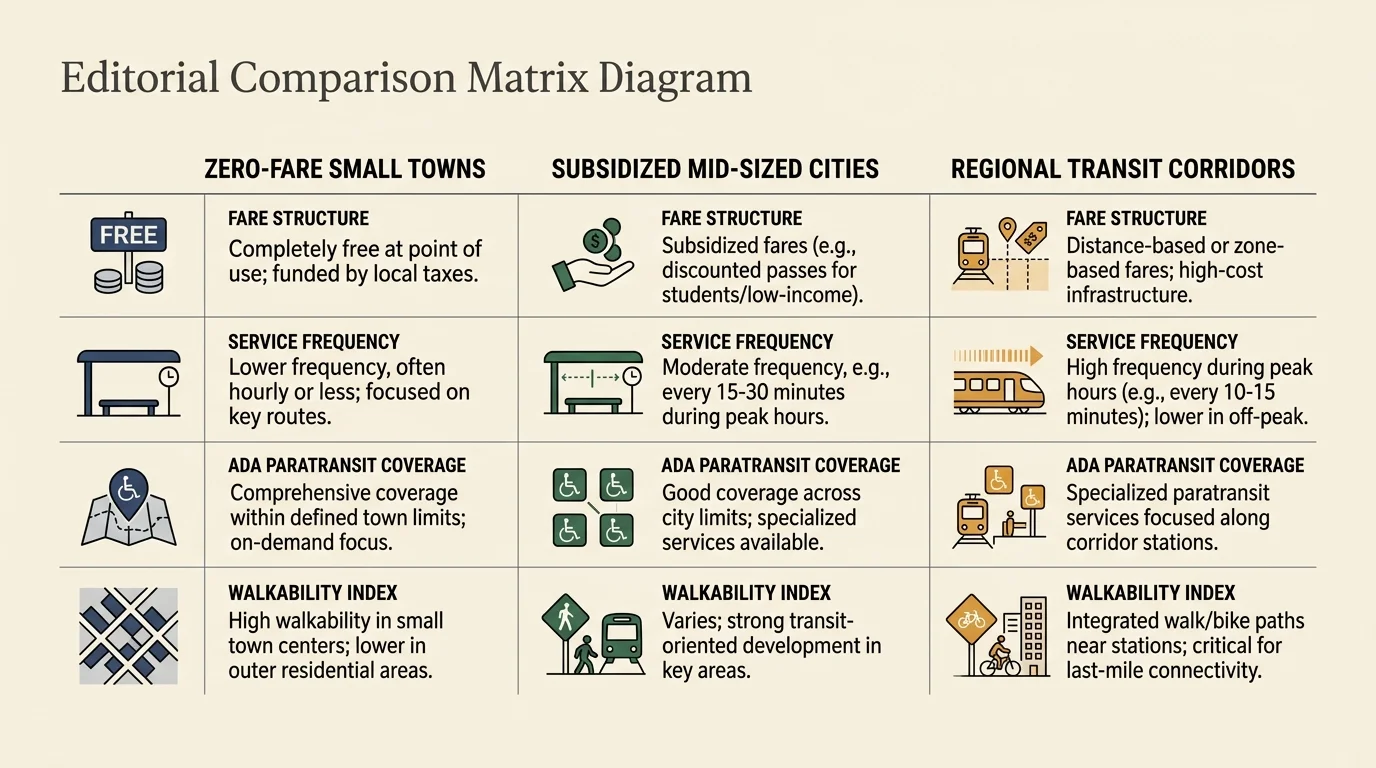
Comparing Senior-Friendly Transit Locations
Reviewing transit options side by side helps you choose the right retirement town for your lifestyle and budget. The table below outlines key transit programs across popular senior-friendly communities.
| Location | Transit Agency | Senior Fare Cost | Standout Transit Benefit |
|---|---|---|---|
| Chapel Hill, NC | Chapel Hill Transit | 100% Free | Direct fare-free bus service to UNC Medical Center. |
| Corvallis, OR | Corvallis Transit System | 100% Free | Clean, zero-fare network funded by municipal fees. |
| Olympia, WA | Intercity Transit | 100% Free | Zero-fare buses connecting three Puget Sound cities. |
| Missoula, MT | Mountain Line | 100% Free | Fare-free fixed routes and paratransit van services. |
| Tucson, AZ | Sun Tran & Sun Link | 100% Free | Zero-fare buses and streetcars in a warm desert climate. |
| Summit County, CO | Summit Stage | 100% Free | Free mountain transit connecting towns and resorts. |
| Pennsylvania (Statewide) | SEPTA, PRT & Local Systems | 100% Free (65+) | Free fixed routes statewide funded by the PA Lottery. |
| St. Petersburg, FL | PSTA | 50% Discount ($1.10) | Half-price bus fares and beach-access rapid transit. |
Common Transit Pitfalls and How to Avoid Them
Relying on public transit requires some planning. Avoiding common mistakes ensures your trips remain smooth, dependable, and pleasant.
Assuming Weekend Schedules Match Weekday Service
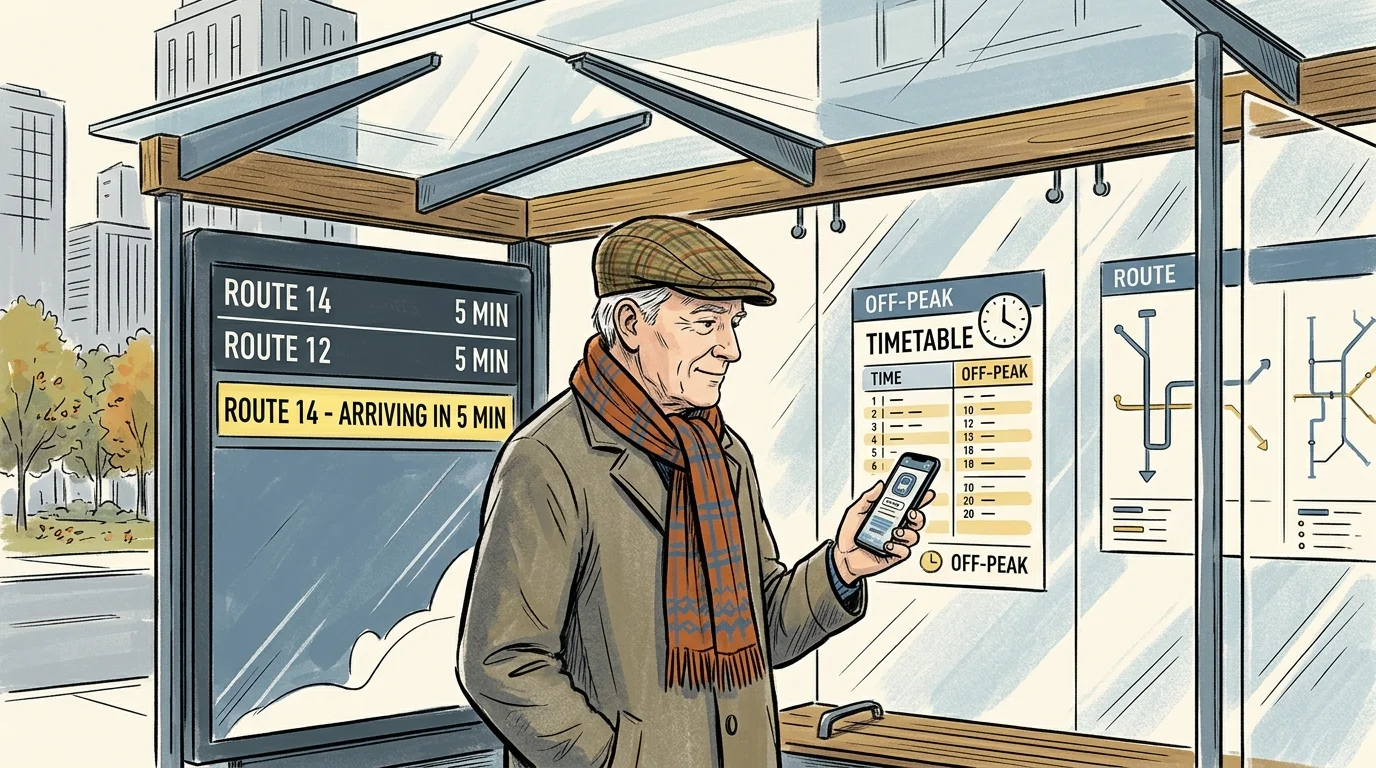
Many municipal bus systems reduce their frequency on Saturdays, Sundays, and major holidays. A bus that arrives every fifteen minutes on Tuesday might run only once an hour on Sunday morning.
Always review weekend transit timetables before heading out for shopping or social engagements. Download your local transit agency’s mobile tracking app to monitor bus locations in real time.
Overlooking Paratransit Certification Timelines
Qualifying for ADA paratransit or county door-to-door van services takes time. Agencies often take several weeks to review medical certifications and schedule in-person mobility assessments.
Submit your paratransit application well before you actually need the rides. Having active paratransit credentials provides a reliable safety net if your mobility temporarily changes.
Ignoring Stop Accessibility and Neighborhood Topography
A retirement town may boast an excellent bus system, but the physical walk to your nearest stop matters just as much. Steep hills, missing sidewalks, and lack of bus shelters make transit difficult in inclement weather.
When scouting retirement neighborhoods, walk the exact path from potential homes to the nearest bus stop. Ensure the route has smooth curbs, continuous sidewalks, and adequate street lighting.
Falling for Third-Party Transit Pass Scams
Scammers sometimes create fake websites charging high processing fees for senior transit passes. Legitimate transit ID cards are issued directly by municipal transit authorities or state government offices.
Never enter credit card details on third-party websites claiming to expedite transit discounts. Always apply through official municipal government portals or at transit customer service centers.
Frequently Asked Questions
At what age do senior public transit discounts usually start?
Most transit agencies offer discounts starting at age 65 under federal rules. However, several municipal systems and regional discount programs begin offering reduced senior fares at age 60 or 62.
Do I have to be a local resident to use zero-fare transit systems?
In completely fare-free transit towns like Chapel Hill, Corvallis, Olympia, and Missoula, anyone can board without proof of residency. You simply walk onto the bus without purchasing a ticket or showing an ID card.
Can I bring mobility devices like walkers and wheelchairs on public buses?
Yes, all federally funded public buses must comply with ADA regulations. Buses feature hydraulic boarding ramps, kneeling suspension, and dedicated securement areas for walkers, manual wheelchairs, and motorized mobility scooters.
How do I prove my eligibility on discounted transit systems?
You can prove your eligibility by showing a valid state photo ID, an agency-issued senior smart card, or your red, white, and blue Medicare card. Bus drivers check these credentials when you tap your card or pay the reduced cash fare.
What should I do if I live too far from a fixed bus route?
Contact your local Area Agency on Aging or transit provider to ask about dial-a-ride, shared-ride, or volunteer driver programs. Many counties operate subsidized on-demand vans designed specifically for older residents living outside standard fixed-route zones.
For additional senior resources, visit
National Institutes of Health (NIH), Centers for Medicare & Medicaid Services (CMS), Social Security Administration (SSA) and Consumer Financial Protection Bureau (CFPB).
Disclaimer: The information in this article is for educational purposes only and is not intended to be a substitute for professional financial, legal, or medical advice. Always consult with a qualified expert for advice tailored to your personal situation.









Leave a Reply