

Living on a fixed retirement income means every dollar you save directly boosts your financial security and daily comfort. While you likely know about standard restaurant deals and basic membership perks, businesses and local governments offer highly valuable savings they rarely advertise. Uncovering these hidden price reductions can trim hundreds or even thousands of dollars off your annual expenses, allowing you to redirect those funds toward travel, healthcare, or family experiences. You simply need to know exactly where to look and what to ask for to unlock these substantial benefits. Here are nine overlooked discounts you can start using today to stretch your retirement budget further without sacrificing the quality of your lifestyle.
The Strategy Of Claiming Unadvertised Savings
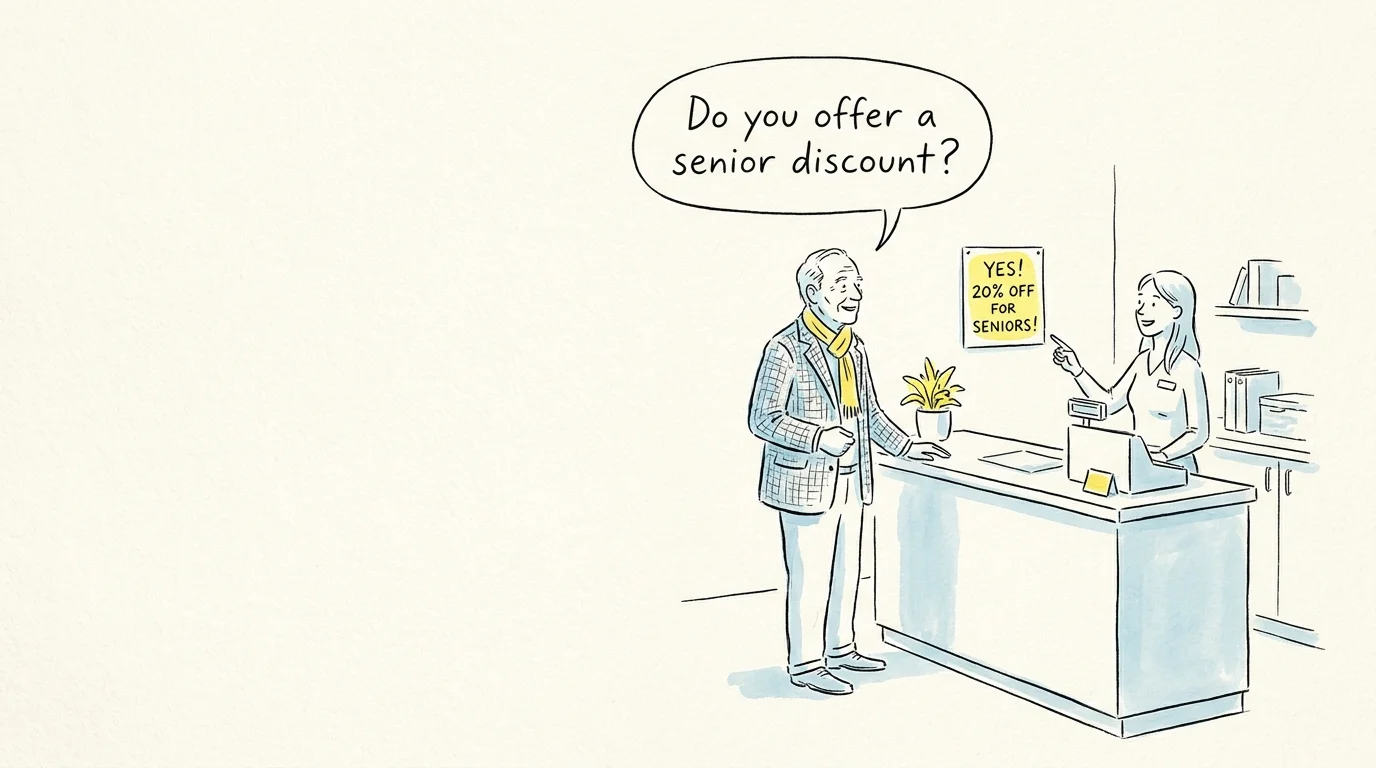
Before examining specific discounts, you need to understand why so many lucrative savings remain hidden. Many businesses hesitate to actively advertise senior perks because they want to maximize their standard profits. However, they willingly provide these reductions to loyal customers who know to inquire. You should get into the habit of asking, “Do you offer a senior discount?” before paying for any product or service.
Age thresholds vary wildly across different industries and government programs. The Social Security Administration (SSA) bases your full retirement age on your birth year—typically 66 or 67—but the private sector operates by its own rules. Some retail stores extend benefits to shoppers as young as 50, while certain travel companies set the minimum age at 62 or 65. Never assume you are too young to qualify for a discount. Always ask the representative what age their specific program begins, and keep your driver’s license or state ID handy to verify your eligibility quickly.
1. Drastic Reductions On Property Taxes
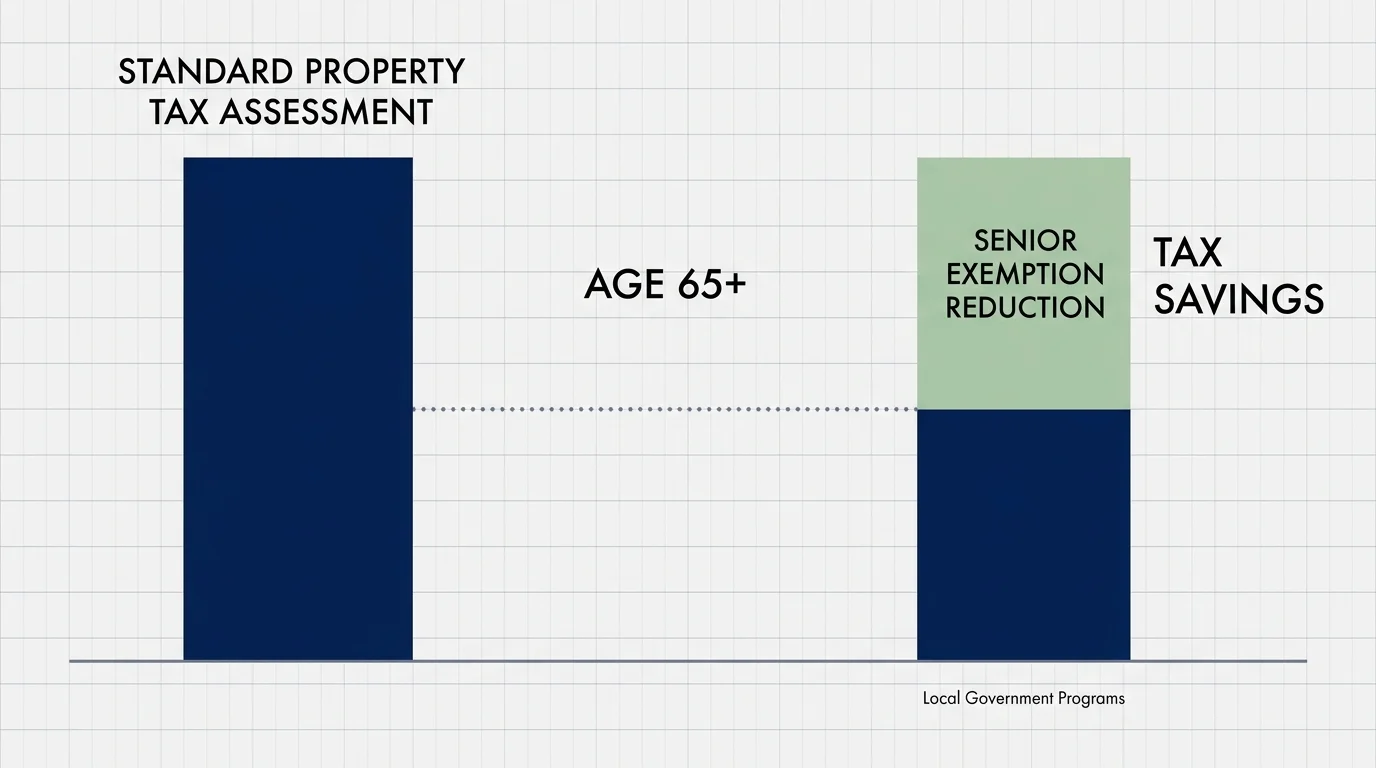
Housing remains one of the largest expenses in retirement. If you own your home, you might be overpaying your local government by thousands of dollars each year. Many counties and municipalities offer substantial property tax relief specifically designed to help seniors age in place without being priced out of their homes by rising local tax assessments.
These programs typically fall into three categories. First, standard senior exemptions reduce the assessed value of your home, lowering your total tax bill. Second, valuation freezes lock in your property’s assessed value at a specific age—often 65—meaning your taxes will not skyrocket even if your neighborhood becomes highly desirable. Third, tax deferral programs allow you to delay paying a portion of your taxes until you sell the home.
How to claim this discount:
- Locate your county tax assessor’s official website or call their office directly.
- Ask for information regarding “senior citizen property tax exemptions” or “homestead exemptions for seniors.”
- Gather your proof of age, proof of residency, and recent tax returns, as many of these programs have specific income thresholds.
- Submit your application well before the annual filing deadline, which usually occurs in the early spring.
2. National Park Lifetime Access Passes
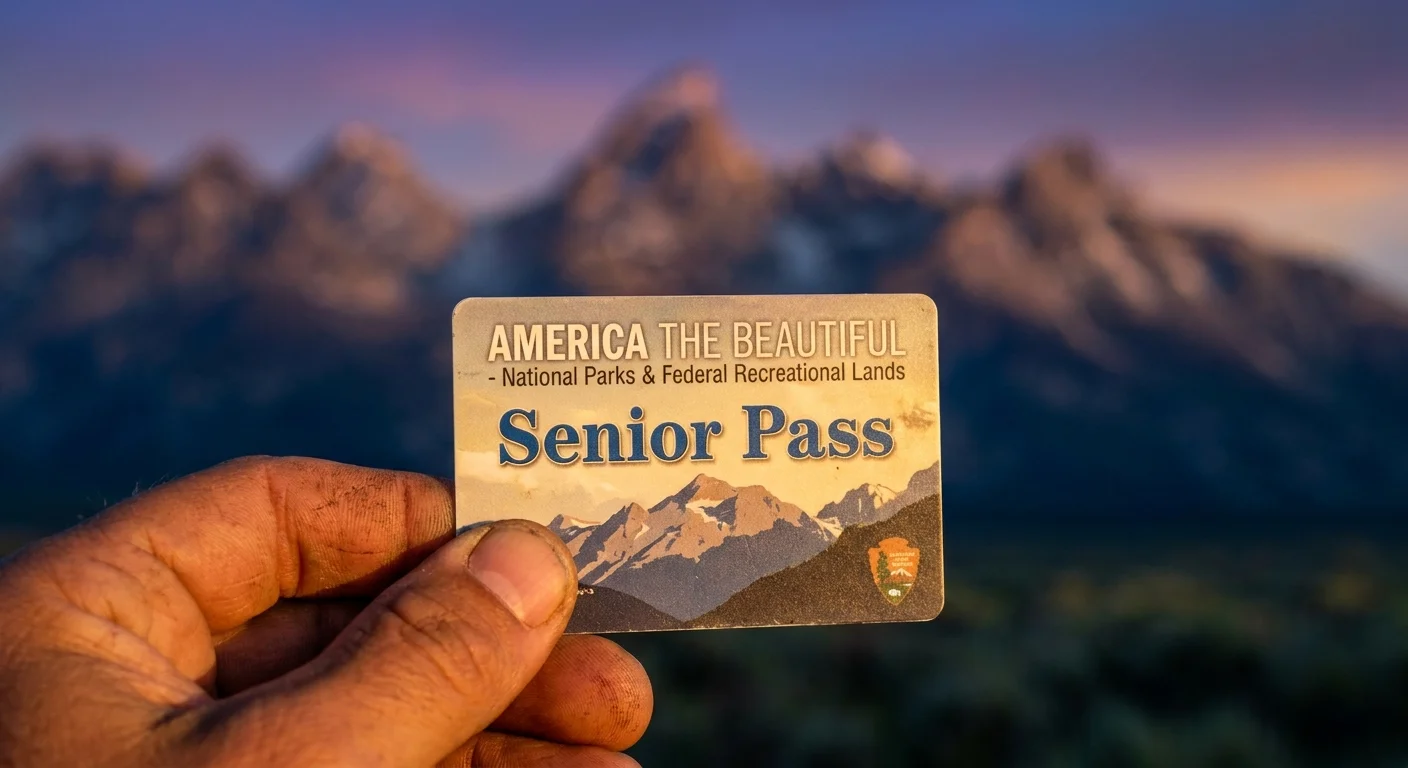
Retirement provides the perfect opportunity to explore the country’s natural wonders, but individual park entrance fees quickly add up. A standard vehicle entry fee for a single park often costs between $30 and $35 for just a few days of access. Fortunately, the federal government offers one of the most generous recreational discounts available anywhere: The America the Beautiful Senior Pass.
Available to U.S. citizens and permanent residents aged 62 or older, this pass provides admittance to more than 2,000 federal recreation sites, including all national parks, national wildlife refuges, and national forests. You can purchase an annual senior pass for $20, but the lifetime pass offers the greatest value at a one-time fee of just $80. Furthermore, the pass covers the entrance fee for you and all passengers in your personal vehicle. It also frequently provides a 50% discount on expanded amenity fees, such as camping, swimming, and boat launching.
How to claim this discount:
- Purchase the pass in person at any federal recreation site that charges an entrance fee to avoid processing charges.
- Alternatively, order the pass online through the official USGS store or through the mail (note that an additional $10 processing fee applies to online and mail orders).
- Keep the physical card in a secure location in your wallet, as digital copies or photographs of the pass are not accepted at park gates.

3. Auto Insurance Mileage And Course Discounts
When you stop commuting to work every day, your driving habits change dramatically. Your auto insurance premiums should reflect this reduction in risk. Many seniors continue paying premiums based on a 15,000-mile annual commute simply because they never updated their driving status with their insurance agent.
Call your insurance provider and explain that you are now retired. Request a “low-mileage discount” or ask to reclassify your vehicle’s primary use from “commuting” to “pleasure.” Additionally, most states mandate that insurance companies offer a mandatory premium reduction—often between 5% and 10%—to seniors who complete an approved defensive driving course.
| Insurance Factor | Standard Policy Profile | Senior Optimized Profile |
|---|---|---|
| Primary Vehicle Use | Commuting to work/school | Pleasure and errands only |
| Annual Mileage | 12,000 to 15,000 miles | Under 7,500 miles (varies by carrier) |
| Driver Education | Standard state licensing | Recent Defensive Driving Course completion |
| Telematics Tracking | Not enrolled | Enrolled (rewards safe, daytime driving) |
How to claim this discount:
- Record your current odometer reading and estimate your new annual mileage.
- Contact your auto insurance agent and request a policy review tailored to your retired lifestyle.
- Look up online or in-person defensive driving courses approved by your state’s Department of Motor Vehicles (often offered through local libraries or senior centers).
4. Utility Bill Lifelines For Fixed Incomes
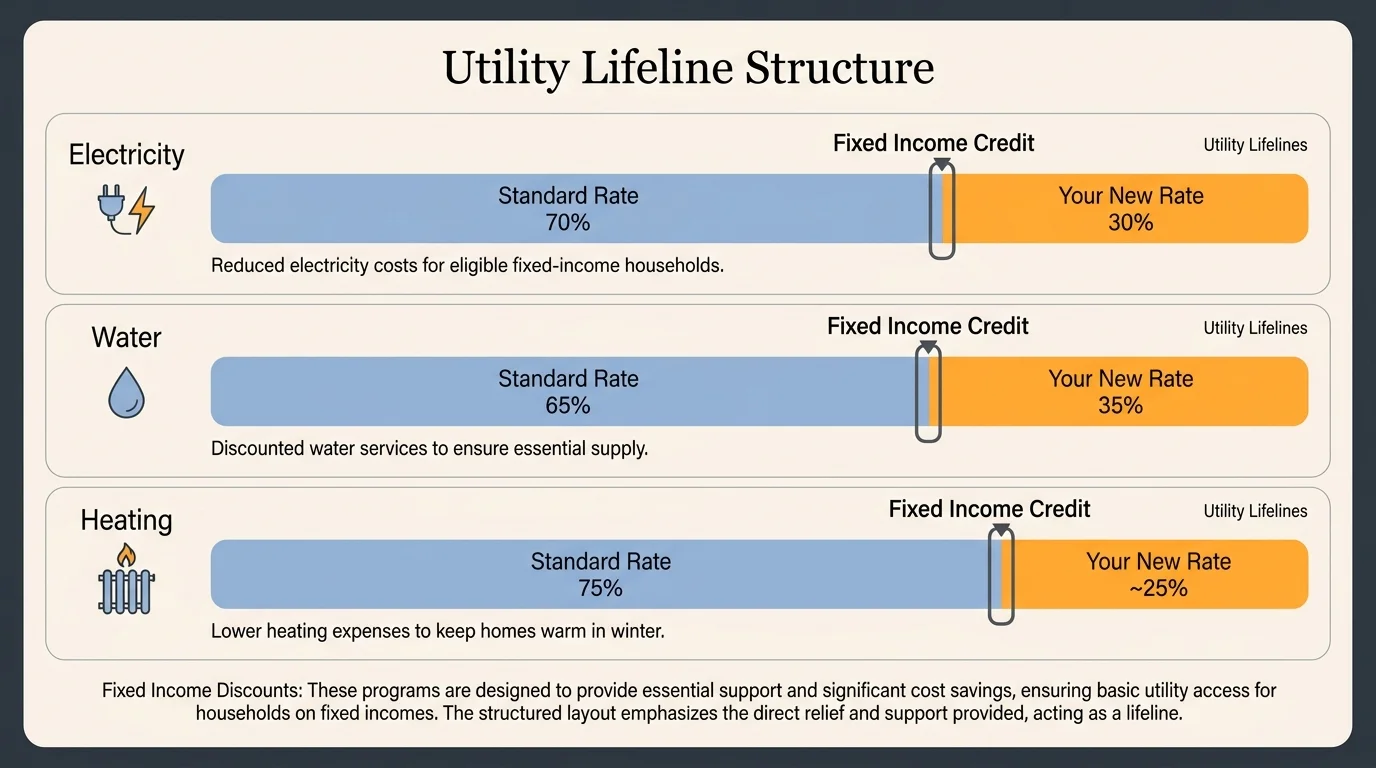
Fluctuating energy costs create significant stress when you manage a fixed budget. However, you do not have to endure freezing winters or sweltering summers just to keep your bills manageable. Local utility companies and federal programs offer hidden lifelines designed to ease the burden of heating and cooling costs for older adults.
If you struggle with heating or cooling costs, Benefits.gov offers a comprehensive directory to help you locate energy assistance programs, including the Low Income Home Energy Assistance Program (LIHEAP). This federally funded initiative helps vulnerable households cover the costs of energy bills, weatherization, and minor energy-related home repairs.
Beyond federal help, your local utility provider likely has an unadvertised senior tier. Many electric and water companies offer a permanent percentage reduction on your monthly bill once you reach age 65. Others offer “medical baseline” programs, which provide extra electricity at the lowest standard rate if you rely on medical equipment like a CPAP machine or a motorized wheelchair.
How to claim this discount:
- Review your most recent utility bills to find the customer service phone numbers.
- Call and specifically ask, “Do you have any billing programs, discounts, or rate tiers for senior citizens?”
- If you have a medical condition requiring temperature control or powered equipment, request an application for a medical baseline allowance.

5. Hidden Travel Perks Beyond The Standard Rate
Traveling during retirement is a dream for many, but standard booking engines rarely show you the absolute lowest price. Travel companies structure their online booking systems to promote their standard rates, keeping age-based discounts tucked away in drop-down menus or reserving them strictly for customers who call a booking agent.
As noted by experts at AARP, simply carrying a membership card can unlock hundreds of unadvertised retail, dining, and travel deals. However, you do not always need a paid membership to save. Amtrak, for instance, offers a 10% discount on most rail fares for travelers aged 65 and older. Major airlines sometimes offer senior fares on select domestic and international flights, but you usually must call the airline’s reservation desk to secure them. Hotel chains like Marriott, Hilton, and Choice Hotels frequently offer discounts ranging from 10% to 15% for guests aged 60 or 62 and older.
How to claim this discount:
- When booking hotels online, always check the “Special Rates” or “Corporate/Promo Code” drop-down menu for a senior option before searching for rooms.
- If booking flights, call the airline directly to compare the online standard fare with their unadvertised senior fare.
- When renting a car, combine your senior discount with an advance-payment option for maximum savings.
6. Amazon Prime And Subscription Reductions
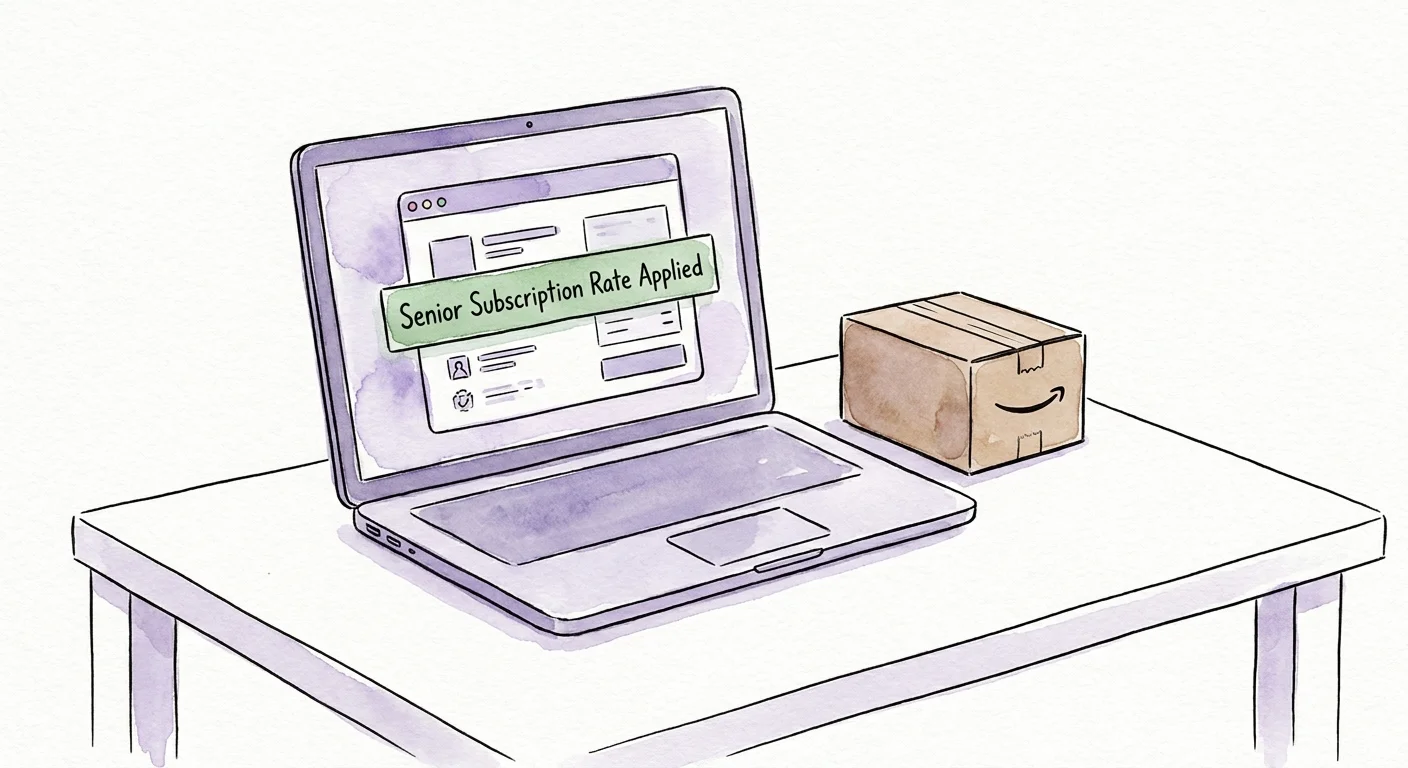
Monthly subscriptions silently drain retirement accounts. You might view services like Amazon Prime, high-speed internet, and unlimited cell phone plans as essential, but you likely pay more than necessary to maintain them.
If you participate in qualifying government assistance programs—such as Medicaid, SNAP (Supplemental Nutrition Assistance Program), or SSI (Supplemental Security Income)—Amazon offers “Prime Access.” This program provides all the standard benefits of Amazon Prime, including free delivery and streaming video, at more than 50% off the standard monthly fee. Similarly, major telecommunications companies offer dedicated, heavily discounted phone plans for customers over age 55. These plans often provide unlimited talk, text, and data for two lines at a fraction of the cost of their standard family plans.
How to claim this discount:
- Search “Amazon Prime Access” online and upload an image of your qualifying EBT or Medicaid card to verify your status.
- Contact your mobile phone carrier and explicitly ask if they offer a “55 Plus” or “Senior” unlimited plan.
- Call your internet service provider and ask about their low-income or senior-specific broadband packages.

7. Grocery Store Designated Discount Days
Food costs take up a massive portion of the monthly budget. While clipping coupons and using store loyalty apps help, shopping on the right day of the week can instantly cut your grocery bill by 5% to 10%.
Many regional and national supermarket chains host specific senior discount days—usually falling on a Tuesday or Wednesday when store traffic is generally light. Stores like Harris Teeter, Fred Meyer, and Hy-Vee offer these percentage-based discounts to shoppers typically aged 55 or 60 and older. The best part about this hidden perk is that it applies to your entire basket of eligible items, meaning your savings scale up the more you buy.
How to claim this discount:
- Visit the customer service desk at your primary grocery store and ask if they host a designated senior discount day.
- Plan your major household stocking trips around this specific day of the week.
- Ask the cashier to apply the discount before you swipe your payment card, as it is rarely applied automatically.

8. Entertainment And Education Freebies
Staying mentally active and socially engaged is vital for a fulfilling retirement. Fortunately, entertainment venues and educational institutions aggressively subsidize costs for older adults to encourage participation.
Most major movie theater chains, including AMC, Regal, and Cinemark, offer discounted senior pricing. Sometimes these are available every day, while others designate specific “Senior Days” with deeply discounted tickets and concession specials. Furthermore, museums, botanical gardens, and local historical sites almost universally offer reduced admission for seniors.
Perhaps the most valuable hidden gem is the ability to audit college courses for free or for a nominal fee. All 50 states have state-supported universities or community colleges that waive tuition for older adults who wish to attend classes for personal enrichment rather than academic credit.
How to claim this discount:
- Check your local community college or state university website for “senior citizen tuition waivers” or “auditing programs.”
- Always select the “Senior” ticket option when purchasing movie or museum tickets online or at the kiosk.
- Look for early-bird dining specials or matinee showtimes, which often stack with age-based discounts.
9. Healthcare And Pharmacy Prescription Clubs
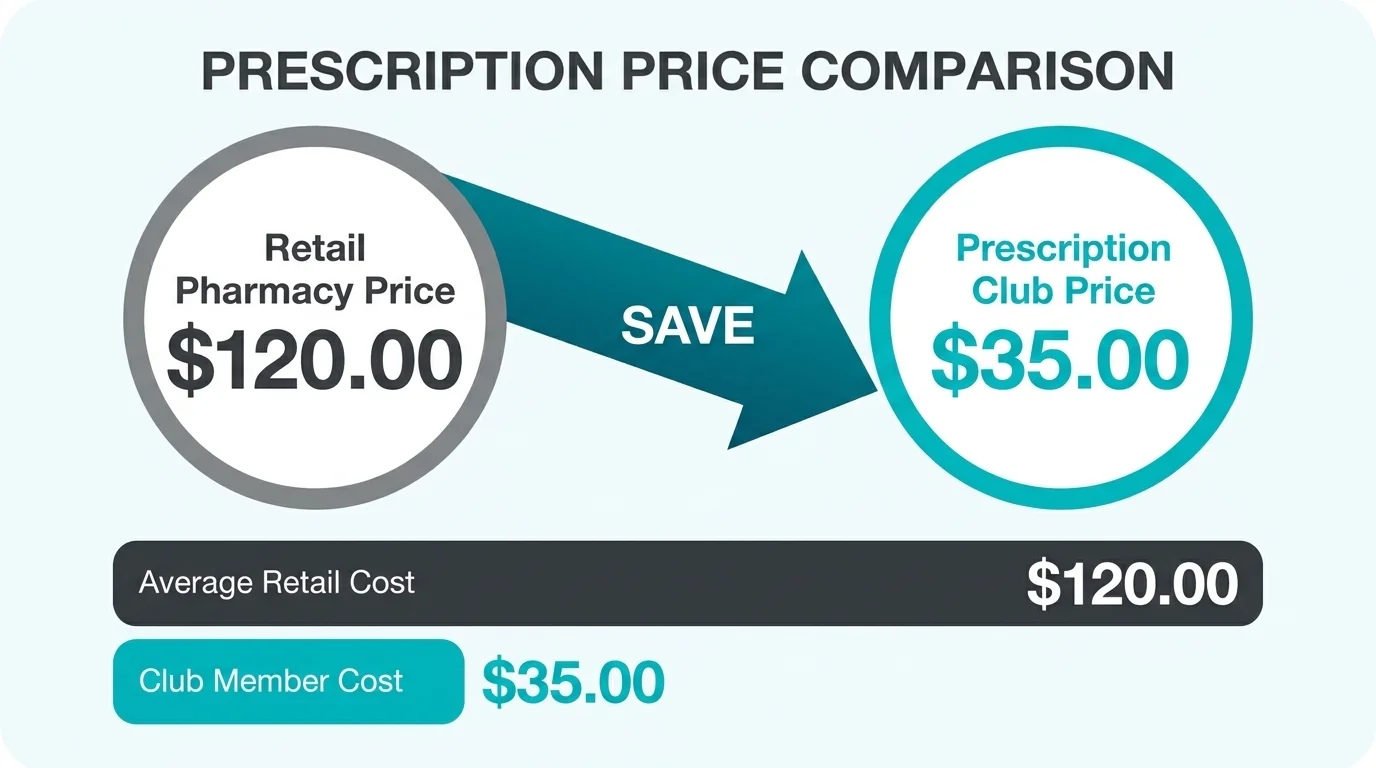
Medical expenses can easily derail a carefully planned retirement budget. Even with robust insurance coverage, out-of-pocket costs for prescription medications remain a major pain point. Relying solely on your insurance card at the pharmacy counter is a common mistake that could cost you hundreds of dollars.
Exploring your options during open enrollment through Medicare.gov ensures you select the most cost-effective Part D plan for your specific medications. However, independent of Medicare, you should explore pharmacy discount programs. Many major grocery store pharmacies and big-box retailers offer prescription clubs where generic medications cost as little as $4 for a 30-day supply. Furthermore, discount cards like GoodRx allow you to bypass your insurance entirely if the cash price of the drug is cheaper than your insurance copay.
How to claim this discount:
- Ask your pharmacist what the “cash price” of your medication is before using your insurance.
- Download prescription comparison apps to check prices at different pharmacies in your zip code.
- If you take expensive brand-name medications, search the manufacturer’s website for patient assistance programs that offer the drug at a heavily reduced cost based on your income.

Beware Of Fake Discounts And Phishing Scams
While seeking out hidden savings is a smart financial strategy, you must remain vigilant against individuals and organizations that prey on your desire to save money. Scammers deliberately target older adults by creating fake discounts, phantom subscription services, and counterfeit government programs.
Scammers frequently use the promise of exclusive savings to steal personal information. According to the Consumer Financial Protection Bureau (CFPB), you should never provide your Social Security number or bank details to an unsolicited caller offering a supposed discount. A legitimate business will never demand instant payment via gift cards, wire transfers, or cryptocurrency to “unlock” a senior rate.
Always verify the source. If you receive an email promising a drastic reduction on your utility bill or a free medical device, do not click the links provided. Instead, navigate independently to the official company or government website to verify the offer. When in doubt, trust your instincts—if a discount sounds completely unrealistic, it is almost certainly a trap designed to drain your accounts.
Frequently Asked Questions
At what age do most senior discounts begin?
There is no universal age requirement. While many government programs and Medicare align with age 65, private businesses set their own rules. Retailers and restaurants often begin offering discounts at age 50 or 55, while travel companies typically set their threshold at 60 or 62. You should always ask about age requirements, regardless of your current age.
Do I need to carry my birth certificate to prove my age?
No, you rarely need a birth certificate. A valid state-issued driver’s license, passport, or state ID card is sufficient for almost all businesses and government agencies. For casual dining or retail discounts, cashiers will often take your word for it or just visually verify your age without asking for an ID at all.
Are senior discounts automatically applied at the register?
In most cases, no. Point-of-sale systems cannot read your age, and many clerks are trained not to assume a customer’s age to avoid causing offense. You must proactively request the discount before the cashier totals your purchase or runs your credit card.
Can I combine a senior discount with other coupons or sales?
This depends entirely on the store’s policy. Many businesses prohibit “stacking” discounts, meaning you must choose between the senior discount and the sale price. However, grocery stores and certain retailers will occasionally allow you to apply a senior percentage discount to your entire cart, including items that are already on sale. Always politely ask the cashier to try running both.
Is an AARP membership required to get these deals?
No. While an AARP membership provides access to a specific network of negotiated discounts, countless businesses offer their own independent senior discounts to anyone who meets their age requirement. You do not need to pay for any third-party membership to access property tax relief, utility assistance, or standard grocery and retail age-based discounts.
For additional senior resources, visit Centers for Medicare & Medicaid Services (CMS), Social Security Administration (SSA) and Consumer Financial Protection Bureau (CFPB).
Disclaimer: The information in this article is for educational purposes only and is not intended to be a substitute for professional financial, legal, or medical advice. Always consult with a qualified expert for advice tailored to your personal situation.








Leave a Reply