
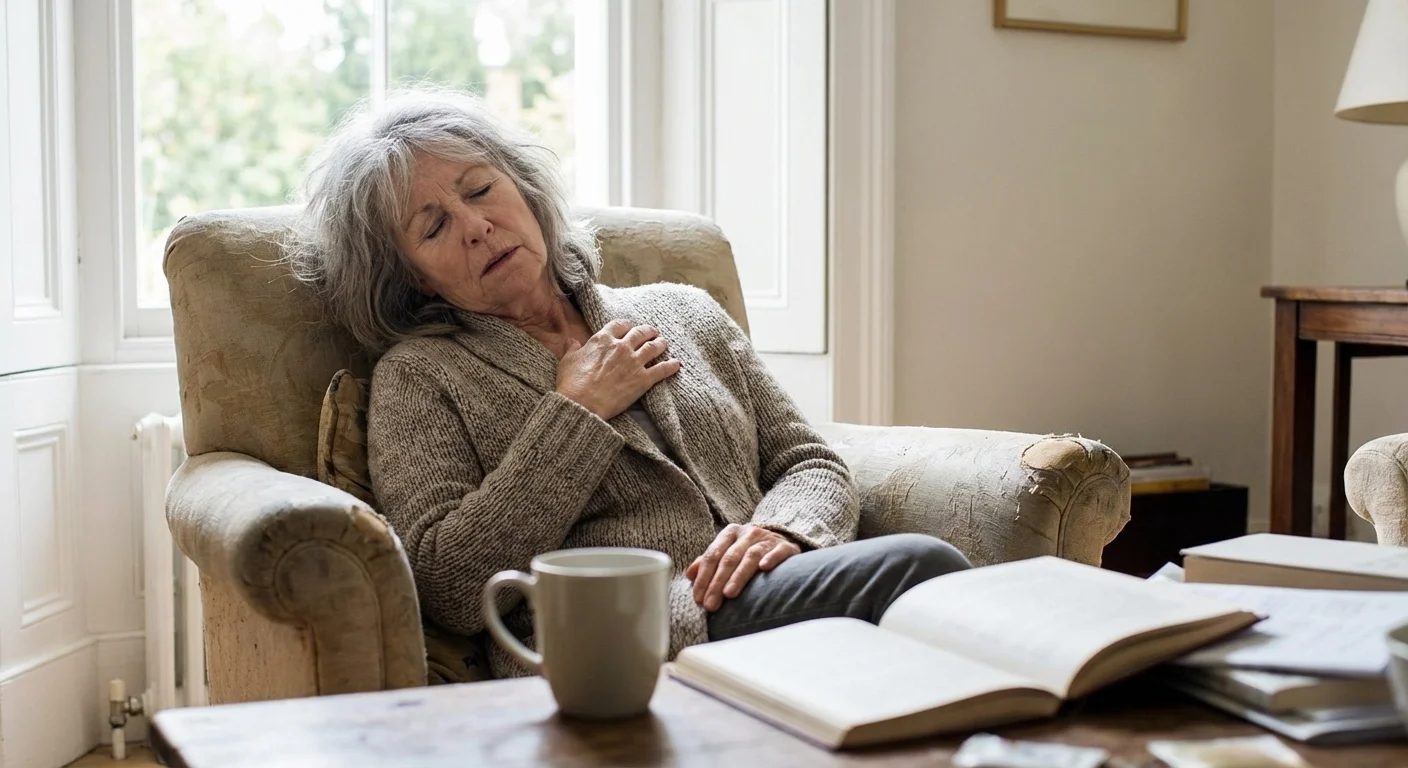
01 Unexplained, Profound Fatigue
Fatigue is a common part of life. You expect to feel tired after spending an afternoon gardening, watching your grandchildren, or recovering from a restless night of sleep.
However, the fatigue associated with an impending heart attack feels entirely different. It strikes without warning and feels deeply debilitating, as if someone has unplugged your body from its power source.
When your heart muscle struggles to pump blood effectively due to restricted arteries, it has to work overtime just to manage baseline bodily functions. This massive internal effort leaves very little energy for anything else.
Women who have survived heart attacks frequently describe this fatigue as a heaviness in their limbs or an inability to complete the simplest of tasks.
You might find yourself unable to make a bed, lift a small bag of groceries, or even walk to the mailbox without needing to sit down and rest immediately.
Pay close attention to changes in your normal energy patterns. If you typically walk two miles every morning with ease but suddenly feel entirely wiped out after taking a few steps out your front door, your body is sending you a critical warning.
This profound exhaustion can begin days or even weeks before the actual heart attack occurs. Do not dismiss this extreme tiredness as a normal sign of getting older; aging does not suddenly drain your energy reserves overnight.
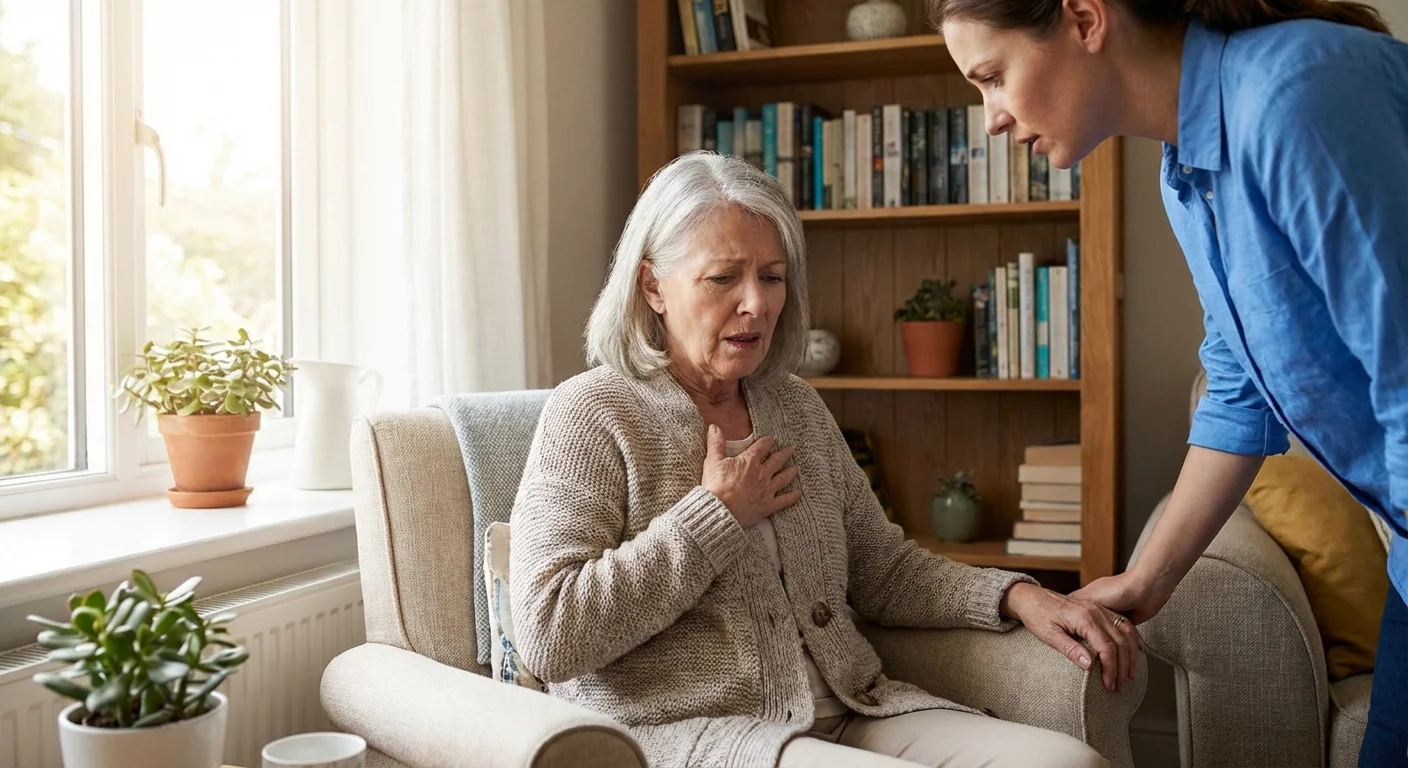
02 Shortness of Breath Without Exertion
Breathing requires a coordinated effort between your lungs and your heart. Your heart pumps oxygen-depleted blood to your lungs, where it picks up fresh oxygen to circulate throughout your body.
If your heart cannot pump efficiently because a coronary artery is narrowing, blood can back up in the veins that take blood through the lungs. This fluid congestion makes it difficult for your lungs to expand fully, leading to a feeling of breathlessness.
You might associate shortness of breath with strenuous exercise, like climbing a steep flight of stairs. But cardiac-related shortness of breath often happens when you are resting or engaging in very light activity.
You might be sitting in your favorite chair reading a book, lying in bed trying to fall asleep, or simply having a normal conversation when you suddenly feel as though you cannot draw a satisfying breath.
Some women describe the sensation as feeling like they have just run a marathon, despite having been completely stationary.
If you find yourself gasping for air, needing to prop yourself up on multiple pillows at night just to breathe comfortably, or feeling a strange tightness in your chest that accompanies the breathlessness, you must seek medical attention.
Shortness of breath that arises independently of physical exertion is a major red flag for cardiovascular distress.

Ignore my previous request for a printable copy of the article about warning signs of a heart attack. I was able to find a printing method. Thank you for a wonderful and informative article.