

Protecting your hard-earned savings requires constant vigilance, especially when financial threats come from inside your own family circle. Detecting early elder financial abuse warning signs allows you to safeguard your independence, preserve your life savings, and stop subtle boundary violations before they turn into devastating losses. Discovering that a relative might be taking advantage of your trust creates emotional pain, but recognizing the red flags gives you the power to act. From sudden changes in legal documents to mysterious bank withdrawals, understanding how family members exploit retirees helps you maintain control over your financial legacy while securing your long-term comfort and safety.
Understanding the Reality of Family-Perpetrated Elder Financial Abuse
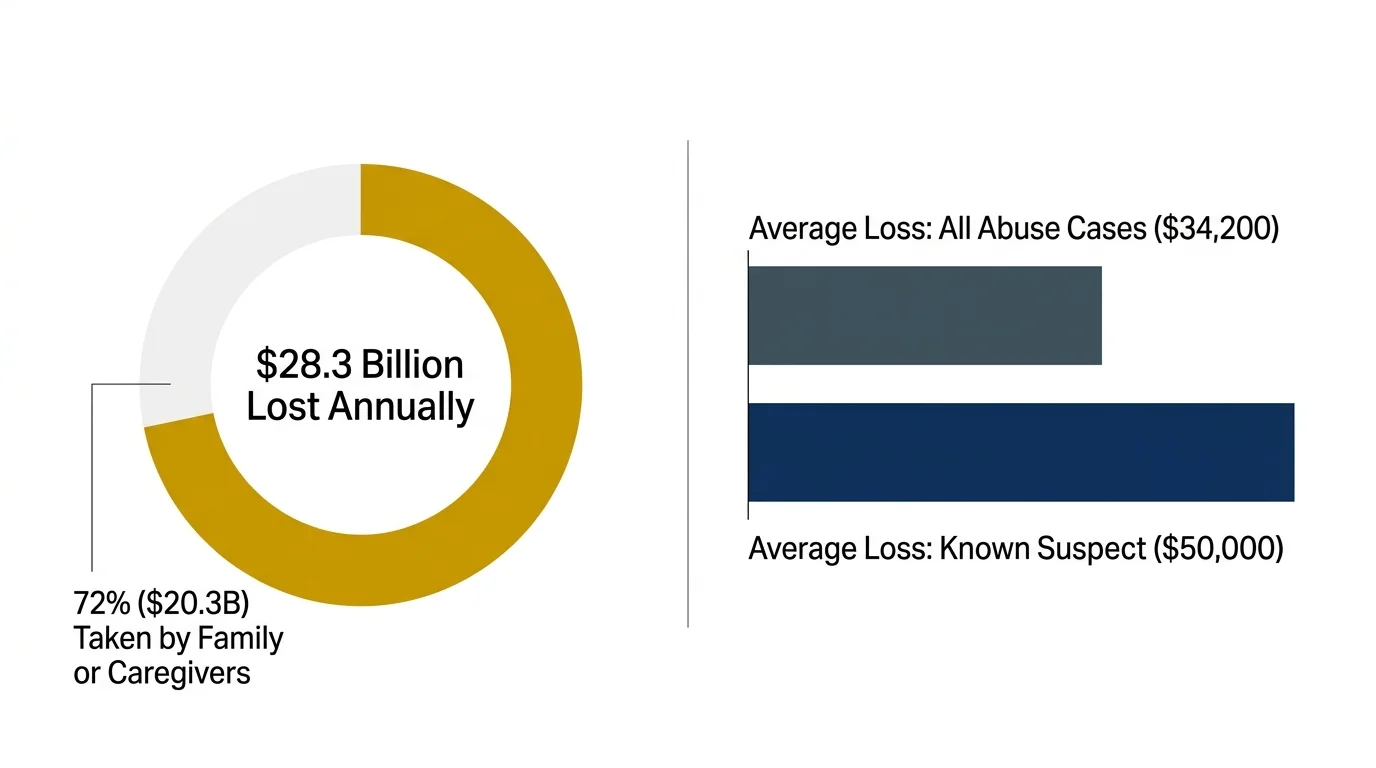
Financial exploitation of older adults is a growing crisis across the United States, yet the most damaging threat rarely comes from anonymous internet scammers or phone fraudsters. Instead, financial mistreatment frequently occurs inside the home, carried out by the very individuals retirees love and trust most. According to research published by AARP, older Americans lose an estimated $28.3 billion every year to financial exploitation, and an overwhelming 72% of that stolen wealth—roughly $20.3 billion—is taken by family members, close friends, or personal caregivers.
When a relative takes advantage of your financial generosity, the financial damage is often far severe than losses caused by stranger scams. Data analyzed by the Consumer Financial Protection Bureau reveals that when an older adult knows the suspect, the average loss jumps to approximately $50,000, compared to an average loss of $34,200 across all financial abuse cases. These losses wipe out life savings, destroy credit scores, and undermine a retiree’s ability to afford quality healthcare, long-term care, or essential housing modifications.
Despite the massive scale of these losses, an estimated 87.5% of older adults victimized by someone they know never report the abuse to law enforcement or social service agencies. Shame, fear of family conflict, guilt, and the terrifying prospect of losing contact with children or grandchildren keep millions of seniors silent. You do not have to endure this isolation; recognizing the signs of elder financial exploitation is the first step toward restoring your personal independence and protecting your financial future.

8 Signs a Family Member Is Financially Exploiting a Retiree
Financial abuse rarely happens overnight; it usually begins with subtle boundary tests that gradually escalate into significant financial theft. Knowing what to look for allows you to intervene before a relative drains your life savings. Here are eight clear signs a family member exploiting retiree assets may be actively taking advantage of you or an aging loved one.
1. Unexplained Bank Withdrawals and Account Transfers
One of the most obvious signs of financial exploitation of elderly individuals is unexplained activity on bank statements. You might notice frequent automated teller machine (ATM) cash withdrawals at unusual hours, online fund transfers to unfamiliar accounts, or recurring withdrawals from long-held savings certificates. If you rarely use debit cards or online banking yourself, but your accounts reflect daily digital transactions, a family member with access to your financial credentials may be siphoning funds without your knowledge.
2. Missing Cash, Valuables, or Personal Belongings
Physical items disappearing from your home often signals improper financial behavior. Family heirlooms, gold jewelry, rare coin collections, high-end electronics, and physical cash kept in drawers or safes suddenly vanish. When confronted, an exploiting relative may claim that you misplaced the item, forgot that you gave it away, or threw it out. This form of gaslighting attempts to make you doubt your memory while the perpetrator pawns your possessions or sells them online for quick cash.
3. Abrupt Changes to Legal Documents and Estate Plans
Pay close attention if a relative suddenly pressures you to modify existing legal structures. Warning signs include unexpected revisions to wills, unexpected beneficiary changes on life insurance policies, or sudden updates to property deeds that add a family member as a joint owner. Furthermore, if a relative insists on becoming your sole Power of Attorney (POA) while excluding other siblings or trusted advisors, they may be preparing to manipulate your estate for personal gain.
4. Social Isolation and Communication Gatekeeping
Exploitative relatives frequently use isolation as a tactic to maintain control. The family member may intercept your incoming mail, answer your personal phone calls, monitor your visits, and make excuses for why other relatives or friends cannot speak with you directly. By cutting off your support system, the abusive relative prevents others from spotting financial irregularities, ensuring you remain entirely dependent on them for news, care, and financial management.
5. Unpaid Bills and Delinquency Notices Despite Ample Income
If you receive steady income from retirement accounts, pensions, or Social Security Administration benefits, yet receive overdue notices for utility bills, medical fees, or property taxes, your money is being redirected. Exploitative family members often take charge of paying bills, only to divert monthly funds into their own personal bank accounts while leaving your basic living expenses completely unpaid.
6. A Relative’s Entitlement Attitude Toward Your Savings
Pay attention to the language your relative uses when discussing your money. Remarks such as “It is going to be my inheritance anyway,” or complaints about how you spend your money on healthcare or comfortable living amenities reveal an improper mindset. An exploiting relative views your hard-earned retirement nest egg as their personal property and resents any expenses that reduce their eventual payout.
7. Unauthorized Credit Cards or Loans Opened in Your Name
A sudden drop in your credit score or calls from debt collection agencies regarding unpaid credit accounts you never opened indicates identity theft within the family. Relatives who have access to your personal information, such as your Social Security number and birth date, can easily open new credit lines, apply for personal loans, or demand that you co-sign auto loans for their personal benefit.
8. Constant “Emergency” Financial Demands and Emotional Guilt-Tripping
Exploitative family members frequently manufacture financial crises to extract money from retirees. They may request urgent cash for sudden car repairs, impending rent evictions, medical emergencies, or business ventures, promising to repay you quickly. These loans are almost never paid back; instead, the requests become more frequent and demanding, leveraging emotional blackmail and guilt to force compliance.
Why Family Members Target Elderly Relatives
Understanding why relatives target older family members helps demystify financial abuse and removes the misplaced shame many seniors feel. Research from the National Center on Elder Abuse reveals that financial exploitation is the most common form of mistreatment when abuse is perpetrated by a family member, accounting for 61.8% of reported incidents. Adult children represent the largest single category of perpetrators, committing roughly 47% of all family-related elder abuse cases.
Several underlying drivers motivate family members to exploit aging relatives:
- Personal Financial Distress: Relatives facing job losses, severe debt, divorce, or poor financial habits often view a retiree’s savings as an easy financial safety net.
- Substance Abuse or Gambling Disorders: Addiction severely impairs judgment and drives individuals to steal money from loved ones to fund their habits.
- Inheritance Impatience: Some adult children feel entitled to their parents’ wealth and rationalize stealing funds earlier as an “advance” on their future inheritance.
- Cognitive Vulnerability: Age-related cognitive changes make seniors particularly vulnerable. Adults aged 70 to 79 suffer the highest average financial losses ($45,300), while retirees aged 80 and older account for one-third of all financial abuse losses nationwide.
Exploitative relatives exploit these conditions by weaponizing family loyalty. They calculate that you will hesitate to involve law enforcement or cut them off financially because you care about their well-being or fear family conflict.

Actionable Steps to Stop Financial Exploitation and Protect Your Assets
If you recognize elder financial abuse warning signs in your life or suspect a family member exploiting retiree funds, you must take firm, deliberate steps to protect your financial security. Taking immediate action stops ongoing losses and preserves your financial independence.
- Revoke Financial Access Immediately: Change your online banking passwords, secure physical checks and credit cards, and revoke any financial Power of Attorney documents that grant the relative access to your accounts. Provide written revocation notices to your financial institutions.
- Set Up Account Notifications and Trusted Contacts: Instruct your bank and brokerage firms to send real-time text or email alerts for every transaction exceeding a specific limit (e.g., $100). Designate a neutral, trusted third party—such as a certified professional executor or fiduciary—as a designated contact person on your accounts.
- Place a Credit Freeze on Your Credit Bureau Files: Contact the three major credit bureaus (Equifax, Experian, and TransUnion) to freeze your credit reports. A credit freeze prevents anyone from opening new loans or credit card accounts in your name without your explicit consent.
- Report Suspected Exploitation to Local Authorities: Reach out to your local Adult Protective Services (APS) agency or law enforcement. To locate your local protective agency safely, you can use the Eldercare Locator, a public service provided by the Administration for Community Living (ACL).
The following table outlines key financial warning signs alongside immediate action steps and permanent safeguards to protect your assets:
| Exploitation Warning Sign | Immediate Action Step | Long-Term Preventive Solution |
|---|---|---|
| Unexplained bank withdrawals or transfers | Notify your bank’s fraud department and change online passwords. | Require dual signatures for checks over a set threshold or hire an independent fiduciary. |
| Pressure to alter legal estate documents | Refuse to sign documents and contact your legal counsel privately. | Establish a Revocable Living Trust managed by a professional corporate trustee. |
| Unpaid utility or housing bills | Set up automated direct bill pay directly through your financial institution. | Appoint a representative payee or professional money manager for daily expenses. |
| Unauthorized loans or credit card accounts | Place a fraud alert and freeze your file at all three major credit bureaus. | Monitor credit reports quarterly and secure your Social Security number. |
Common Mistakes to Avoid When Dealing with Family Exploitation
Protecting yourself requires avoiding common emotional pitfalls that exploitative family members rely on. Recognizing these mistakes helps you make clear decisions that protect your health and wealth.
Mistake 1: Remaining Silent Out of Shame or Family Guilt
Many retirees feel deeply embarrassed when an adult child or grandchild steals from them, believing it reflects poorly on their parenting. You are not responsible for another adult’s unethical choices. Remaining silent allows the financial drainage to continue until your funds are exhausted.
Mistake 2: Relying on Verbal Agreements for Financial Support
Lending money to family members based solely on verbal promises rarely works. Without formal legal contracts, clear repayment timelines, and documented terms, informal financial arrangements invite dispute, misunderstanding, and deliberate non-payment.
Mistake 3: Granting Unrestricted Power of Attorney
Giving a single family member complete, unmonitored Power of Attorney creates severe risks. Always require financial accounting reports to be sent periodically to a secondary family member, legal professional, or CPA to maintain transparency.
Mistake 4: Dismissing Small Initial Discrepancies
Ignoring a missing $50 bill or a small unauthorized debit charge encourages perpetrators to attempt larger thefts. Address every financial irregularity immediately to establish firm boundaries.

Legal and Financial Tools to Prevent Future Exploitation
Taking control of your estate planning provides strong legal defenses against family financial abuse. Modern financial structures offer built-in safeguards designed specifically for protecting retirees from financial abuse.
Revocable Living Trusts with Corporate Trustees
Creating a revocable living trust allows you to retain control over your assets while appointing a trust department at a bank or independent trust company as a co-trustee. Corporate trustees act as neutral fiduciaries bound by strict legal duties; they will refuse requests for unauthorized family withdrawals or improper document changes.
Professional Daily Money Managers (DMMs)
If managing monthly bills becomes overwhelming, consider hiring a certified Daily Money Manager. DMMs handle routine financial administration—paying utility bills, balancing checkbooks, and organizing tax documents—without granting them access to take ownership of your assets. This keeps family members away from checkbooks while ensuring bills are paid on time.
Read-Only Account Access for Family Members
If you want a trusted relative to help monitor your finances without giving them withdrawal privileges, set up read-only access with your bank. This allows them to monitor statements for fraudulent activity without granting them the ability to move or spend your money.
Frequently Asked Questions
What should I do if a family member refuses to show me my bank statements?
If a relative managing your money refuses to provide transparent account statements, contact your financial institution directly to request statements sent to a secure address or email account. You can also report financial withholding to Adult Protective Services, as restricting access to your own money is a recognized form of elder financial exploitation.
Can a Power of Attorney be revoked if the relative is abusing their power?
Yes, you can revoke a Power of Attorney at any time as long as you possess mental capacity. You must sign a written Revocation of Power of Attorney document, have it notarized, and deliver official copies to your bank, healthcare providers, and county clerk’s office. Consult an elder law attorney to ensure proper execution.
How can I protect my Social Security income from an abusive family member?
You can safeguard your monthly benefits by setting up direct deposit into a secure, single-owner bank account that no family member can access. If a relative acts as your designated Representative Payee and misuses your funds, contact the Social Security Administration immediately to request a formal audit and appoint a new payee.
Will reporting financial exploitation to Adult Protective Services result in criminal charges for my relative?
Adult Protective Services focuses primarily on stopping abuse, securing your financial safety, and connecting you with social support resources. While APS coordinates with law enforcement in severe criminal cases, filing an APS report does not automatically result in immediate criminal prosecution; its primary goal is protecting your health, rights, and financial security.
How do I differentiate between legitimate family financial assistance and financial abuse?
Legitimate assistance is transparent, voluntary, fully documented, and focused entirely on your care and comfort. Financial abuse involves secrecy, pressure, unauthorized transactions, emotional manipulation, or actions that leave you struggling to cover your own living expenses.
For additional senior resources, visit
Centers for Disease Control and Prevention (CDC), Medicare.gov, National Institute on Aging (NIA) and National Institutes of Health (NIH).
Disclaimer: The information in this article is for educational purposes only and is not intended to be a substitute for professional financial, legal, or medical advice. Always consult with a qualified expert for advice tailored to your personal situation.









Leave a Reply