

Navigating your post-work years requires a clear understanding of reality, yet false retirement beliefs frequently derail even the best-laid financial plans. Relying on outdated assumptions about spending, healthcare costs, tax rates, and Social Security can jeopardize your long-term independence and drain your hard-earned savings far sooner than expected. By uncovering solid financial advisor retirement advice, you can replace pervasive retirement planning myths with proven, actionable strategies. Dispel these common retirement misconceptions today so you can protect your portfolio, minimize unnecessary taxes, make confident lifestyle choices, and enjoy the comfortable, secure retirement you have worked a lifetime to achieve.
The Shifting Reality of Modern Retirement
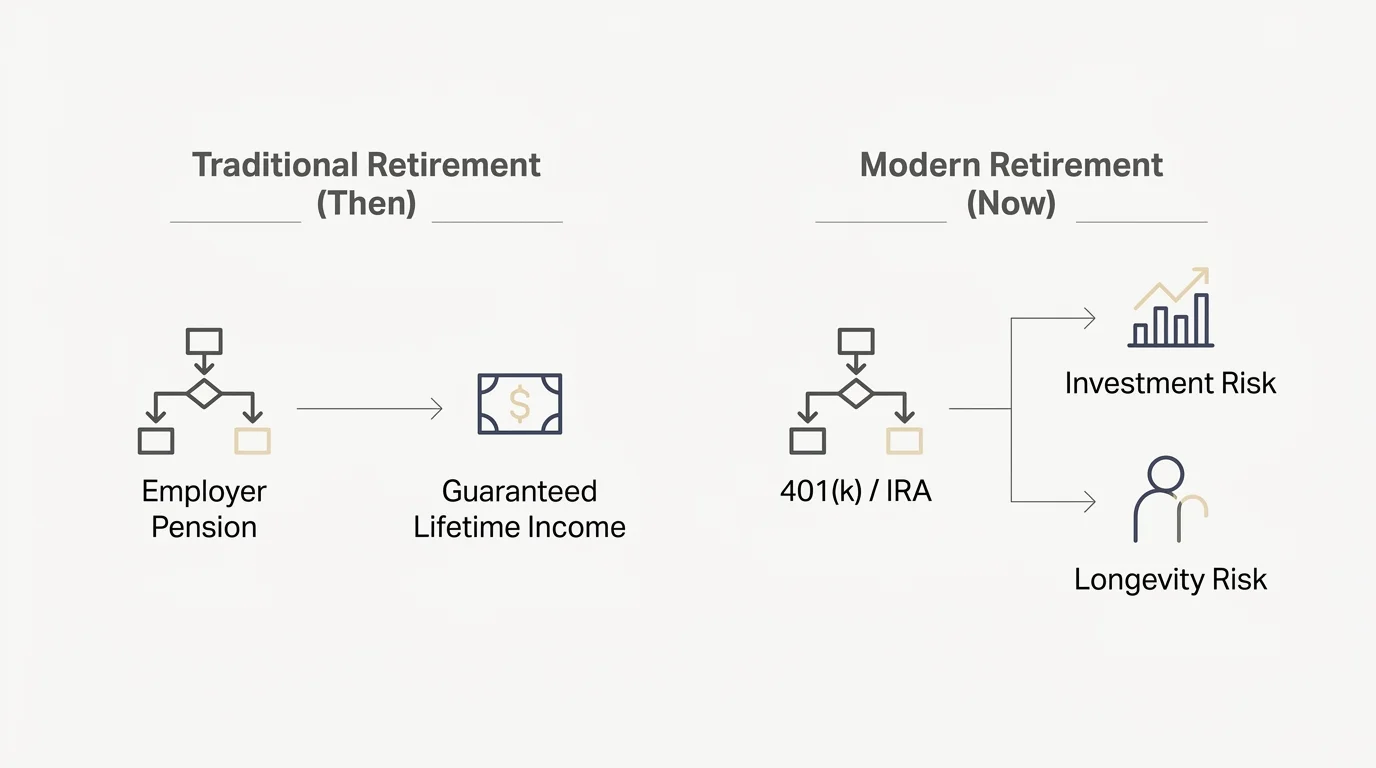
Retirement in America looks vastly different today than it did a generation ago. Decades ago, traditional employer pensions provided guaranteed income for life, and shorter lifespans meant retirement accounts only needed to stretch for ten or fifteen years. Today, defined-contribution plans like 401(k) accounts have largely replaced pensions; shifting the entire burden of investment risk and income management directly onto your shoulders.
Living longer is a wonderful gift, but it presents a major financial challenge: longevity risk. If you retire at age 65, you must plan for a retirement that could easily span 25 to 30 years. Relying on outdated advice or simplified math can leave you vulnerable during your later years. Uncovering the truth behind false retirement beliefs allows you to build a resilient financial framework that withstands inflation, market swings, and unexpected medical expenses.

Myth 1: You Will Spend Far Less Money Once You Stop Working
A classic rule of thumb suggests that you will only need 70% to 80% of your pre-retirement income once you leave the workforce. While you certainly eliminate work-related expenses like commuting, professional wardrobes, and daily business lunches, other expenditures rapidly fill that gap. In reality, modern retirees often experience three distinct spending phases throughout their retirement journey.
- The “Go-Go” Phase (Ages 60–75): You have abundant free time and good health. Spending on travel, dining out, home improvements, and long-postponed hobbies often causes overall expenditure to equal or exceed pre-retirement levels.
- The “Slow-Go” Phase (Ages 75–85): Activity levels decline, and travel slows down. Discretionary spending decreases, leading to a temporary stabilization in your annual cash flow requirements.
- The “No-Go” Phase (Ages 85+): While travel expenses vanish, medical expenses, home modification needs, and personal assistance costs surge—frequently making this phase the most expensive of all.
Rather than assuming your budget will automatically shrink on day one, build a detailed budget based on your desired lifestyle. Factoring in inflation and early-retirement travel plans ensures your nest egg supports you comfortably throughout every season of life.

Myth 2: Medicare Covers All Healthcare and Long-Term Care Needs
Assuming Medicare will pay for all your medical bills is one of the most dangerous common retirement misconceptions. While Medicare provides excellent essential coverage for hospitalizations and doctor visits, it contains substantial coverage gaps that catch many older adults completely unprepared.
According to comprehensive estimates from Fidelity Investments, a 65-year-old individual retiring in 2026 can expect to spend approximately $185,500 out-of-pocket on healthcare expenses throughout retirement. For a married couple, that total jumps to roughly $371,000—and that figure assumes you enroll in Original Medicare!
Crucially, Original Medicare (Parts A and B) does not pay for long-term custodial care—the ongoing personal assistance required for daily living activities like bathing, dressing, eating, or moving safely around your home. Yet, statistics reveal that approximately 70% of adults turning 65 will require long-term care services at some point. National data shows median costs reaching roughly $70,800 per year for assisted living communities and surpassing $127,000 per year for a private room in a skilled nursing facility.
According to guidance from Medicare.gov, beneficiaries must plan ahead for routine dental care, vision exams, hearing aids, and non-skilled daily care, as standard Medicare coverage excludes these items entirely.
| Expense Category | Original Medicare Coverage | Average Out-of-Pocket Liability |
|---|---|---|
| Hospitalization (Part A) | Covered after deductible | Deductibles and daily copays for long stays |
| Doctor & Outpatient (Part B) | Covered at 80% after deductible | 20% co-insurance with no out-of-pocket maximum |
| Prescription Drugs (Part D) | Requires separate plan | Monthly premiums, copays, and formulary limits |
| Assisted Living Facility | Not Covered | ~$70,800 annually (national median) |
| Private Nursing Room | Not Covered | >$127,000 annually (national median) |
To insulate your portfolio against medical shocks, consider dedicated long-term care insurance, hybrid life insurance policies with long-term care riders, or maintaining a dedicated high-yield health savings balance.
Myth 3: You Should Claim Social Security as Soon as You Turn 62
The moment you turn 62, you become eligible to claim Social Security retirement benefits. Reaching for that check immediately is tempting, but doing so without evaluating the long-term mathematical impact is a mistake financial advisors routinely fight to correct.
Social Security is designed to replace approximately 30% to 50% of an average worker’s pre-retirement earnings. In 2026, the average monthly Social Security benefit sits between $1,976 and $2,071. However, your actual payout depends heavily on when you file:
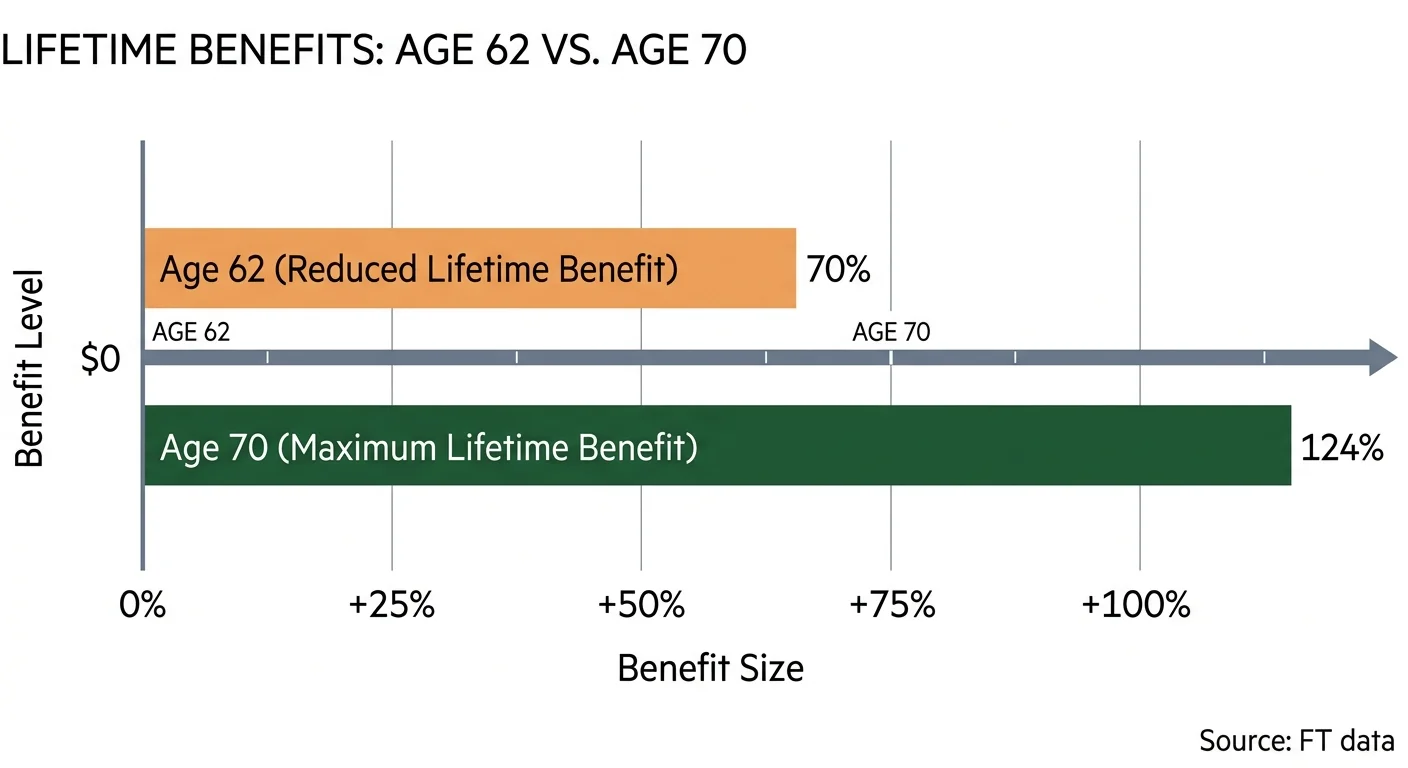
- Early Claiming (Age 62): Filing at 62 permanently reduces your monthly check by up to 30% compared to your Full Retirement Age baseline.
- Full Retirement Age (FRA): For anyone born in 1960 or later, your FRA is exactly 67. Claiming at FRA yields 100% of your earned benefit.
- Delayed Claiming (Up to Age 70): For every year you delay claiming past your FRA, you earn delayed retirement credits of 8% per year. Waiting until age 70 permanently boosts your monthly benefit payout by 24%.
Planning your Social Security claiming strategy is crucial for establishing reliable lifetime cash flow. According to the Social Security Administration (SSA), delaying benefits past your full retirement age offers a guaranteed, inflation-protected increase that no commercial financial product can match.
If you are in good health and have other assets to draw from during your early 60s, delaying Social Security creates a significantly higher income floor for the rest of your life—and provides maximum survivor protection for your spouse.
Myth 4: The 4% Rule Guarantees You Will Never Run Out of Money
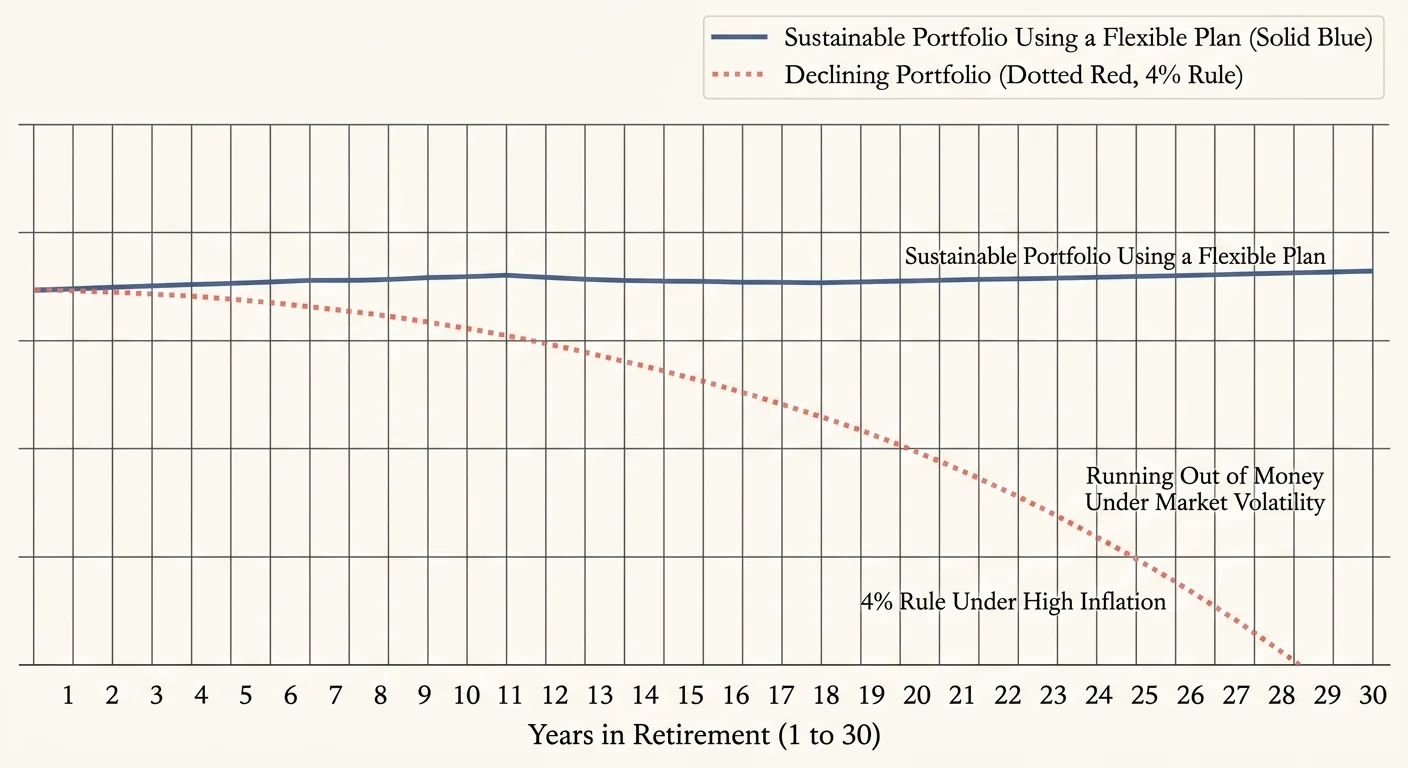
First popularized in the mid-1990s, the “4% Rule” suggests that if you withdraw 4% of your total portfolio value during your first year of retirement—and adjust that exact dollar amount upwards for inflation each subsequent year—your savings will last for at least 30 years.
While this rule offers a helpful baseline estimate, financial advisors warn against treating it as an unchangeable law. The primary flaw with a rigid 4% withdrawal rate is its inability to account for sequence-of-returns risk. If market downturns strike during the first few years of your retirement, continuing to withdraw fixed inflation-adjusted dollar amounts permanently cannibalizes your principal, leaving fewer assets to bounce back when markets recover.
Instead of relying on a static percentage, adoption of dynamic withdrawal strategies—often called “guardrails”—is far more effective:
- Set an Initial Rate: Start with a reasonable baseline withdrawal rate between 3.5% and 4.5% based on market valuations and your portfolio mix.
- Apply Market Guardrails: If your portfolio experiences a severe loss, temporarily freeze annual inflation raises or reduce discretionary spending by 3% to 5%.
- Take Advantage of Market Surges: When investment returns exceed expectations, give yourself a modest raise to fund travel or family gifts.
Flexible spending rules keep your portfolio intact during market pullbacks, providing peace of mind regardless of Wall Street fluctuations.
Myth 5: You Must Shift All Investments to Low-Risk Safe Assets
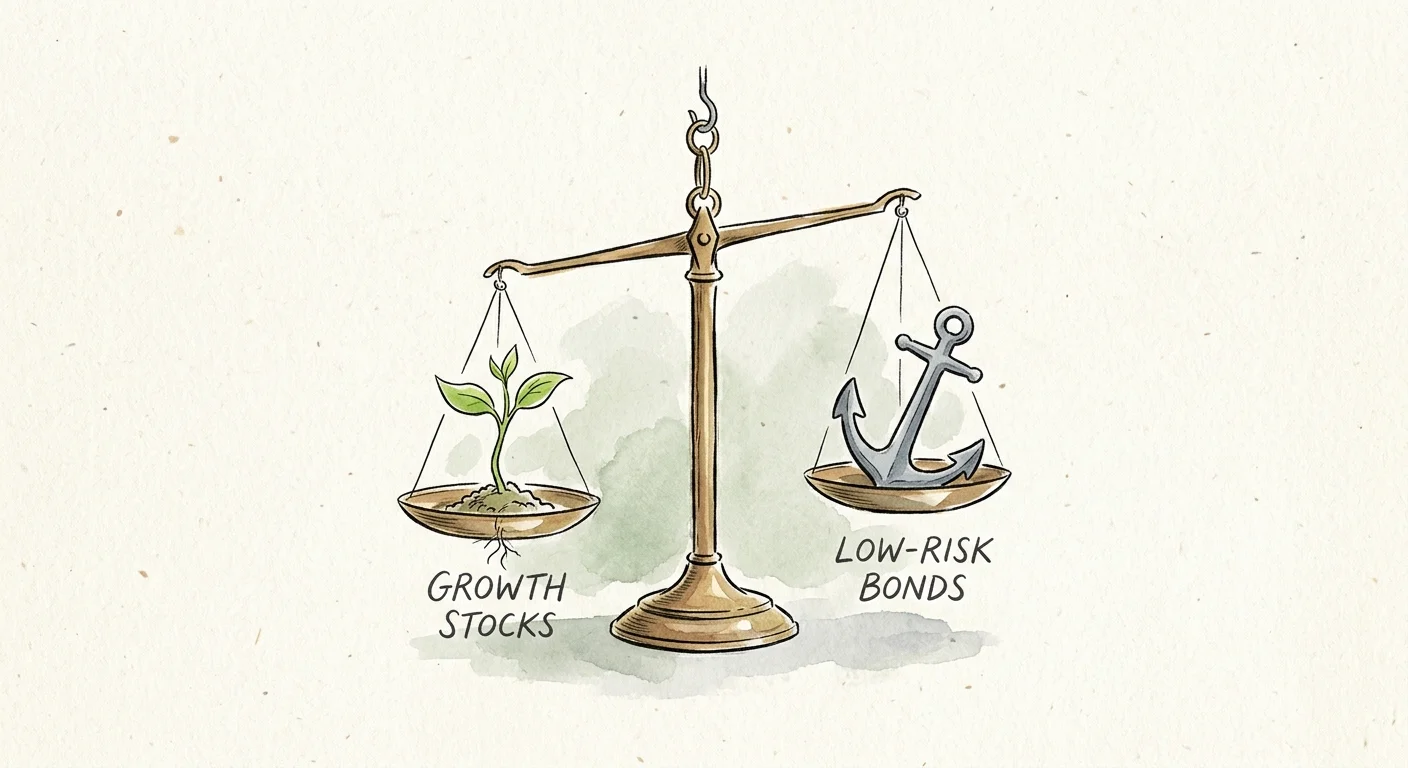
An old rule of thumb advised subtracting your age from 100 to determine your equity allocation percentage. Following that logic, a 70-year-old would hold only 30% in stocks and 70% in conservative bonds or cash. However, following this approach today introduces a subtle yet catastrophic danger: purchasing power erosion.
While cash and fixed-income assets shield your capital from daily stock market volatility, they offer very little protection against persistent inflation. Over a 25-year retirement, even a moderate 3% inflation rate reduces the real purchasing power of your money by more than half. If your entire portfolio yields 2% in high-yield savings accounts or low-coupon bonds, you guarantees a real-dollar loss year after year.
Solid financial advisor retirement advice emphasizes holding a balanced, growth-oriented portfolio throughout your 60s, 70s, and beyond. Maintaining a 40% to 60% allocation in high-quality dividend-paying equities or broad market index funds gives your portfolio the growth potential needed to outpace inflation. Pair this with a liquid cash cushion—holding 2 to 4 years of net spending needs in safe assets—so you never have to sell stocks during a temporary market dip.

Myth 6: Taxes Will Be Significantly Lower in Retirement
Many pre-retirees assume that stopping work means jumping down to the lowest tax brackets. Unfortunately, taxes do not automatically disappear when you receive your final paycheck. Unplanned tax obligations are among the most common false retirement beliefs seniors face.
When you withdraw money from traditional 401(k)s or IRAs, every dollar counts as ordinary income. Furthermore, federal regulations force you to take Required Minimum Distributions (RMDs) once you reach a certain age—whether you need the income or not.
Thanks to the SECURE 2.0 Act, the required beginning age for RMDs stands at 73 for those born between 1951 and 1959, and rises to 75 starting in 2033 (for individuals born in 1960 or later). Large tax-deferred balances can generate massive mandatory distributions, pushing you into higher tax brackets and triggering additional tax traps.
- Taxed Social Security Benefits: Up to 85% of your Social Security payments become subject to federal income tax if your combined income (adjusted gross income + nontaxable interest + 50% of your Social Security benefit) exceeds $25,000 for single filers or $32,000 for married couples filing jointly.
- Medicare IRMAA Surcharges: Income spikes from large RMDs can trigger Income-Related Monthly Adjustment Amounts (IRMAA), adding hundreds of dollars in monthly surcharges to your Medicare Part B and Part D premiums.
To prevent tax surprises, work with a professional to execute partial Roth IRA conversions during your early retirement years (between retirement and age 73) to lock in lower tax rates and shrink future mandatory distributions.

Myth 7: Estate Planning Is Only for Wealthy Seniors
Many seniors delay estate planning because they believe it is strictly an exercise for multi-millionaires attempting to avoid federal estate taxes. In truth, comprehensive estate planning is vital for every single older adult, regardless of account balances.
Estate planning is not just about what happens to your property after you pass away; it governs how your medical care and financial decisions are handled if you become temporarily or permanently incapacitated. Essential estate documents every senior needs include:
- Durable Power of Attorney: Authorizes a trusted individual to manage your financial accounts, pay bills, and handle legal matters if you are unable to do so.
- Healthcare Power of Attorney & Living Will: Names a designated surrogate to make medical decisions on your behalf and outlines your specific preferences regarding life-prolonging treatments.
- Updated Beneficiary Designations: Ensures your primary financial accounts, IRAs, and insurance policies pass directly to your loved ones without entering lengthy and expensive probate court proceedings.
Clearing up these retirement planning myths preserves your autonomy, protects your spouse, and eliminates unnecessary stress and legal expenses for your family during difficult times.

Protecting Yourself from Financial Pitfalls and Senior Fraud
Dispelling retirement myths debunked by modern research also requires safeguarding your accumulated savings against predatory practices and financial fraud. Seniors are primary targets for dishonest salespeople pushing overly complex products, high-fee investment schemes, and outright scams.
According to consumer research published by AARP, older Americans lose billions of dollars annually to financial scams ranging from imposter phone calls to aggressive high-commission financial products that lock up liquidity.
Protecting your hard-earned financial independence requires implementing several straightforward precautions:
- Establish Trusted Contacts: Official guidance from the Consumer Financial Protection Bureau (CFPB) advises adding designated “trusted contacts” to all bank and brokerage accounts. This enables financial institutions to reach out to a designated family member or advisor if they detect suspicious account activity or potential cognitive decline.
- Beware of Complex, High-Fee Products: Be cautious when aggressive salespeople pitch products offering “guaranteed returns with zero risk.” Always request full, written disclosure of commissions, surrender charges, and management fees.
- Leverage Community Resources: Local agencies funded through the Administration for Community Living (ACL) provide objective, unbiased benefit counseling and consumer protection resources to help seniors evaluate options safely.
Frequently Asked Questions
What is the biggest unexpected expense seniors face in retirement?
Out-of-pocket healthcare costs and long-term custodial care represent the single largest unexpected financial drain for retirees. Because standard Medicare does not pay for non-skilled home health aides, assisted living facilities, or nursing home care, these costs must be paid out-of-pocket unless you hold dedicated long-term care insurance or qualify for Medicaid.
How does SECURE 2.0 change my Required Minimum Distributions (RMDs)?
The SECURE 2.0 Act raised the mandatory RMD age to 73 for anyone born between 1951 and 1959. If you were born in 1960 or later, your starting age for RMDs increases to 75 beginning in 2033. This extra time allows you additional flexibility to convert traditional tax-deferred assets into Roth accounts at lower tax brackets.
Can I work part-time in retirement without losing my Social Security benefits?
Yes, but if you claim Social Security before reaching your Full Retirement Age (FRA), your benefits are subject to an earnings test limit. If your earned wages exceed annual thresholds, $1 in benefits is temporarily withheld for every $2 or $3 earned above the limit. Once you reach your FRA, earnings no longer reduce your monthly checks, and withheld benefits are recalculated back into your monthly payout.
How much cash should I keep in emergency reserves after I retire?
Financial advisors generally recommend keeping 1 to 2 years of net living expenses in liquid cash (such as high-yield savings or money market accounts), plus an additional 2 to 3 years of expenses in short-term conservative bonds. This 3-to-5-year safety buffer allows you to cover essential living costs during severe stock market downturns without selling equities at a loss.
What is the safest way to protect my retirement income from inflation?
Combating inflation requires maintaining a diversified portfolio that includes growth assets like broad-market equities and dividend-growth stocks. Additionally, delaying your Social Security claim provides a built-in, inflation-adjusted income stream, as Social Security benefits receive annual Cost-of-Living Adjustments (COLA) linked to consumer price changes.
For additional senior resources, visit Alzheimer’s Association, American Heart Association, Benefits.gov, National Institute on Aging (NIA) and Centers for Disease Control and Prevention (CDC).
Disclaimer: The information in this article is for educational purposes only and is not intended to be a substitute for professional financial, legal, or medical advice. Always consult with a qualified expert for advice tailored to your personal situation.








Leave a Reply