

Your residential mailing address may hold the key to hundreds of extra dollars in financial assistance every single month. Recent headlines often talk about location-based benefits, but widespread confusion makes it difficult to separate fact from online fiction.
While your standard retirement check remains uniform across state borders, dozens of local programs tie real cash supplements directly to where you live. Knowing how your territory shapes these programs can put valuable dollars back into your wallet.
From utility allowances to healthcare credits, your neighborhood boundaries affect your overall retirement budget. You can easily claim these regional adjustments once you understand which agencies oversee each specific payout.
The Truth About ZIP Code Social Security Rumors
Many retirees encounter online advertisements promising a secret regional social security increase based on their home address. These misleading promotions often twist genuine federal policies to capture your personal contact information.
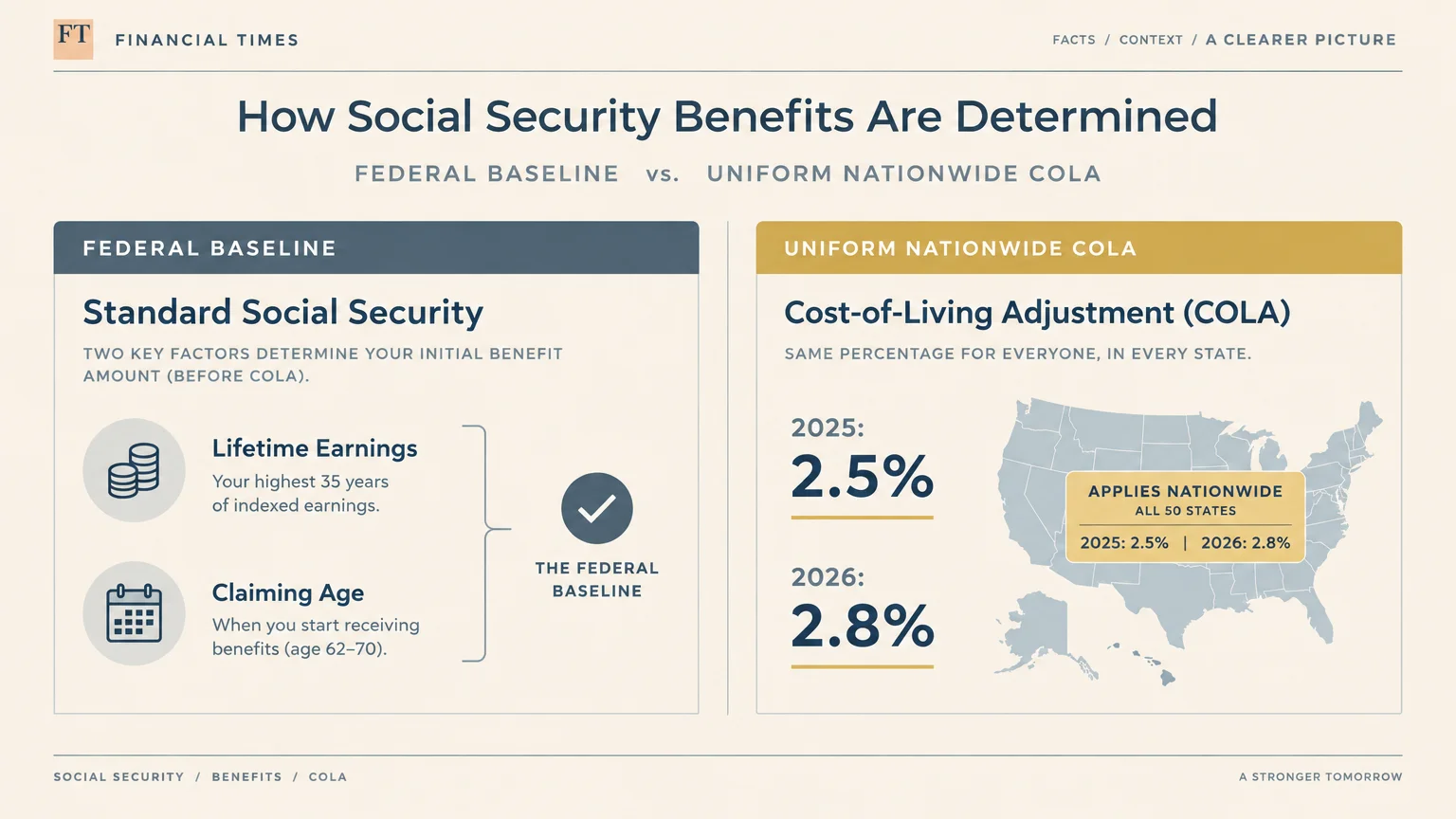
The plain reality is clear; standard Social Security retirement and disability payments do not vary by postal code. Your lifetime earnings history and claiming age alone dictate your monthly federal baseline payment.
According to the Social Security Administration (SSA), federal cost-of-living adjustments apply uniformly nationwide. Every beneficiary receives the exact same annual percentage adjustment regardless of where they live.
The nationwide cost-of-living adjustment was 2.5% in 2025 and 2.8% in 2026 across all fifty states. Living in an expensive metropolitan market does not lift your base federal check.
Online confusion persists because marketers intentionally blur standard retirement insurance with separate localized assistance programs. They use terms like zip code social security to attract curious retirees searching for breathing room in their budgets.
While your core retirement check stays steady, location based social security supplements do exist through distinct state and county relief programs. Recognizing this difference protects you from financial scams while helping you locate genuine aid.
You can safeguard your personal records by disregarding any promoter who claims they can alter your federal retirement formula. Instead, focus your energy on the authentic regional subsidies designed for your specific community.
Supplemental Security Income and State Supplementary Payments
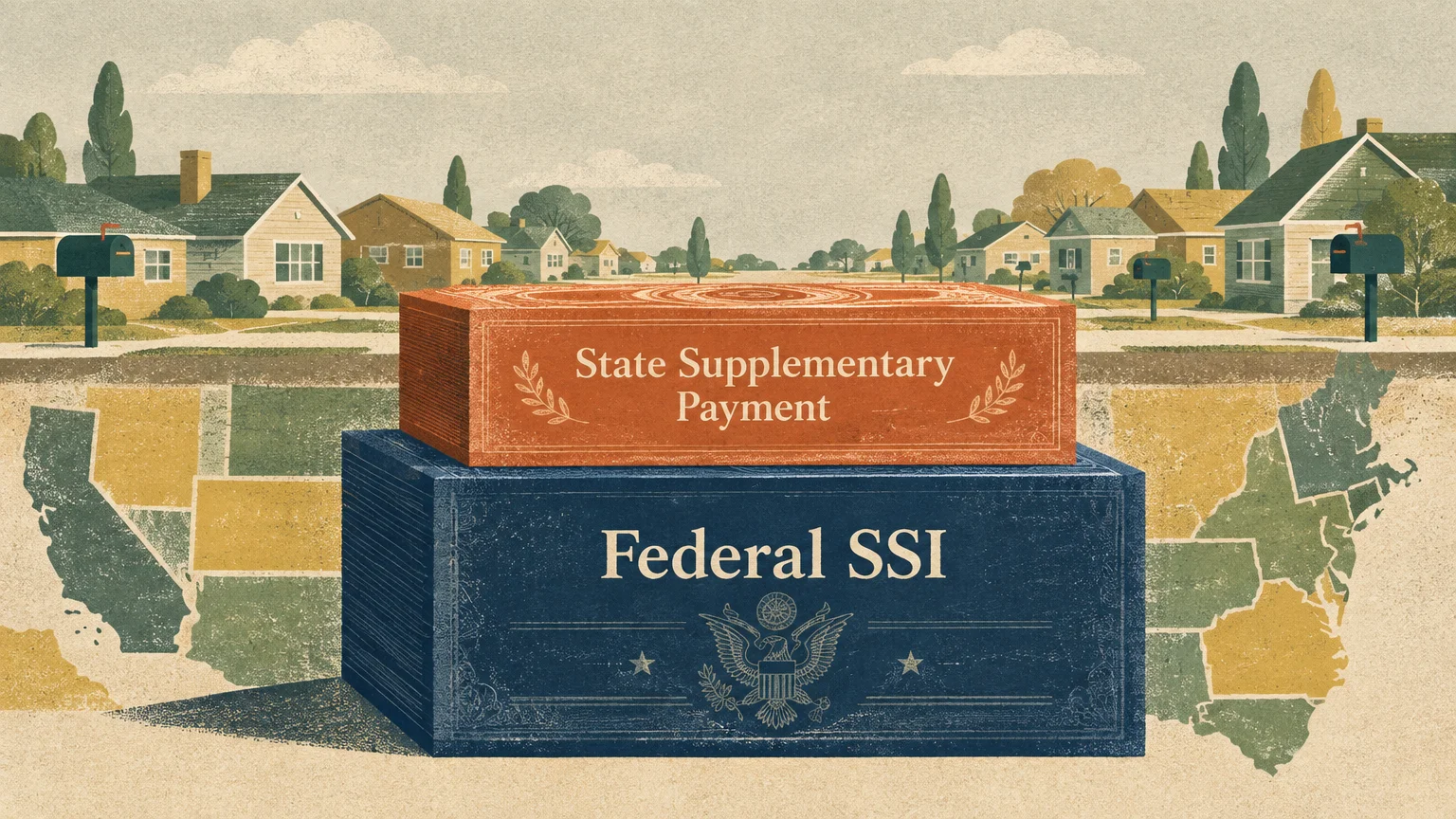
While standard retirement insurance remains fixed, Supplemental Security Income presents a very different financial structure. Over forty states provide an additional monthly cash stipend known as a State Supplementary Payment.
The federal baseline for Supplemental Security Income is $994 per month for an individual and $1,491 for a couple in 2026. State-funded supplements build directly on top of these standard federal payments.
These supplemental disbursements represent real cost of living benefits determined by state legislatures. Where you choose to live can produce a substantial difference in your total monthly cash flow.
States such as California, New York, and Pennsylvania provide significant extra funding to offset elevated regional expenses. Other states offer targeted allowances designed specifically for seniors living in specialized adult care settings.
In some jurisdictions, administrators even vary these supplements by county or municipal district. As a result, genuine zip code benefits exist for low-income seniors residing within participating county lines.
You generally apply for these state supplements through your local county social services department or federal portals. Checking your regional payment schedule ensures you receive every dollar authorized by your state legislature.
| State / Jurisdiction | Program Structure | Typical Monthly Add-On (2026 Est.) | Administering Agency |
|---|---|---|---|
| California | Statewide SSP Addition | $200 to $400+ depending on living arrangement | Social Security Administration / State DSS |
| New York | State Supplement Program (SSP) | $87 to $100+ for independent living | New York OTDA |
| Pennsylvania | State Supplementation | $27 to $400+ based on care needs | Pennsylvania Department of Human Services |
| Nevada | Targeted Supplementary Aid | $100 to $390 for residential care settings | Nevada Aging and Disability Services |
| Texas | Facility-Based Assistance Only | Varies; limited to adult foster or care homes | Texas Health and Human Services |
As the table highlights, state supplementary amounts depend heavily on your physical living arrangement. Seniors residing in supportive group housing often qualify for significantly higher monthly adjustments.
Reviewing your regional eligibility criteria can quickly uncover hidden monthly funds. Local welfare agencies publish detailed charts showing maximum monthly payments for every qualifying living situation.
Medicare Part B Giveback Benefits by Location
Healthcare spending represents one of the clearest examples of location-based financial differences for older adults. Private Medicare Advantage plans establish their provider networks, monthly premiums, and auxiliary perks strictly by county and postal zone.
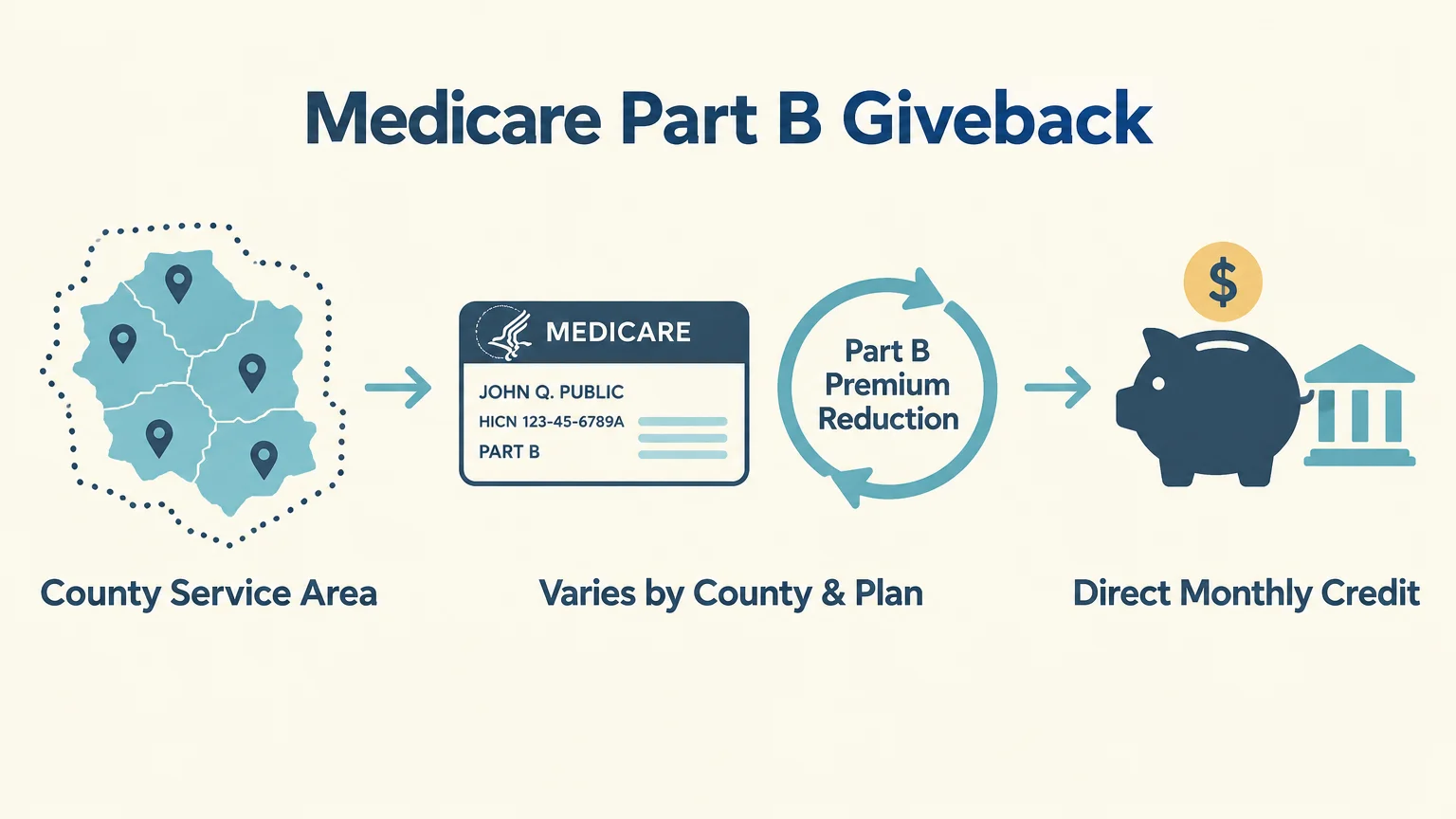
In highly competitive metropolitan regions, insurance carriers frequently offer a Medicare Part B giveback benefit. This popular feature credits money directly back onto your monthly Social Security retirement deposit.
Rather than paying the standard Part B premium out of your check, the carrier covers part or all of that cost. This rebate immediately increases your monthly take-home income.
You can research plan availability in your neighborhood by using Medicare.gov. The official plan finder tool illustrates how plan features shift when you cross a county line.
In addition to premium rebates, regional plans often provide monthly allowances for groceries, home utilities, and over-the-counter medicine. Insurers target these benefit packages to dense population centers with abundant medical networks.
Moving just a few miles down the road can completely alter your available healthcare subsidies. Always verify local network agreements before switching plans during the annual fall enrollment period.
Rural communities sometimes feature fewer plans offering these generous cash rebates due to smaller healthcare provider networks. However, regional plans often substitute alternative perks, such as generous medical transportation allowances.
Take time each autumn to review your Annual Notice of Change to see what new benefits have entered your postal district. Insurers adjust their regional offerings annually based on local healthcare contracts.

Targeted Outreach: Extra Help and Medicare Savings Programs
Federal agencies use postal data to locate households that qualify for financial assistance but have never applied. The Social Security Administration actively mails notification packets to postal districts showing lower median household incomes.
If you open your mailbox and find official letter SSA-L447 or SSA-L448, pay close attention. These letters indicate that your household likely qualifies for substantial prescription drug assistance.
According to the Centers for Medicare & Medicaid Services (CMS), qualifying for the Extra Help program saves seniors an average of $6,200 each year. This federal program pays prescription drug deductibles, monthly premiums, and retail copayments.
State-run Medicare Savings Programs work alongside these federal drug subsidies to cover your Part B premiums. Many states enforce higher income limits, enabling more neighborhood residents to access these savings.
Do not discard these agency mailings as promotional junk mail. Opening official correspondence promptly ensures you never miss a vital enrollment window.
The application for Extra Help requires basic information about your monthly income and household assets. Many seniors complete the entire submission online in less than twenty minutes.
Once approved, your pharmacy automatically updates its records to reflect your reduced copayments. You will notice immediate savings the next time you pick up routine maintenance prescriptions.
Housing Assistance and HUD Small Area Fair Market Rents
Housing expenses place an intense strain on older Americans living on fixed incomes. To address dramatic rent spikes within single metropolitan markets, the federal government reformed how it calculates rental vouchers.
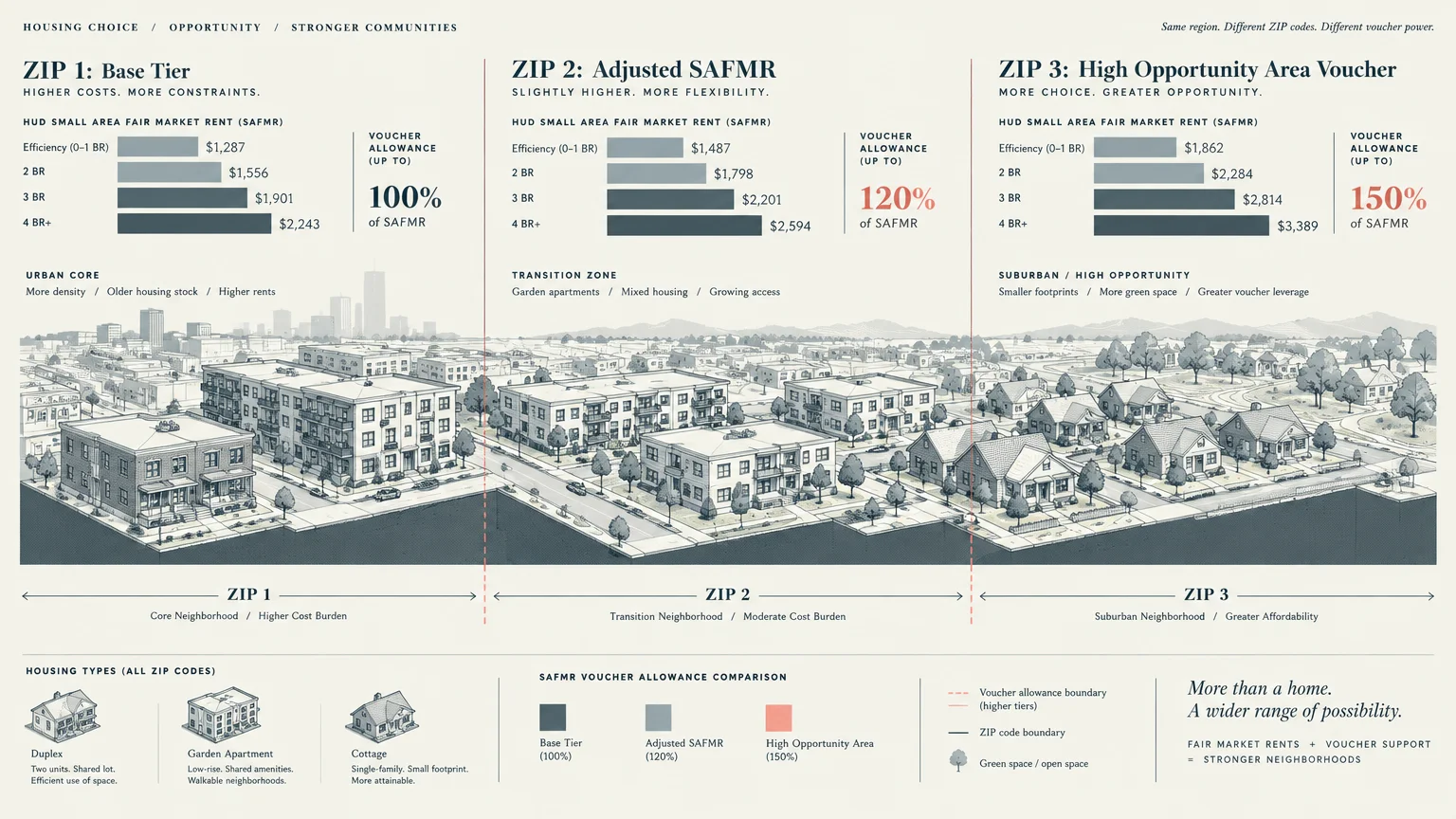
The Department of Housing and Urban Development now calculates Small Area Fair Market Rents using individual postal zones. This granular formula replaces broad regional averages with localized neighborhood pricing data.
If you participate in the Housing Choice Voucher program, your monthly voucher amount directly reflects rent prices on your specific street. Seniors residing in higher-cost neighborhoods receive larger monthly vouchers to meet rising rent obligations.
This localized calculation prevents older adults from being displaced from familiar communities where they have lived for decades. It ensures you can afford safe housing near your family members, pharmacies, and religious centers.
Local public housing authorities distribute these vouchers based strictly on regional rental metrics. Inquiring about your neighborhood payment standard gives you clear insight into your available housing support.
Even if you do not use vouchers, many municipalities run local property tax freeze initiatives. These programs lock in real estate assessments for long-term homeowners who meet local age criteria.
Call your county tax assessor to find out if your street qualifies for homestead tax exemptions. Lowering your annual property tax bill provides permanent relief without requiring you to move.

Local Community Care and the PACE Program
Aging in place remains the primary goal for millions of retirees across the country. Specialized community programs provide the comprehensive medical and personal assistance needed to maintain your independence safely.
The Program of All-Inclusive Care for the Elderly, commonly known as PACE, coordinates medical treatment, therapy, and personal care. Its primary mission is keeping nursing home-eligible seniors living comfortably at home.
You can search for registered community assistance initiatives and localized support programs through Benefits.gov. The database lets you search for available state and federal programs tailored to your address.
Enrollment in a PACE center is restricted strictly to designated service boundaries. If your home falls outside the organization’s designated geographic territory, you cannot access that specific provider network.
For qualifying seniors within the boundaries, PACE covers adult day care, prescription delivery, primary medical care, and specialized transportation. These services eliminate overwhelming out-of-pocket costs while keeping you in your cherished residence.
Interdisciplinary teams manage every detail of your health plan, from dietary requirements to physical rehabilitation. This integrated care model dramatically reduces stressful emergency room visits and hospital admissions.
If you have both Medicare and Medicaid, PACE services often carry zero monthly out-of-pocket costs. Checking local provider maps will confirm whether your neighborhood falls within an active service territory.
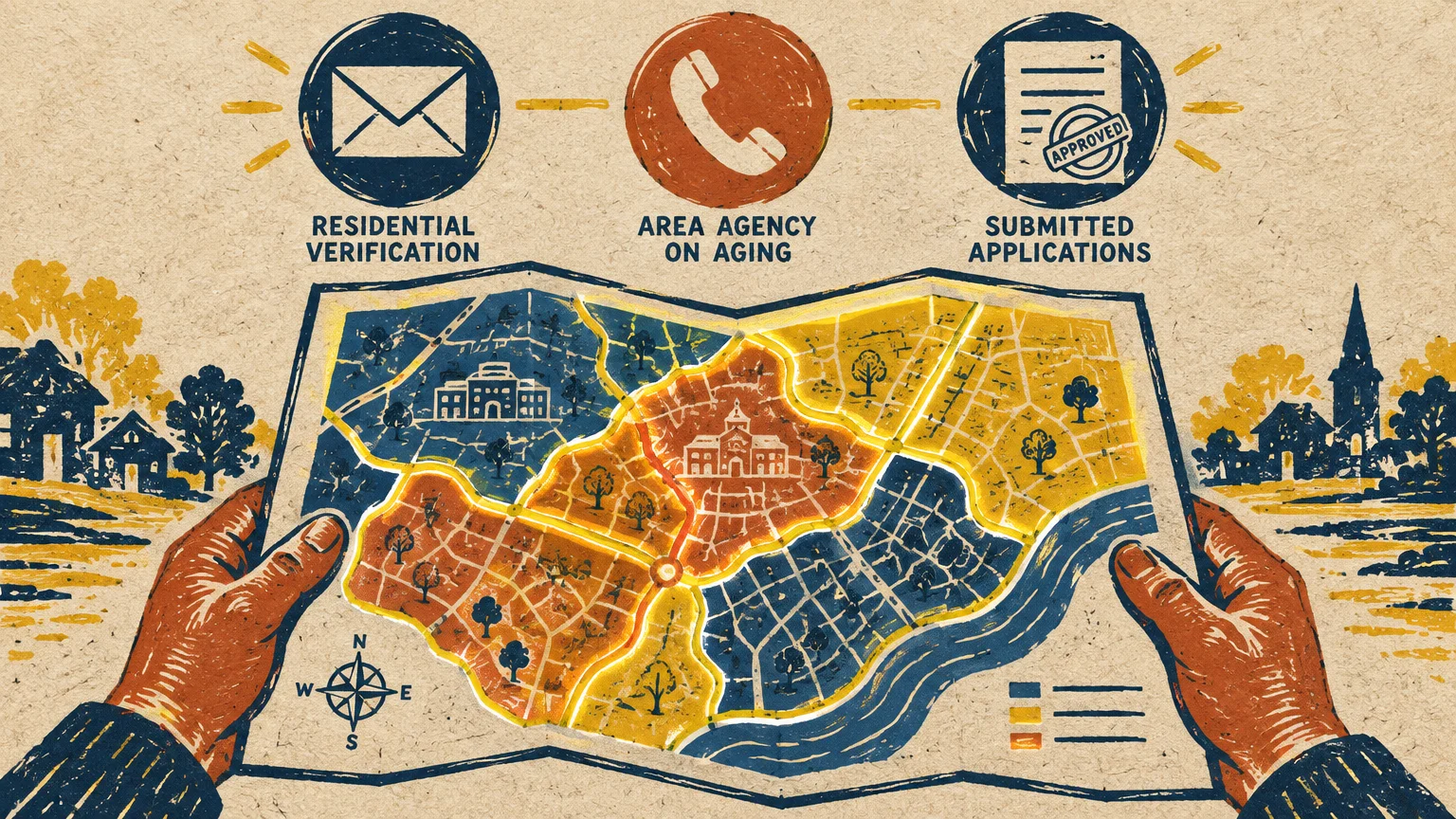
How to Uncover and Claim Your Local Benefits
Securing location-based financial relief requires an organized, proactive approach. Unscrupulous commercial companies frequently mail deceptive pamphlets disguised as official government benefit notifications.
Legitimate state agencies and community programs never require an upfront processing fee to disburse your funds. If an organization demands payment to review your benefit eligibility, decline their offer immediately.
According to the Consumer Financial Protection Bureau (CFPB), older adults should aggressively protect their personal information from unexpected telephone callers. Never reveal your Social Security number or banking credentials to an unverified contact.
Start your local search by contacting your regional Area Agency on Aging. Their certified staff members provide free, objective evaluations of municipal, county, and state programs for which you qualify.
Next, inquire with your municipal utility providers regarding low-income senior billing rates. Electric, natural gas, and water companies routinely offer discounted tariffs based on local residency.
Furthermore, consult your local tax assessor regarding property tax relief programs. Many counties grant property tax freezes, circuit breaker credits, or homestead exemptions exclusively to long-term resident seniors.
Follow these structured steps to uncover and secure all eligible location-based benefits:
- Gather your recent tax returns, monthly bank statements, and Social Security benefit award letters.
- Contact your local Area Agency on Aging to schedule a comprehensive benefits checkup.
- Check your postal code on the official federal plan finder to evaluate Medicare Part B giveback options.
- Submit an application for Extra Help if your prescription medication costs strain your monthly budget.
- Visit your county assessor office to verify whether your home qualifies for local property tax exemptions.
Taking action on these steps can substantially increase your disposable monthly income. Even modest adjustments across multiple programs combine to create meaningful financial breathing room.
Frequently Asked Questions
Does moving to a new ZIP code increase my standard Social Security check?
No, moving to another postal code will not change your standard federal retirement or disability benefit amount. Your base Social Security calculation relies exclusively on your lifetime earnings record and claiming age.
What should I do if I receive letter SSA-L447 or SSA-L448?
Open the letter immediately and review the eligibility criteria for the Extra Help program. The Social Security Administration sends these notices to help you secure vital prescription drug discounts.
How does the Medicare Part B giveback benefit show up on my statement?
The giveback amount appears as a reduction in the Medicare Part B deduction on your monthly benefit statement. This credit leaves more money in your monthly Social Security bank deposit.
Can I receive a State Supplementary Payment if I only get regular retirement benefits?
State Supplementary Payments are generally reserved for individuals enrolled in the Supplemental Security Income program. If your retirement benefit is very modest, you might qualify for combined SSI and SSP assistance.
Why do two neighboring towns have different senior property tax exemptions?
Property tax rules are determined by municipal councils, school districts, and county commissioners rather than the federal government. Local taxing authorities establish independent age limits, income caps, and tax reduction formulas for their residents.
For additional senior resources, visit
Administration for Community Living (ACL), Eldercare Locator, AARP, Alzheimer’s Association and American Heart Association.
Disclaimer: The information in this article is for educational purposes only and is not intended to be a substitute for professional financial, legal, or medical advice. Always consult with a qualified expert for advice tailored to your personal situation.









Leave a Reply