

Maintaining clear vision and a healthy smile is essential for your independence, yet these vital services often carry staggering out-of-pocket costs. Original Medicare generally excludes routine eye exams, glasses, dental cleanings, and dentures, leaving many older adults struggling to afford care on a fixed income. Fortunately, government agencies and non-profit organizations offer comprehensive dental and vision programs at no cost to seniors across the United States. You can access the professional care you need without jeopardizing your retirement savings. This comprehensive guide outlines the exact programs available in your community, specific eligibility requirements, and practical steps to successfully apply for financial assistance today.
Understanding Medicare Limitations and Coverage Options
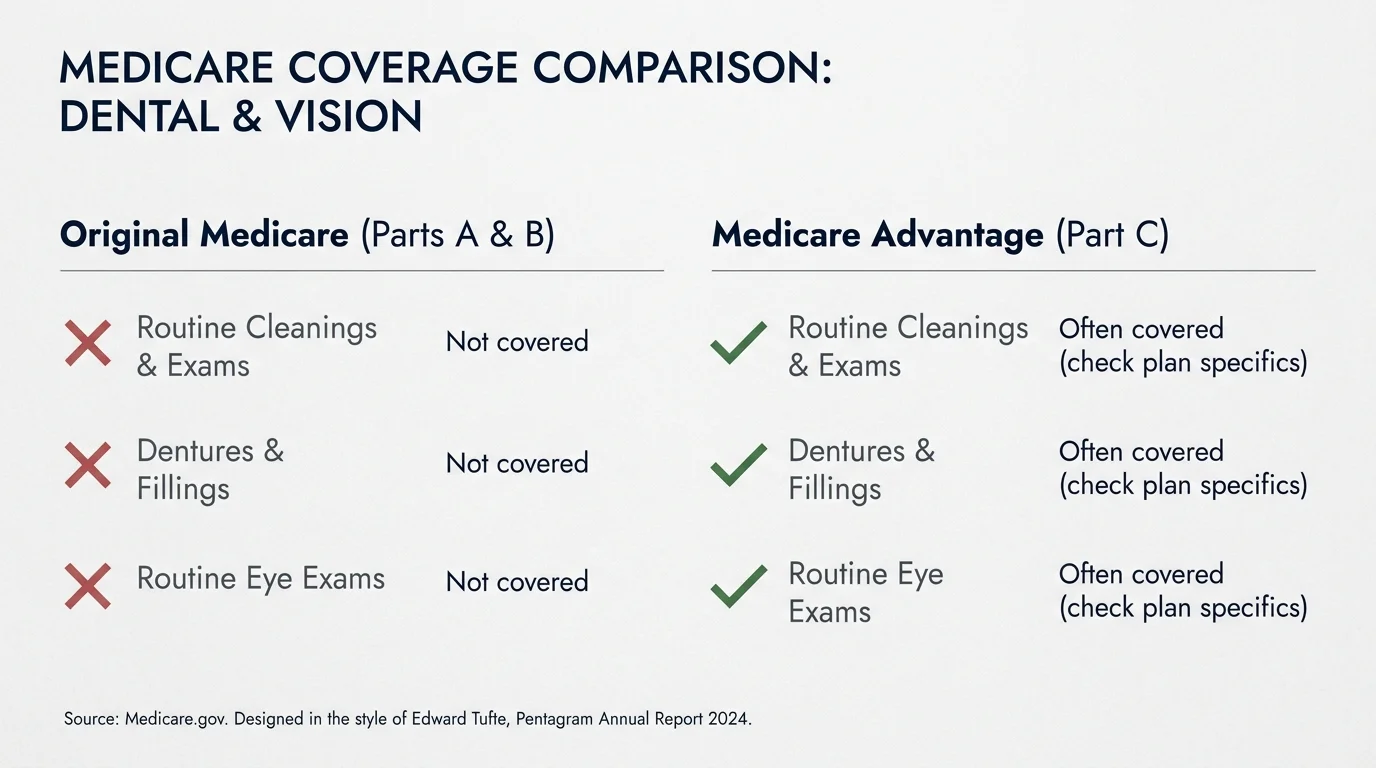
When planning your healthcare budget in retirement, you must clearly understand what your primary insurance covers—and more importantly, what it leaves out. Original Medicare, which consists of Part A for hospital insurance and Part B for medical insurance, is governed by strict federal laws regarding covered services. The law explicitly excludes most routine dental care, eye examinations for prescribing glasses, and hearing aids. If you need a cavity filled, a tooth extracted, or a new pair of bifocals, Original Medicare will not share the cost.
There are rare exceptions to this rule. Medicare Part A may pay for certain dental services that you receive while hospitalized, such as jaw reconstruction following an accident. Medicare Part B covers some preventive eye care, such as an annual glaucoma screening if you are at high risk, or cataract surgery to implant an intraocular lens. However, according to Medicare.gov, the cost of routine checkups, cleanings, dentures, and standard eyeglasses falls entirely on your shoulders unless you have supplemental coverage.
Many seniors turn to Medicare Advantage (Part C) plans to fill these gaps. Private insurance companies sell these bundled plans, which often boast “free” or low-cost dental and vision benefits. While these plans can save you money, you must scrutinize the fine print. A plan might cover a standard cleaning and a basic eye exam at zero cost, but charge steep copayments for complex procedures like root canals or progressive lenses. Furthermore, Medicare Advantage plans usually require you to visit dentists and optometrists within their specific, sometimes narrow, network.
| Feature | Original Medicare (Parts A & B) | Medicare Advantage (Part C) |
|---|---|---|
| Routine Cleanings & Exams | Not covered | Often covered (check plan specifics) |
| Dentures & Fillings | Not covered | Partial coverage; annual limits often apply |
| Routine Eye Exams | Not covered | Usually covered once a year |
| Prescription Eyeglasses | Only after cataract surgery | Often includes an annual allowance or voucher |
| Network Restrictions | See any doctor who accepts Medicare | Must typically use in-network providers |
Top National Free and Low-Cost Dental Programs for Older Adults
If you lack supplemental insurance and cannot afford out-of-pocket fees, several national charitable organizations provide life-changing dental care. These non-profits mobilize volunteer dentists to serve vulnerable populations, ensuring that fixed incomes do not prevent seniors from eating comfortably and living pain-free.
The Dental Lifeline Network is one of the most prominent organizations serving older adults. Through their Donated Dental Services (DDS) program, volunteer dentists and specialized dental laboratories provide comprehensive treatment to eligible applicants. To qualify, you generally must be over 65, permanently disabled, or medically fragile, and lack adequate income to pay for dental care. Because this program offers extensive procedures—including free dentures, crowns, and bridges—waitlists can be lengthy, sometimes stretching to a year or more. However, the wait is often worth the profound improvement in oral health and quality of life.
Federally Qualified Health Centers (FQHCs) offer another excellent avenue for affordable care. The federal government funds these community-based clinics to serve underserved areas. FQHCs charge for services on a sliding fee scale based strictly on your income and household size. If your income falls below the federal poverty level, you may receive basic extractions, fillings, and cleanings for a nominal fee—often as low as ten or fifteen dollars per visit. You can search for a local health center using the Health Resources and Services Administration (HRSA) online directory.
You should also consider seeking care at university dental schools or dental hygiene programs. Because dental students require clinical experience under the strict supervision of licensed professors, these institutions offer top-tier, cutting-edge care at a fraction of the cost of a private practice. Some schools host free senior clinics during specific months of the year. The primary trade-off is time; appointments at dental schools typically run much longer than standard visits because instructors must verify every step of the student’s work.

Nationwide Vision Assistance Initiatives You Should Know
Deteriorating vision directly impacts your ability to drive safely, manage medications, and enjoy hobbies. Routine eye care is vital, as early detection can prevent irreversible blindness from age-related conditions. Research and guidelines published by the National Institute on Aging (NIA) stress that adults over age 60 should receive a comprehensive dilated eye exam every one to two years, as conditions like glaucoma and macular degeneration often develop without early symptoms.
EyeCare America, a public service program of the Foundation of the American Academy of Ophthalmology, provides exceptional support for older adults. Their Seniors Program connects eligible individuals aged 65 and older with volunteer ophthalmologists who provide a comprehensive medical eye exam and up to one year of care at no out-of-pocket cost for any disease diagnosed during that initial exam. The program covers medical treatments rather than routine refractions, meaning they will not pay for your eyeglasses, but they will provide sight-saving care for serious eye diseases. You must be a U.S. citizen or legal resident, not belong to an HMO or have VA vision benefits, and not have seen an ophthalmologist in three or more years.
When you need physical eyeglasses rather than medical treatments, Lions Clubs International steps in to help. Local Lions Clubs operate independently across the country, collecting donated eyeglasses, refurbishing them, and distributing them to individuals in need. Many local chapters also provide vouchers to cover the cost of basic eye exams and a standard pair of single-vision or bifocal glasses for low-income seniors. You can request assistance by contacting your regional Lions Club chapter directly.
Another valuable resource is New Eyes, a non-profit organization that purchases new prescription eyeglasses for individuals facing financial hardship in the United States. While they do not pay for the eye exam itself, they will provide a voucher for a basic pair of prescription glasses once you have a current prescription from an optometrist. Your application must be submitted by a social worker, health care advocate, or local community agency on your behalf.
Leveraging State and Local Government Resources
Beyond national charities, your specific state and county offer localized safety nets designed to keep seniors healthy and out of emergency rooms. State programs vary drastically based on local budgets and legislation, making it crucial to explore your regional options.
Medicaid serves as a vital lifeline for low-income older adults. Unlike Original Medicare, Medicaid is a joint federal and state program, meaning your coverage depends entirely on where you live. Some states view adult dental and vision care as essential services, providing comprehensive coverage that includes dentures, root canals, eyeglasses, and bi-annual cleanings. Other states consider these services optional and restrict Medicaid adult dental coverage to emergency pain relief and tooth extractions. If you struggle to pay for daily living expenses, you should verify your state’s current Medicaid eligibility thresholds, as limits often adjust annually.
For military veterans, the Department of Veterans Affairs (VA) provides robust healthcare benefits. However, VA dental care eligibility is notoriously complex. Usually, you must have a service-connected dental disability or qualify as a 100% disabled veteran to receive free, comprehensive dental care. Vision care is generally more accessible; if you qualify for VA healthcare, you will likely receive routine eye exams, preventive vision testing, and free eyeglasses.
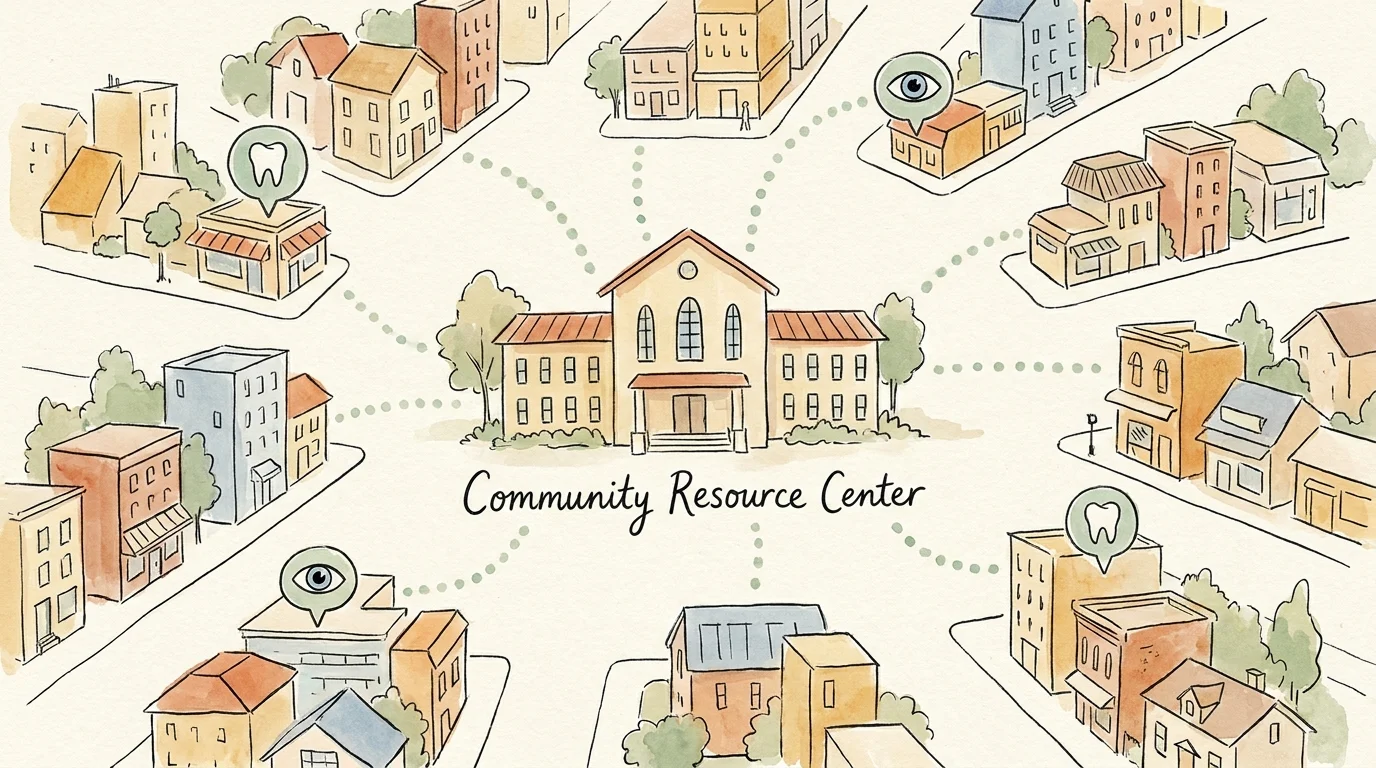
If you feel overwhelmed trying to identify local programs, your Area Agency on Aging (AAA) is the best place to start. These federally mandated agencies operate in every region of the country, specializing in connecting seniors to community resources, meal deliveries, and healthcare assistance. The Eldercare Locator is an official government tool designed specifically to connect you with the AAA branch serving your zip code. Local counselors at your AAA can provide a curated list of free clinics, senior discount days, and state-specific healthcare grants operating in your immediate vicinity.
Step-by-Step Guide to Applying for Free Care
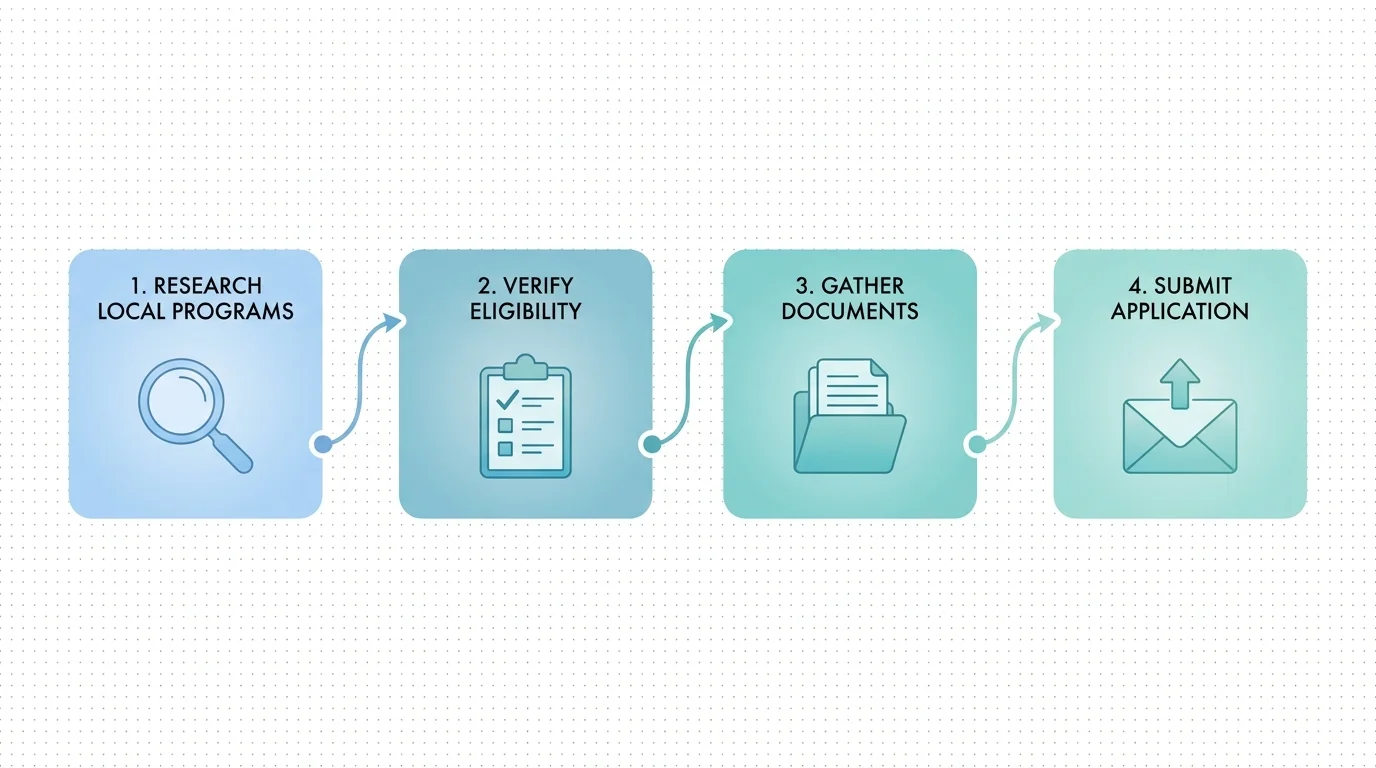
Securing free dental and vision care requires patience, organization, and a proactive approach. Assistance programs must verify that their limited funds reach those who truly need them, which means you will need to provide proof of your financial situation. Follow these steps to streamline your application process and avoid frustrating delays.
- Step 1: Gather your financial documentation. Nearly all free and sliding-scale clinics operate on an income-based model. Create a dedicated folder containing your most recent tax return, your annual Social Security award letter (SSA-1099), two months of bank statements, and any proof of pension income. Having these documents ready prevents you from scrambling when an application deadline approaches.
- Step 2: Perform a comprehensive eligibility check. Before filling out lengthy paper applications, you can use official government screening tools to see which programs you likely qualify for. You can visit Benefits.gov to complete a confidential questionnaire that will instantly match you with federal, state, and local assistance programs for healthcare, housing, and food.
- Step 3: Secure a medical referral or current prescription. Programs like New Eyes require a valid, recent eyeglass prescription to issue a voucher. Similarly, dental charities may ask for a baseline assessment of your oral health. If you use a sliding-scale clinic for a cheap initial exam, keep all the paperwork to use when applying for grants for expensive procedures like dentures.
- Step 4: Track your applications systematically. When applying to programs with waitlists, like the Dental Lifeline Network, maintain a simple notebook. Record the date you applied, the name of the organization, the contact person, and any confirmation numbers. Call the organization every six months to update your contact information and confirm you remain on the active list.
- Step 5: Respond to requests promptly. If an agency leaves a voicemail requesting additional documentation, return the call immediately. Waitlists are highly competitive, and missing a deadline to provide an updated bank statement can bump you to the bottom of the list.
Navigating Technology and Application Barriers
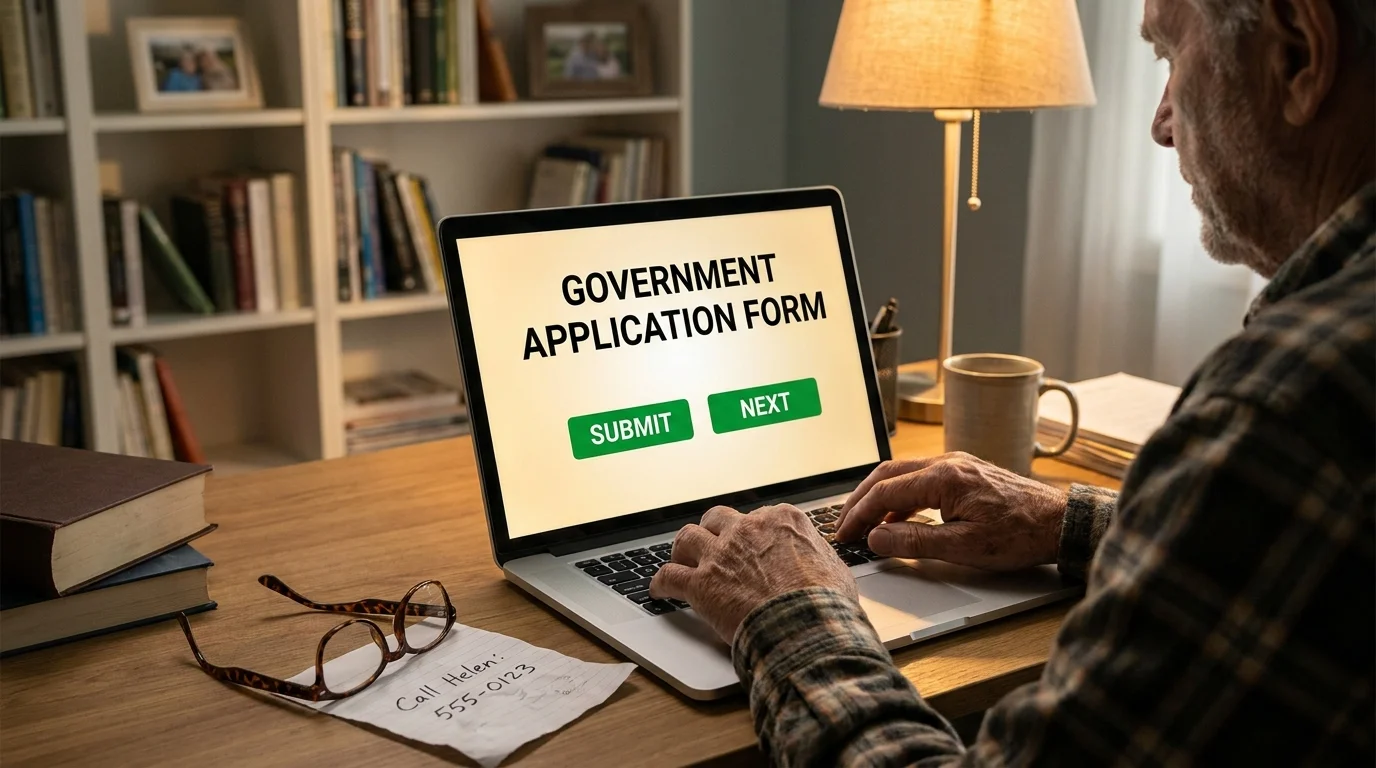
Finding and applying for assistance programs can feel incredibly daunting, especially when an increasing number of state agencies and charities move their forms exclusively online. If you do not own a computer, lack reliable high-speed internet, or simply feel uncomfortable uploading sensitive financial documents to a website, you are not alone. These barriers should never prevent you from accessing the care you deserve.
You can bypass digital hurdles by utilizing local, in-person community resources. Your local public library is an excellent starting point. Librarians are skilled researchers who can help you locate specific program websites, print out paper application forms, and point you toward community bulletin boards advertising free upcoming health clinics.
Furthermore, many senior centers and religious organizations employ social workers or trained volunteers whose sole job is to help older adults navigate complex bureaucracy. You can also dial 2-1-1 from any telephone. This free, confidential service connects you to a local community resource specialist who can provide phone numbers and physical addresses for dental and vision charities, allowing you to request paper applications by mail rather than applying online.
Do not hesitate to ask a trusted family member, younger neighbor, or friend to assist you with the technical aspects of the application. Having someone scan your tax documents or help you set up an email account specifically for corresponding with healthcare charities can dramatically accelerate your approval process.
Spotting and Avoiding Healthcare Scams
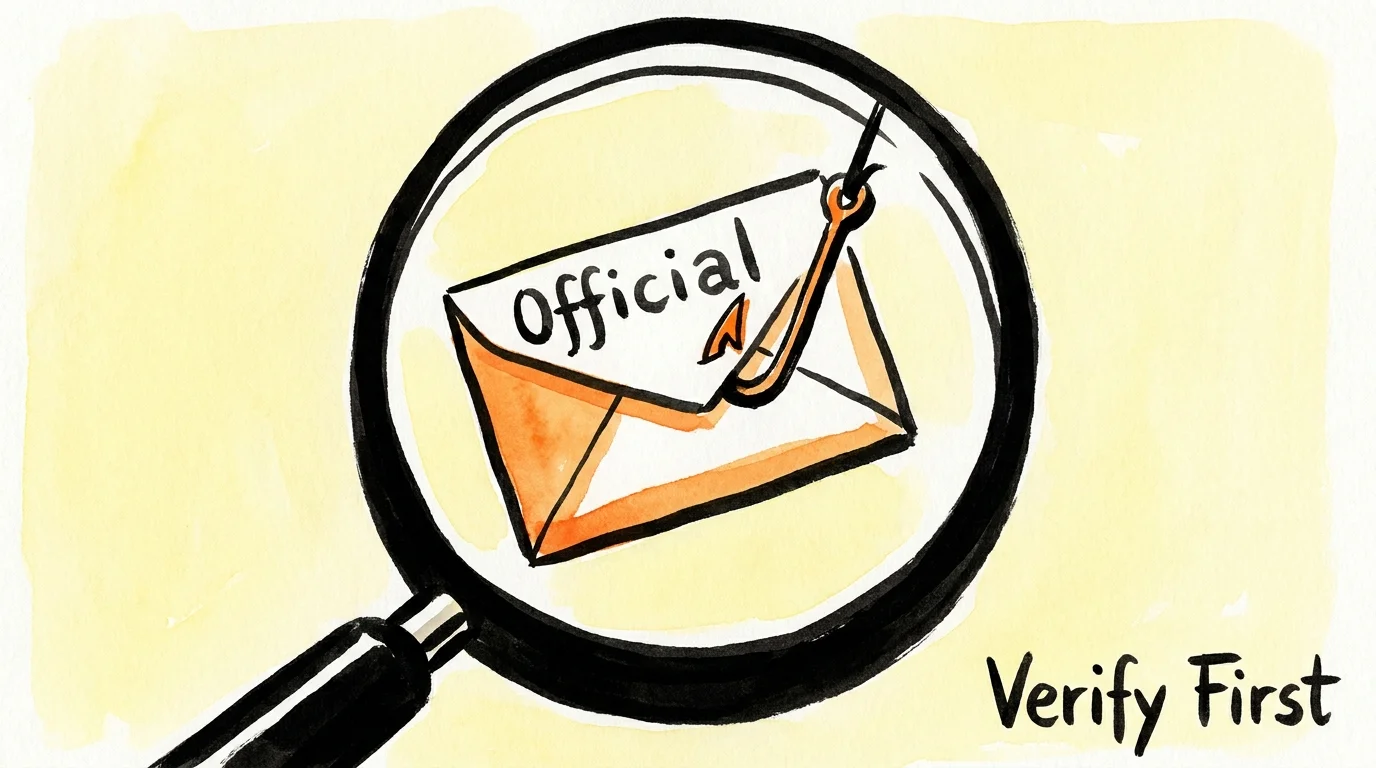
Unfortunately, opportunistic scammers frequently target older adults searching for affordable healthcare. They prey on the anxiety of living on a fixed income, crafting sophisticated schemes that sound like legitimate government programs. You must remain vigilant to protect your identity and your savings.
The “medical discount card” scam is highly prevalent. Fraudsters will mail glossy brochures or call you offering a card that guarantees 80% off all dental and vision care for a one-time setup fee of several hundred dollars. In reality, these cards are completely worthless, and participating dentists have never heard of the program. Legitimate charities will never demand an upfront processing fee to place you on a waitlist or send you an application.
Another dangerous trap involves Medicare impersonators. A scammer will call you out of the blue, claiming to be a federal representative offering a new “free dental and vision package” under Medicare. To process your new card, they insist you must verify your Medicare number and your bank routing details. The Consumer Financial Protection Bureau (CFPB) advises that government agencies will never call you unprompted to demand sensitive personal information or financial details. If someone calls claiming to be from Medicare and asks for your number, hang up the phone immediately.
Always verify the legitimacy of an organization before handing over your personal information. Check the charity’s rating on independent sites like Charity Navigator or the Better Business Bureau. If an offer sounds too good to be true—such as immediate, free dental implants with no income verification required—it is almost certainly a scam designed to steal your identity.
Frequently Asked Questions
Can I get free dentures through Medicare?
No, Original Medicare (Parts A and B) explicitly excludes coverage for false teeth and the dental impressions required to make them. If you need dentures, you will need to rely on a Medicare Advantage plan that includes dental benefits, state Medicaid (if your state covers adult dentures), or charitable organizations like the Dental Lifeline Network.
Are there waiting lists for free dental programs?
Yes, demand for free comprehensive dental care far exceeds the supply of volunteer dentists. Programs offering complex services like extractions, root canals, and dentures frequently have waitlists that can last several months to over a year. It is crucial to apply as early as possible and consider sliding-scale community clinics for immediate pain relief while you wait.
How often can I get a free eye exam?
Eligibility for free eye exams depends on the program. The EyeCare America Seniors Program generally allows you to qualify for a medical eye exam if you have not seen an ophthalmologist in three or more years. Local Lions Clubs typically allow you to apply for an eye exam and glasses voucher once every one to two years, depending on the specific chapter’s funding and rules.
What if my state’s Medicaid does not cover dental care?
If your state restricts adult Medicaid dental coverage to emergency-only services, you must explore alternatives. Look for local Federally Qualified Health Centers (FQHCs) for sliding-scale preventative care, check for nearby university dental schools, or contact your Area Agency on Aging to find local non-profit dental clinics operating outside the Medicaid system.
Do I have to pay taxes on donated medical services?
No, receiving free medical, dental, or vision care from a recognized non-profit organization or government agency does not count as taxable income. You do not need to report the value of your free eyeglasses, dental work, or medical exams on your federal tax return.
For additional senior resources, visit
National Institutes of Health (NIH), Centers for Medicare & Medicaid Services (CMS), Social Security Administration (SSA), Consumer Financial Protection Bureau (CFPB) and Administration for Community Living (ACL).
Disclaimer: The information in this article is for educational purposes only and is not intended to be a substitute for professional financial, legal, or medical advice. Always consult with a qualified expert for advice tailored to your personal situation.









Leave a Reply