
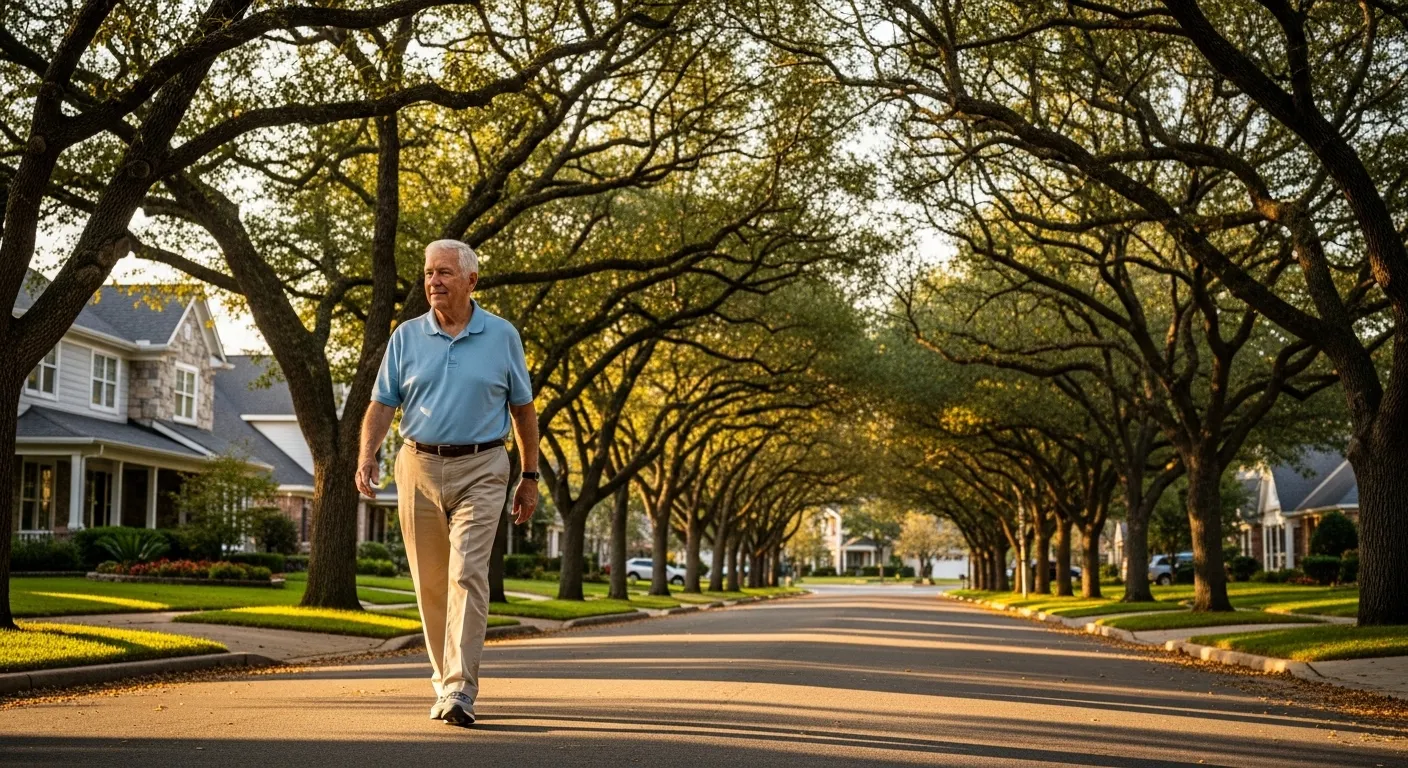
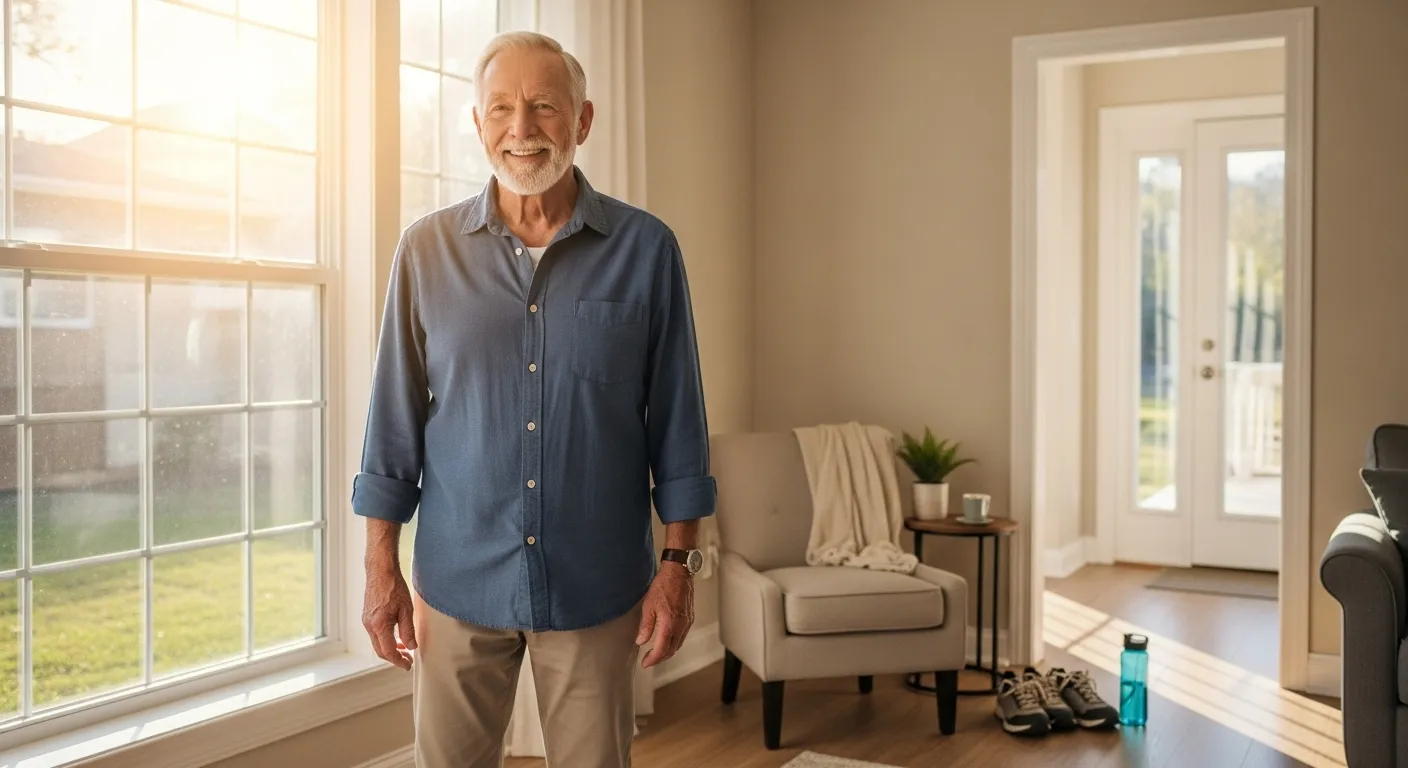
If you had told me five years ago that the most important part of my day would involve a pair of worn-out sneakers and the pavement in my neighborhood, I would have chuckled and changed the channel on the television. Back then, my world was much smaller. It was mostly confined to the four walls of my house, and its capital was a plush, well-worn armchair that had molded perfectly to my body over the years. That chair was my command center for watching old westerns, my perch for observing the world through the living room window, and, if I’m being honest with myself, my comfortable prison.
I was 72, and I had accepted a certain narrative about aging. Aches were a given. A shortness of breath when climbing the stairs was normal. A growing disinterest in going out and doing things? Well, that was just part of slowing down. My wife, Martha, would gently try to coax me out for errands or a visit to the park with our grandkids, but more often than not, I’d beg off, citing a sore knee or general fatigue. The truth was, the effort felt monumental. The energy just wasn’t there, and I had quietly, almost unconsciously, resigned myself to a life of observation rather than participation.
A Wake-Up Call in a Sterile White Room
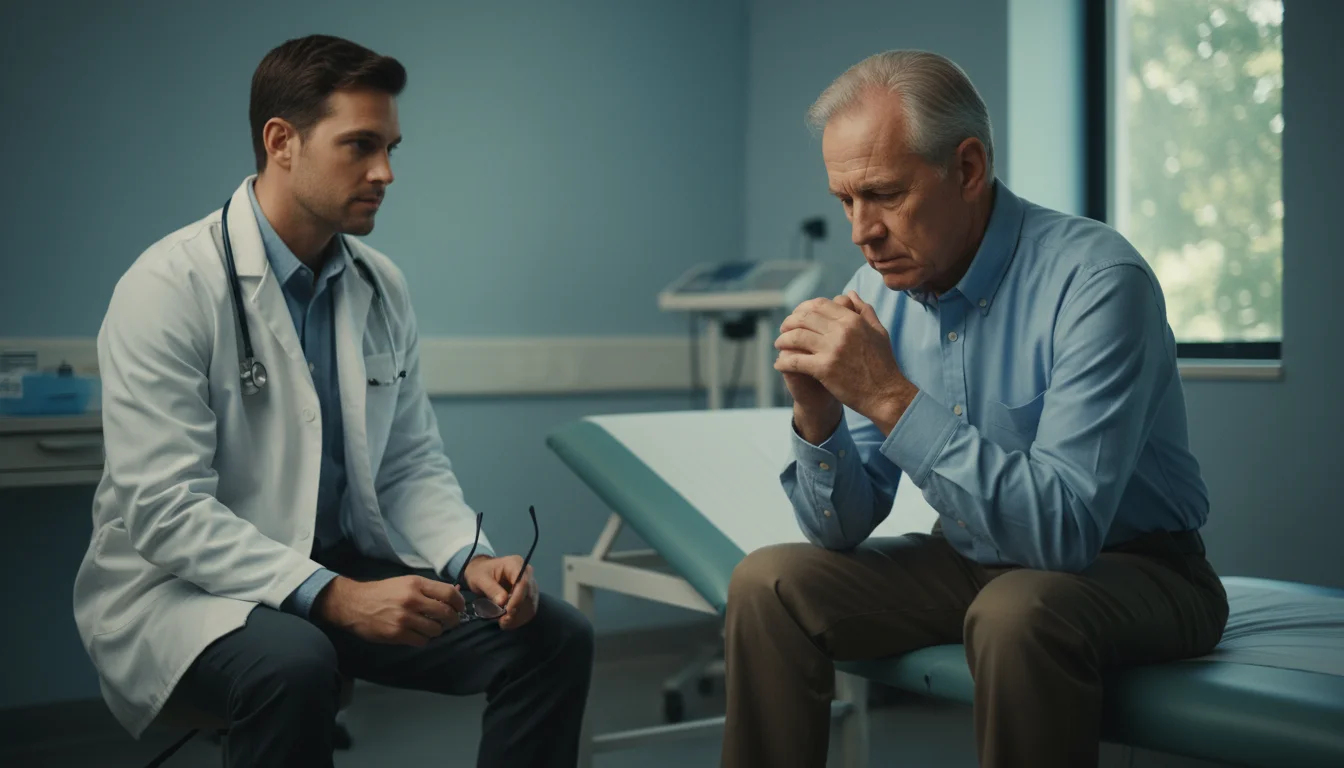
The turning point wasn’t a dramatic, movie-like event. It was quiet, clinical, and utterly terrifying. It happened during my annual check-up with Dr. Evans, a kind man half my age who never talked down to me. He was looking at my chart, his brow furrowed in a way I hadn’t seen before. He took off his glasses and looked at me directly.
“Frank,” he said, his voice gentle but firm. “We need to talk. Your blood pressure is creeping up again. Your cholesterol is high. We’re moving from ‘pre-diabetic’ into a territory where we need to consider daily medication. Your numbers are telling me a story, and it’s not the one I want for you.”
He didn’t lecture me. He just laid out the facts. He spoke about the strain on my heart and the importance of improving my cardiovascular health. He didn’t use scary words like ‘stroke’ or ‘heart attack,’ but they hung in the air between us, unspoken and heavy. He finished by saying, “Before we go down the road of more prescriptions, I want you to try something. Something simple. I want you to walk. Just walk.”
I left that office feeling a chill that had nothing to do with the air conditioning. For the first time, I wasn’t just feeling old; I was feeling fragile. The armchair that had been my comfort now seemed like a trap, and the life I was passively accepting felt like a path I was choosing—a path leading somewhere I didn’t want to go. That night, I looked at Martha, who had been my partner for 48 years, and I saw the worry in her eyes that she tried so hard to hide. I wasn’t just letting myself down; I was letting her down. Something had to change.
Taking the First, Hesitant Steps
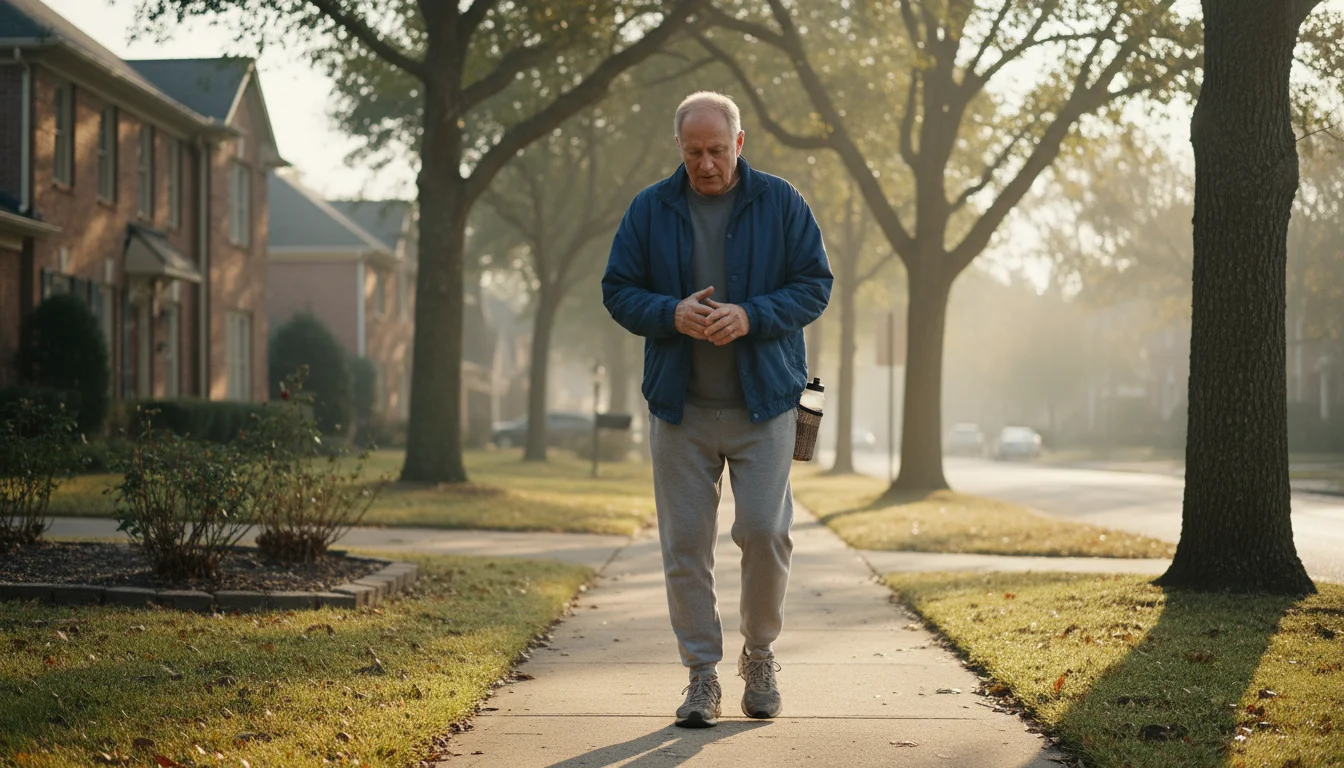
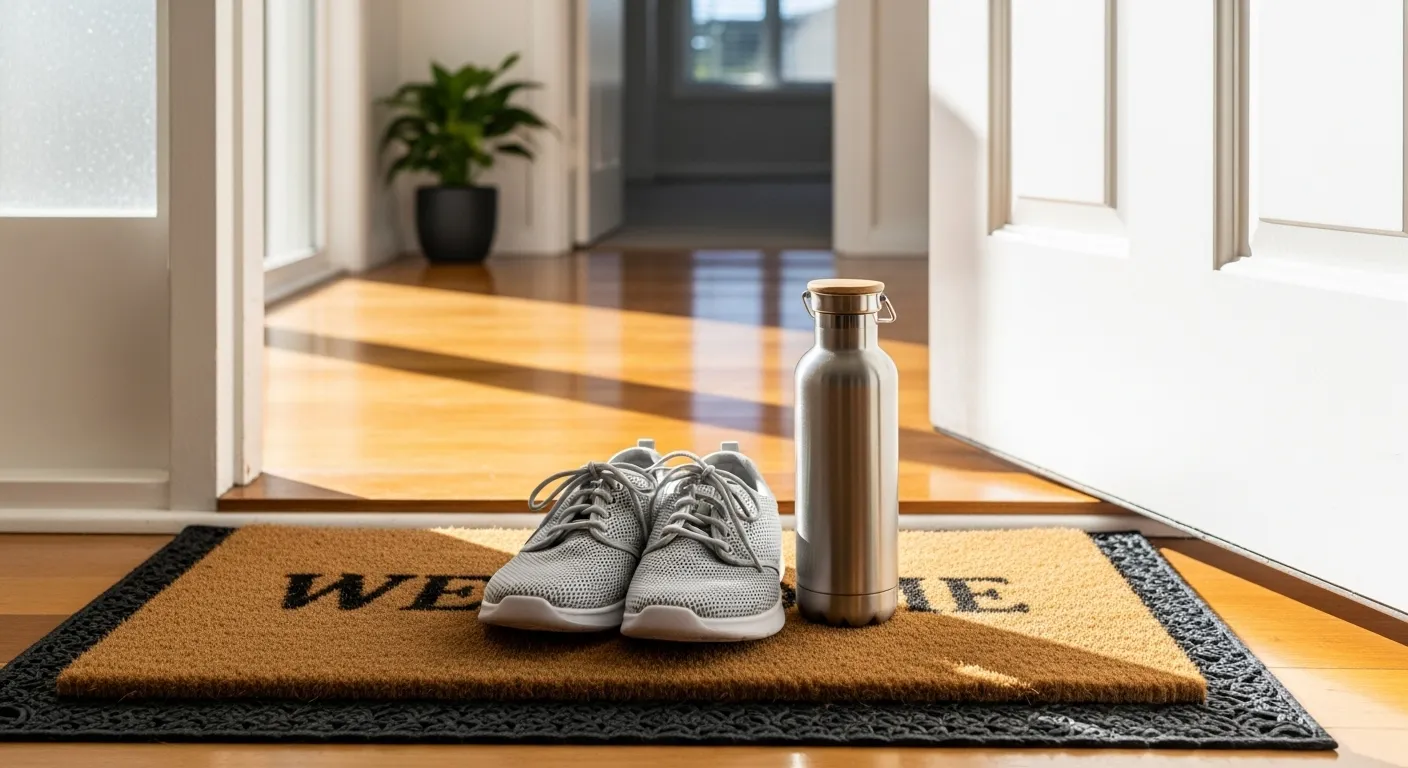
The next morning, I dug an old pair of running shoes out of the back of the closet. They were dusty and stiff. I didn’t have a plan or a grand goal. The doctor’s words echoed in my head: Just walk.
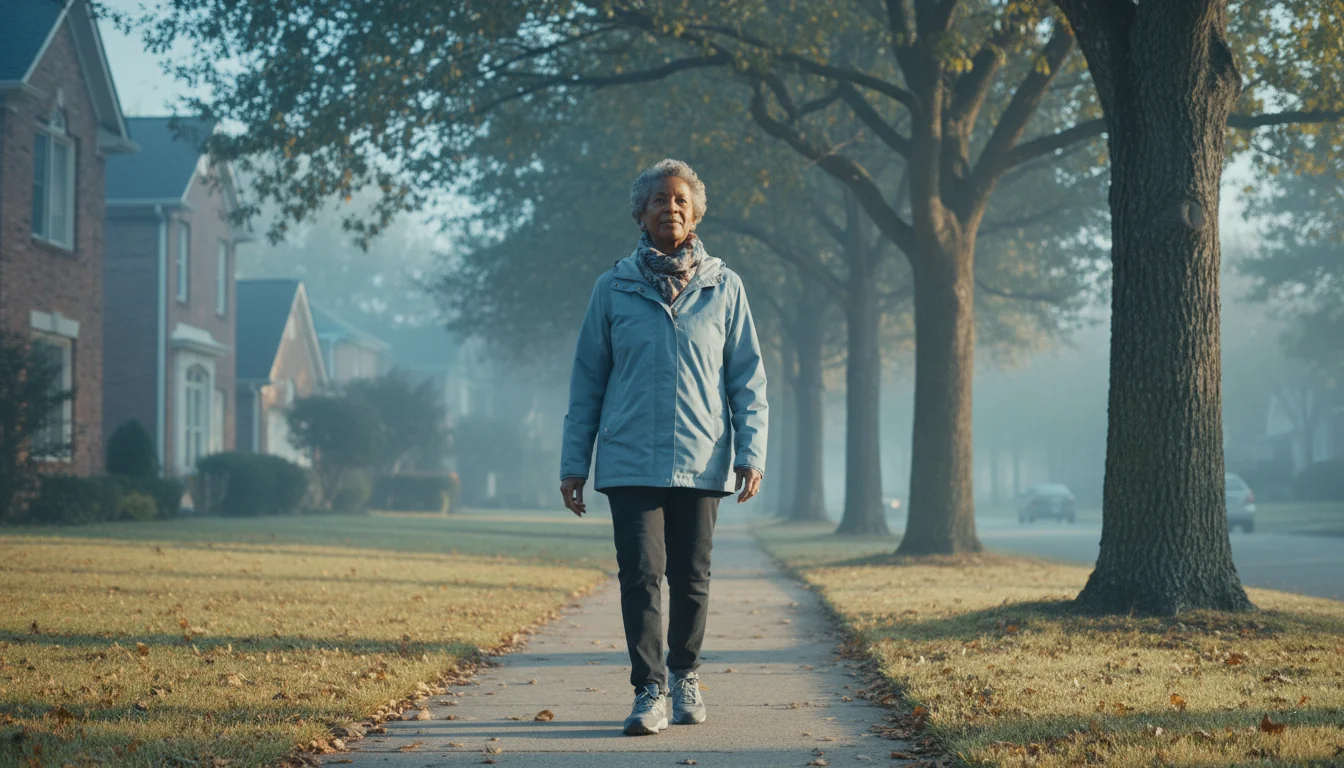
I told myself I would only walk to the big oak tree at the end of our block and back. That was it. It couldn’t have been more than 200 yards total. I opened the front door, and the morning air felt surprisingly cool. I took my first few steps, and my body immediately protested. My knees ached. My lungs felt tight. A stitch formed in my side before I was even halfway to the tree. I felt self-conscious, convinced every passing car was staring at the old man huffing and puffing his way down the sidewalk.
When I finally got back to my front porch, I was winded and discouraged. My first thought was, This is hopeless. But then, a second thought pushed its way through: But you did it. It wasn’t pretty, and it wasn’t easy, but I had done what I set out to do. I had taken the first step. That tiny, almost imperceptible feeling of accomplishment was just enough to make me decide to try again the next day.
The Grind and the Grace of a Daily Routine
Let me be clear: this transformation was not a magical, overnight success. It was a slow, deliberate grind. The first few weeks were the hardest. There were mornings I’d wake up stiff and sore, and the temptation to crawl back under the covers was immense. But I had my conversation with Dr. Evans etched in my mind, and the image of Martha’s worried face was a powerful motivator.
I started a simple daily walking routine. My goal was consistency, not distance or speed. That first walk to the oak tree became my baseline. For a week, that’s all I did. The next week, I pushed myself to go to the corner. Then to the next corner. My initial five-minute shuffle slowly, painstakingly, stretched into ten minutes, then fifteen. Some days were better than others. Some days, my arthritis flared up, and I had to take it easy. But I never let a bad day turn into a bad week. My rule was simple: get the shoes on and get out the door. Even a short walk was better than no walk at all.
Slowly, something began to shift. The walk started to feel less like a chore and more like a part of my day. I began to notice things I hadn’t seen in years from my armchair window—the intricate patterns of a spiderweb glistening with dew, the changing colors of the leaves on the maple trees, the cheerful chirping of the morning sparrows. The walk became my quiet time, a moving meditation. The rhythm of my feet on the pavement became a steady beat that calmed my mind.
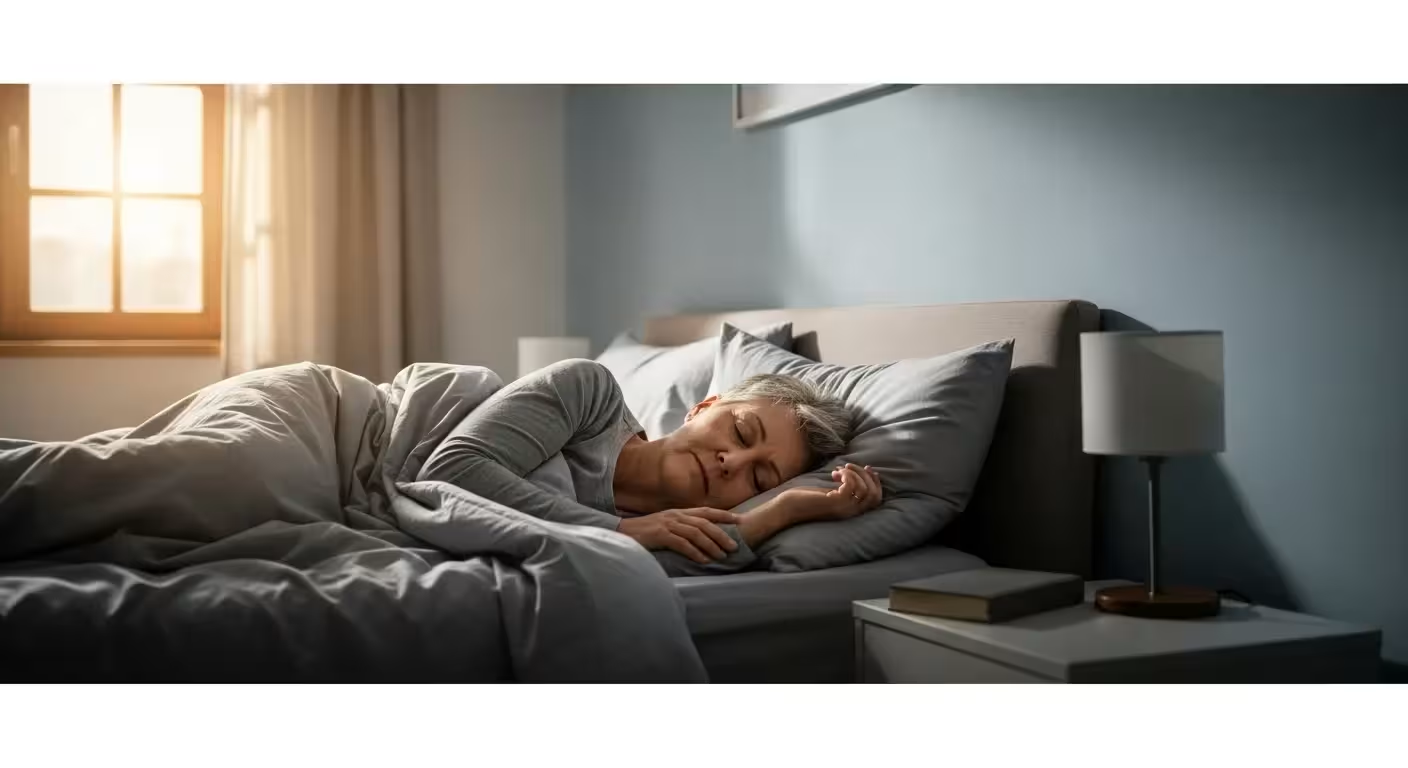
After about two months of this, I finally achieved my initial goal: a consistent 20-minute walk every single morning without feeling like I was going to collapse. And the walking benefits my doctor had talked about were no longer just abstract concepts; they were my new reality. I was sleeping more soundly through the night. The chronic ache in my lower back started to fade. I could carry the groceries in from the car without getting winded. My mood, which had been in a perpetual state of gray, felt brighter. I was feeling the tangible results of what good, old-fashioned senior fitness could do.
More Than Just Exercise: Reconnecting with My World
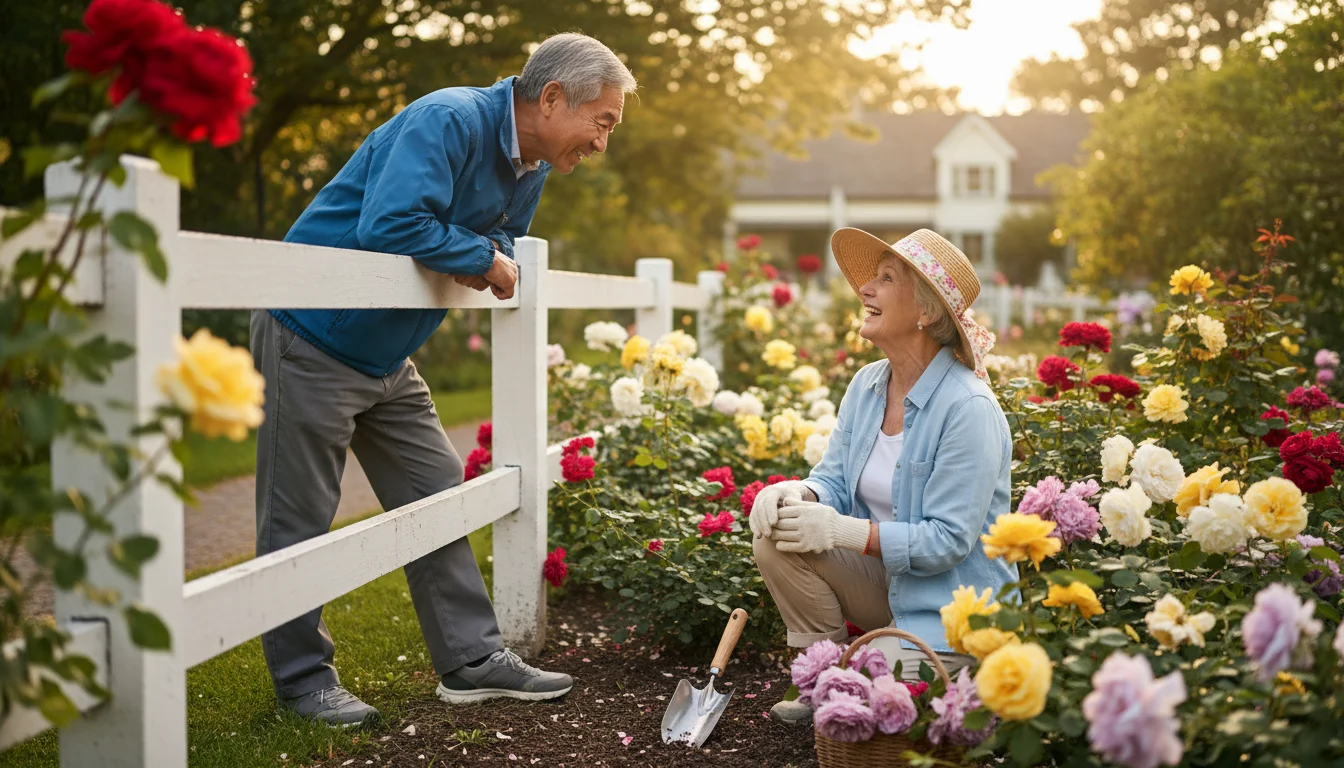
The most surprising part of this journey wasn’t the physical changes, as wonderful as they were. It was how my world started to open back up. My daily walks turned me from an anonymous resident into a neighbor. People started to recognize me. A friendly wave from a woman gardening turned into a conversation about her prize-winning roses. Another early walker, a fellow retiree named Bill, started timing his walks with mine, and we struck up a friendship, solving the world’s problems one block at a time.
Martha noticed the change in me immediately. Seeing my commitment, she started joining me on my walks on the weekends. Those walks became our time. We talked about everything and nothing—our kids, our plans for the garden, memories from long ago. We were connecting in a way we hadn’t in years, away from the distractions of the house and the television. I wasn’t just walking for my health anymore; I was walking alongside the woman I loved, rediscovering our life together, one step at a time.
The Person I Am Today
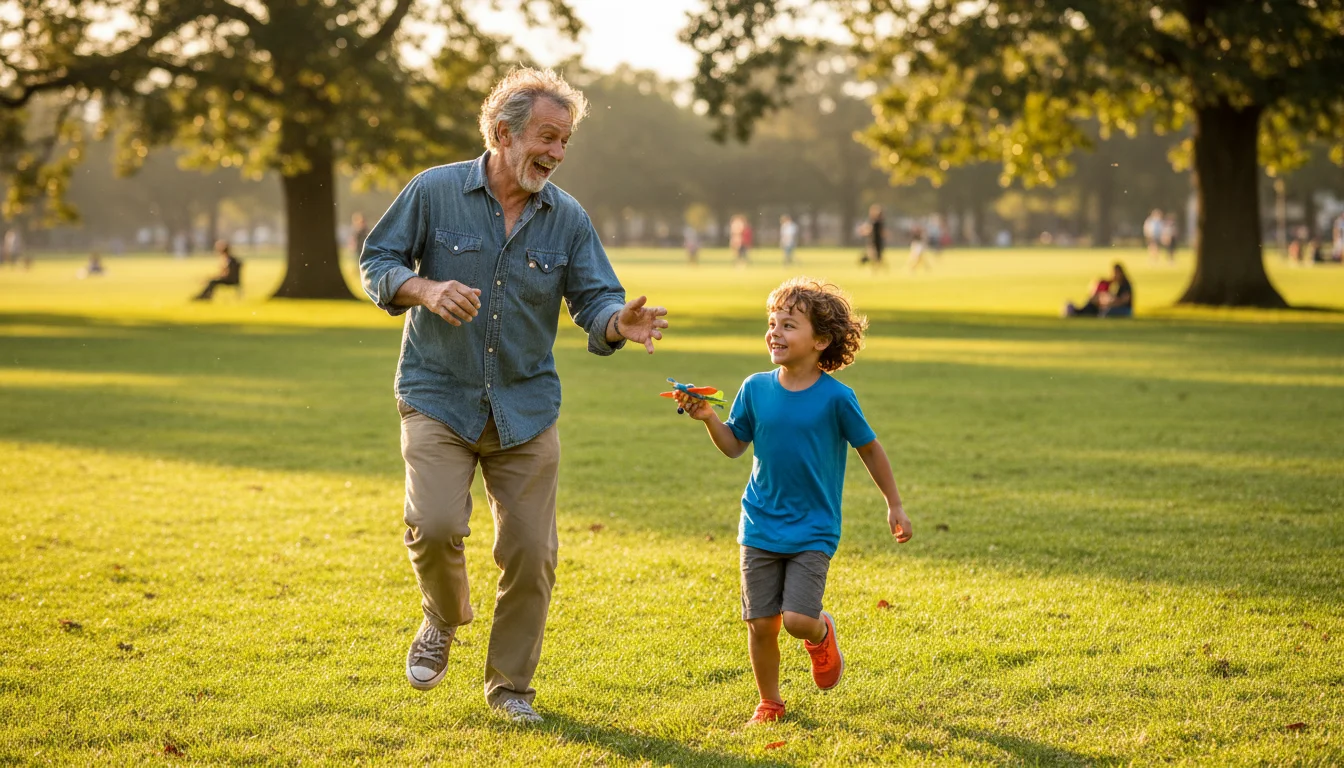
A few months ago, we went to my grandson’s eighth birthday party at the park. Last year, I would have found the nearest bench and stayed there. This year, when he grabbed my hand and yelled, “Grandpa, chase me!” I didn’t hesitate. I ran. I wasn’t fast, and I was laughing so hard I could barely breathe, but I was running. I was playing. I was in my life, not just watching it.
At my last check-up, Dr. Evans put my chart down and smiled. My blood pressure was normal. My cholesterol was in a healthy range. I was no longer in the pre-diabetic category. He looked at me and said, “Frank, whatever you’re doing, keep doing it. You’ve turned back the clock.”
He was right. That simple, 20-minute walk did more than improve my health markers. It gave me back my energy, my confidence, and my connection to the world. It taught me that it’s never too late to make a change and that the biggest transformations often begin with the smallest, most humble steps.
If you’re reading this from your own comfortable armchair, feeling stuck like I was, I want you to know that I understand. I know the doubt and the inertia feel like an anchor. But I’m here to tell you that you have the power to pull that anchor up. You don’t need a gym membership or fancy equipment. You just need a pair of comfortable shoes and the courage to open your front door. Start small. Walk to your mailbox. Walk to the end of the block. Just start. Your body, your mind, and your future self will be so incredibly grateful that you did.
For expert guidance on senior health and finance, visit National Institutes of Health (NIH), Centers for Medicare & Medicaid Services (CMS), Social Security Administration (SSA), Consumer Financial Protection Bureau (CFPB) and Administration for Community Living (ACL).
|
Fact-Checked Content
Our editorial team reviews all content for accuracy and updates it regularly. Learn about our editorial process →
|




Leave a Reply