In this guide5 sections
Hello, and welcome. As we journey through life, it’s natural to encounter moments of stress, worry, or physical discomfort.
The good news is that you hold a powerful, built-in tool for managing these feelings: your own breath. It’s free, it’s always with you, and learning to use it intentionally can have a profound impact on your well-being.
Conscious breathing is more than just inhaling and exhaling. It’s a direct line of communication to your nervous system.
By slowing down and deepening your breath, you can signal to your body that it’s safe to relax. This simple action can help lower your blood pressure, ease muscle tension, quiet a racing mind, and even improve your sleep.
This article offers five gentle yet effective breathing exercises for seniors. They are designed to be safe, easy to learn, and adaptable to your comfort level, whether you are sitting in a chair or lying down.
Think of these as your personal relaxation toolkit, ready to use whenever you need a moment of peace.
Important Note: While these breathing exercises are generally very safe, it is always wise to speak with your doctor or a physical therapist before beginning any new wellness practice, especially if you have a pre-existing heart or lung condition. Listen to your body, and never push yourself to the point of discomfort or dizziness.

01 Master Deep Belly Breathing (Diaphragmatic Breathing)
The ‘Why’: This is the foundation of all effective relaxation techniques. As we age or experience stress, our breathing can become shallow, primarily using the chest muscles.
Diaphragmatic breathing, or “belly breathing,” retrains your body to use the diaphragm, the large dome-shaped muscle at the base of your lungs.
Strengthening this muscle allows for a fuller exchange of oxygen, which calms your heart rate, lowers blood pressure, and reduces the work of breathing. For many seniors, especially those managing conditions like COPD, this can lead to improved lung function and less shortness of breath.
The ‘How’:
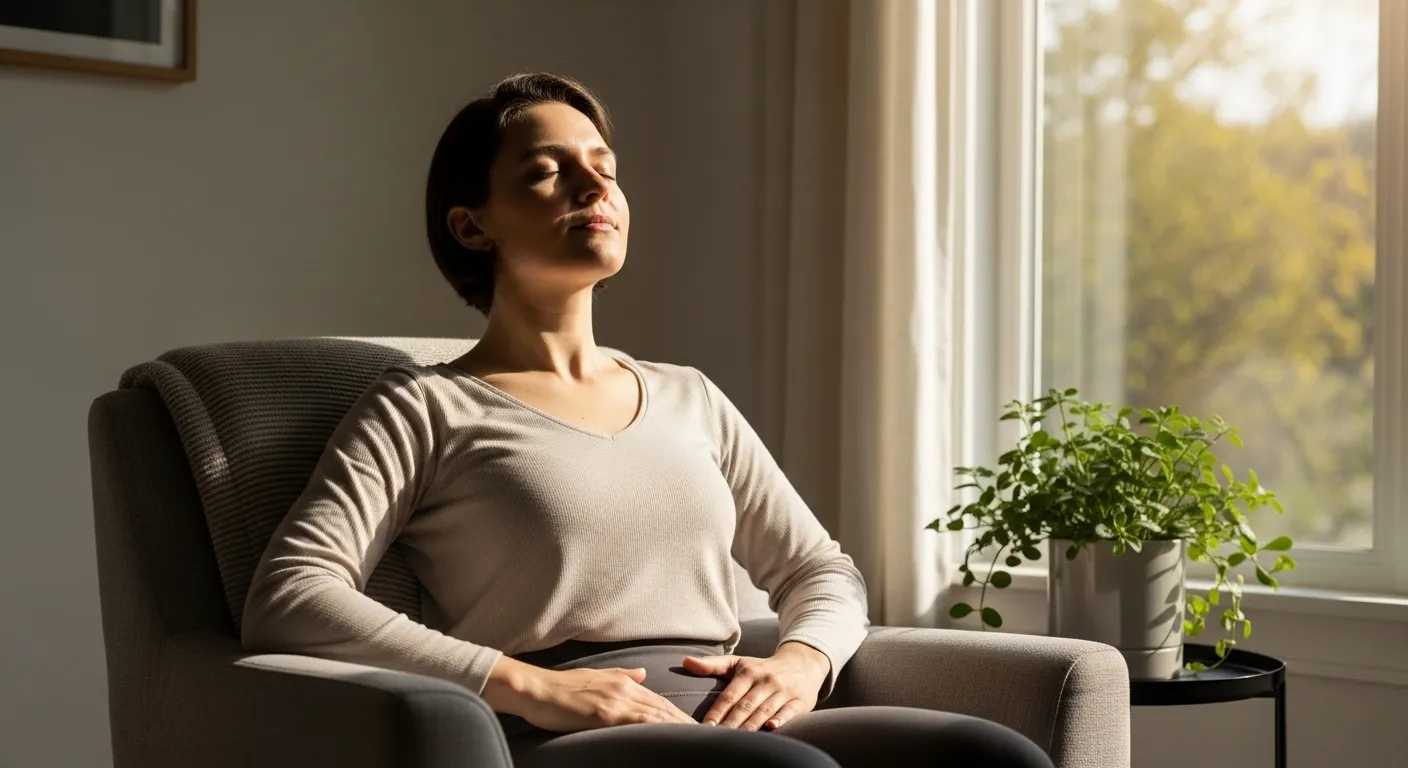
The best way to learn this is by lying down, but you can also do it while sitting comfortably in a supportive chair with your back straight.
- Place one hand gently on your upper chest and the other hand on your belly, just below your rib cage.
- Relax your shoulders, neck, and jaw. Close your eyes if that feels comfortable.
- Breathe in slowly through your nose for about two to three seconds. As you inhale, focus on allowing your belly to rise and push your hand up. The hand on your chest should remain as still as possible. This ensures you are using your diaphragm.
- Gently tighten your stomach muscles and let them fall inward as you exhale slowly through your mouth (or nose, whichever is more comfortable) for about three to four seconds. The hand on your belly should move down.
- Pause for a moment, and then repeat.
Start by practicing for just three to five minutes, two or three times a day. As you become more comfortable, you can extend the time.
This form of mindful breathing is a wonderful way to begin or end your day.
02 Try the 4-7-8 Relaxing Breath
The ‘Why’: Developed by Dr. Andrew Weil, the 4-7-8 technique is sometimes called the “relaxing breath” for good reason. It acts as a natural tranquilizer for the nervous system.
The structured counting focuses the mind, while holding the breath allows oxygen to saturate the bloodstream. The extended exhale is the most important part; it fully expels carbon dioxide and triggers the parasympathetic nervous system, which is responsible for our “rest and digest” response.
This is an excellent tool for managing moments of acute anxiety or for helping you drift off to sleep.
The ‘How’:
You can do this exercise sitting up straight or lying down.
- Place the tip of your tongue against the ridge of tissue just behind your upper front teeth. Keep it there for the entire exercise.
- Exhale completely through your mouth, making a gentle “whoosh” sound.
- Close your mouth and inhale quietly through your nose for a mental count of four.
- Hold your breath for a count of seven.
- Exhale completely through your mouth, making that “whoosh” sound again, for a count of eight.
- This completes one breath. Now inhale again and repeat the cycle three more times for a total of four breaths.
Safety First: When you are first starting, you may feel a little lightheaded. This is normal.
Begin with just one or two cycles and gradually work your way up to four. The ratio of 4-7-8 is more important than the speed, so feel free to count faster or slower as needed.

03 Practice Pursed-Lip Breathing for Better Control
The ‘Why’: Pursed-lip breathing is one of the most practical stress relief breathing techniques, especially if you ever feel short of breath during activities like walking up stairs or carrying groceries.
This technique slows your breathing rate down, which gives your lungs more time to function efficiently. By keeping your airways open longer, it helps release air that can get trapped in the lungs.
This relieves the feeling of breathlessness, improves ventilation, and gives you a greater sense of control over your breathing and your body.
The ‘How’:
This simple technique can be done anytime, anywhere—sitting, standing, or walking.
- First, relax your neck and shoulder muscles.
- Keeping your mouth closed, inhale slowly through your nose for two counts. Don’t take a deep breath; a normal, gentle inhale is perfect.
- Pucker or “purse” your lips as if you were about to gently whistle or blow out a birthday candle.
- Exhale slowly and steadily through your pursed lips for four counts. The key is to make the exhale twice as long as the inhale.
- Repeat this pattern until you feel your breathing become calm and regular.
This is a go-to exercise that physical therapists recommend. Practice it daily so it becomes second nature when you need it most.

04 Find Your Center with Box Breathing (Square Breathing)
The ‘Why’: If your mind feels scattered or overwhelmed with thoughts, Box Breathing is a fantastic way to restore focus and calm. It’s used by everyone from Navy SEALs to yoga practitioners because its simple, even rhythm is incredibly grounding.
By giving your brain four equal points to focus on (inhale, hold, exhale, hold), you interrupt the cycle of anxious thoughts. This predictable pattern is reassuring to the nervous system and can quickly lower stress hormones, helping you feel more centered and in control.
The ‘How’:
Find a comfortable chair where you can sit upright with your feet flat on the floor.
- Gently exhale all the air from your lungs to a count of four.
- Inhale slowly and deeply through your nose for a count of four.
- Hold your breath for a count of four. Try not to clamp your throat; just pause gently.
- Exhale slowly through your mouth for a count of four.
- Hold your breath again at the end of the exhale for a count of four.
- This completes one “box.” Continue for five to ten cycles, or for as long as it feels calming.
You can even visualize drawing a square in your mind as you breathe: draw one side as you inhale, the next as you hold, the third as you exhale, and the final side as you hold again.
This visualization can make the mindful breathing practice even more powerful.

05 Cultivate Calm with Simple Breath Awareness
The ‘Why’: This is perhaps the most gentle and accessible of all the breathing exercises for seniors. Its goal isn’t to change your breath but simply to notice it.
This practice, a cornerstone of mindfulness, trains your attention to stay in the present moment rather than getting carried away by worries about the future or regrets about the past.
By consistently and kindly returning your focus to the simple sensation of breathing, you build mental resilience and cultivate a deep, abiding sense of peace that you can carry with you throughout your day.
The ‘How’:
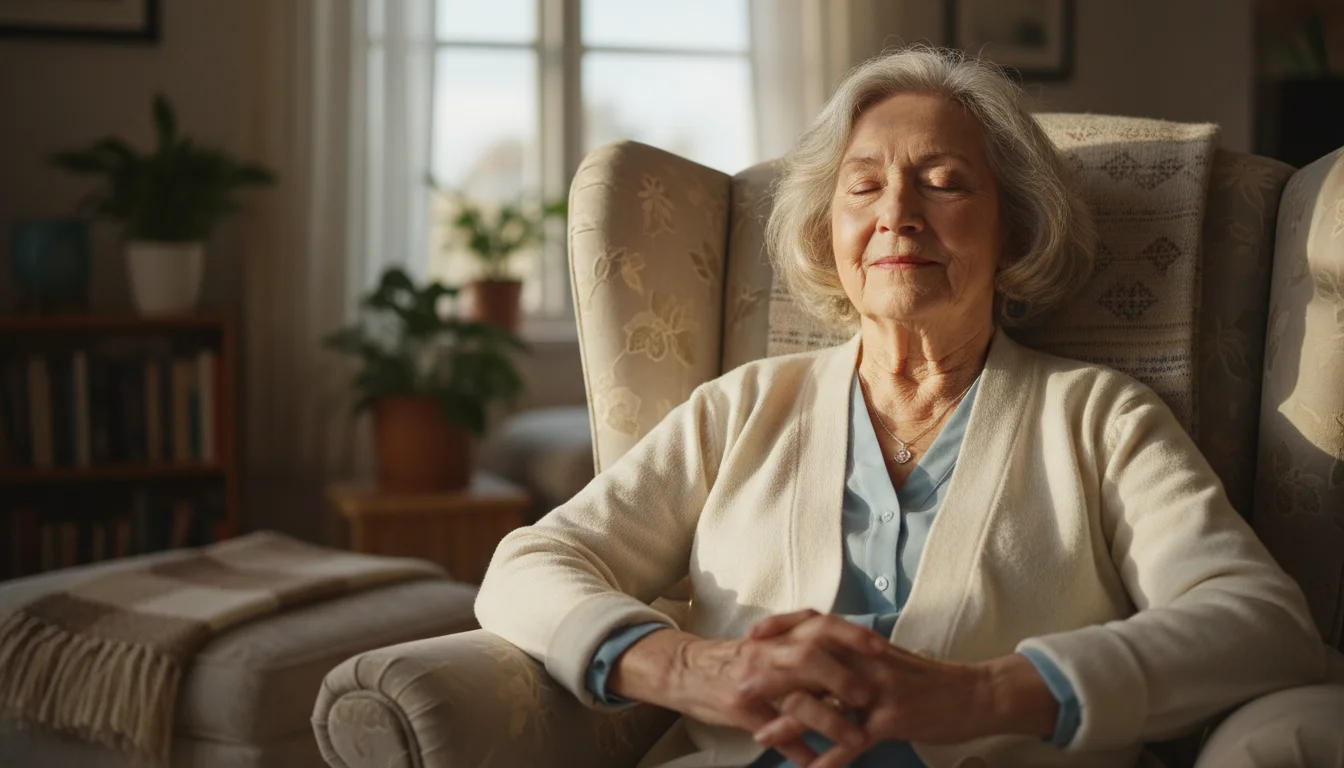
This exercise is perfect for a quiet moment in your favorite chair.
- Sit comfortably, with your back supported and your hands resting in your lap. Allow your eyes to gently close or lower your gaze to the floor.
- Bring your awareness to the physical sensation of your breath. Don’t try to control it or change it in any way. Just observe.
- Notice where you feel the breath most clearly. Is it the cool air entering your nostrils? The gentle rise and fall of your chest? The expansion of your belly?
- Simply rest your attention on that sensation.
- Your mind will inevitably wander. This is completely normal. When you notice your thoughts have drifted, gently acknowledge it without any judgment, and then kindly guide your focus back to the sensation of your breath.
- Start with just two to three minutes a day and gradually increase the time as you feel comfortable.
This practice teaches you that you don’t have to be swept away by every thought or feeling. You have a calm anchor you can always return to: your breath.
Making these simple breathing exercises a part of your daily routine can be a wonderful act of self-care. Choose one that feels good to you and try practicing it for a few minutes each day.
Over time, you may find that you feel calmer, more focused, and better equipped to handle whatever life brings your way.
A final friendly reminder: Your health and safety are the top priorities. Please consult with your healthcare provider to ensure these exercises are right for you. Be gentle with yourself, listen to your body, and enjoy the journey to a more peaceful mind and body.
For expert guidance on senior health and finance, visit American Heart Association, Benefits.gov, National Institute on Aging (NIA) and Centers for Disease Control and Prevention (CDC).
|
Fact-Checked Content
Our editorial team reviews all content for accuracy and updates it regularly. Learn about our editorial process →
|