

Navigating long-term care challenges can feel overwhelming, but you do not have to protect your personal dignity and legal protections alone. Local ombudsman programs serve as free, confidential advocates for seniors living in nursing homes, assisted living facilities, and residential care communities nationwide. Whether you are facing sudden eviction notices, unanswered call lights, or concerns over medication management, certified ombudsmen stand ready to investigate issues and champion your choices. Backed by federal law, these dedicated advocates empower you and your family to resolve disputes swiftly, ensuring your living environment remains safe, respectful, and fully compliant with state and federal care standards.
Understanding the Long-Term Care Ombudsman Network
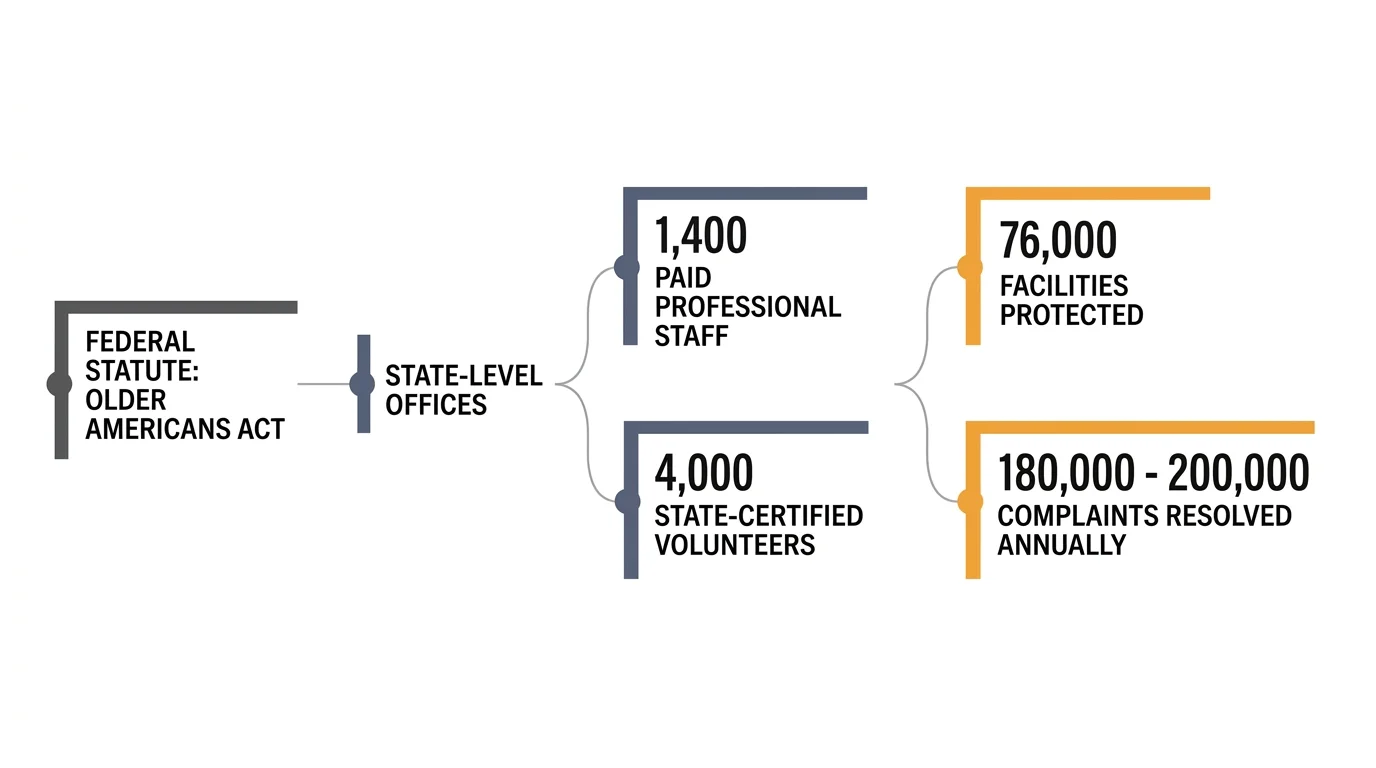
Congress established the Long-Term Care Ombudsman Program (LTCOP) to ensure that vulnerable older adults retain their voice, rights, and quality of life in institutional settings. Originally piloted in 1972 and formally integrated into Title VII of the Older Americans Act in 1978, federal statute mandates an Office of the State Long-Term Care Ombudsman across all 50 states, the District of Columbia, Puerto Rico, and Guam.
According to the Administration for Community Living (ACL), this nationwide advocacy system oversees resident rights in approximately 76,000 long-term care facilities; this network safeguards more than 2 to 3 million seniors residing in nursing homes, assisted living facilities, board-and-care facilities, and continuing care retirement communities. Every year, local ombudsmen investigate and resolve roughly 180,000 to 200,000 complaints, providing an indispensable safety net for residents who might otherwise feel powerless against large corporate care facilities.
The network functions through a cooperative model consisting of roughly 1,400 paid professional staff members and more than 4,000 state-certified volunteer ombudsmen. These advocates make regular, unannounced visits to facilities, monitor living conditions, educate staff on resident autonomy, and provide individualized support without charging a single dollar to residents or their families.
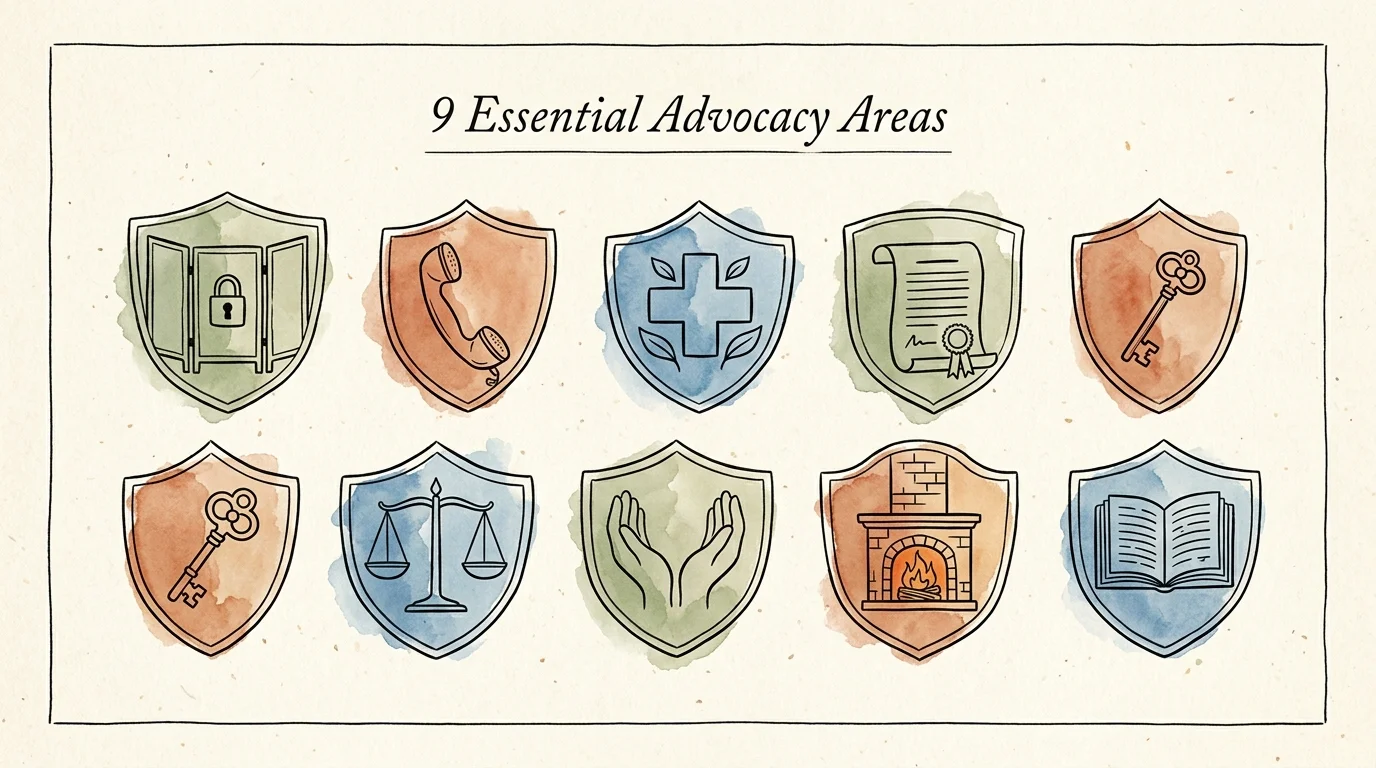
9 Essential Ombudsman Advocacy Programs Protecting Seniors
While state offices provide overarching policy leadership, local ombudsman programs carry out day-to-day frontline advocacy. These specialized initiatives target distinct operational areas where facility violations and disputes frequently arise.
1. Nursing Home Resident Rights Protection Programs
Local nursing home ombudsman programs safeguard the fundamental civil and personal rights guaranteed under federal law. When seniors move into licensed skilled nursing facilities, they retain every right guaranteed to any citizen, including privacy during medical examinations, unrestricted communication with family members, and absolute freedom from chemical and physical restraints. Local ombudsmen ensure that facilities do not curtail your freedoms under the guise of organizational convenience or staffing shortages.
2. Assisted Living and Residential Care Advocacy Initiatives
Assisted living facilities operate under state-specific regulations rather than a single uniform federal standard, creating substantial variance in consumer protections. Local assisted living ombudsman programs bridge this regulatory gap by reviewing residency agreements, monitoring house rules, and ensuring that community management delivers all contracted personal care services, such as bathing assistance, mobility support, and meal preparation.
3. Involuntary Discharge and Eviction Defense Services
Unlawful and abrupt discharges consistently rank as the single most common complaint category handled by ombudsmen nationwide. Facilities often issue illegal eviction notices when a resident exhausts private funds and transitions to Medicaid, or when a resident develops advanced cognitive needs. Ombudsman eviction defense programs review eviction notices for legal compliance, verify whether the facility issued a formal 30-day written notice, and represent residents at administrative appeal hearings to prevent unlawful facility dumping.
4. Daily Care Quality and Response Monitoring Initiatives
When chronic understaffing occurs, day-to-day care routines deteriorate rapidly. Local ombudsman care-quality programs investigate systemic care failures, including prolonged call-bell response times, delayed incontinence care, missed physical therapy sessions, and inadequate assistance with dining. By documenting patterns of care neglect, ombudsmen work directly with directors of nursing and facility administrators to enforce acceptable response standards.
5. Resident Autonomy and Personal Choice Programs
Federal regulation 45 CFR Part 1324 codifies resident-directed advocacy, establishing that care plans must bend to the resident’s wishes—not the other way around. Local autonomy initiatives protect your legal right to choose when you wake up, when you go to bed, what meals you eat, and which daily activities you attend. If you prefer to sleep late or refuse a specific recreational program, the ombudsman ensures facility staff respect your personal schedule without imposing penalties or pressure.
6. Medication Administration and Medical Consent Programs
Managing complex prescription regimens requires strict medical precision and resident consent. Ombudsman medication oversight programs investigate delayed dosages, medication administration errors, and unauthorized changes in prescriptions. Furthermore, these programs actively defend seniors against the inappropriate use of off-label psychotropic medications—often used inappropriately to sedate residents with dementia—by verifying that facilities obtain clear, informed consent from you or your legal representative before administering mind-altering drugs.
7. Board-and-Care and Small Group Home Outreach
Small residential care homes (often called board-and-care homes or adult family homes) usually house between four and ten residents. Because these smaller facilities operate without the expansive corporate infrastructure of large nursing facilities, they can become isolated from regulatory oversight. Specialized local outreach programs ensure that certified ombudsmen visit these intimate residential homes routinely, identifying hidden safety hazards, nutritional deficits, and social isolation.
8. Resident and Family Council Support Programs
Independent resident and family councils provide collective leverage within long-term care environments. Ombudsman council support programs help residents and their loved ones organize, run, and maintain self-directed councils. Ombudsmen train council leaders on group negotiation, inform members of their legal rights under federal rules, and ensure that facility administrators receive and address formal council grievances without dismissing or intimidating participants.
9. Managed Long-Term Care Appeals Advocacy
As states increasingly shift Medicaid and Medicare services into managed care organizations, seniors frequently encounter service authorization denials. Local healthcare appeals ombudsmen assist you in challenging insurance denials for critical supports, such as motorized wheelchairs, specialized wound dressings, or daily personal care hours. These advocates walk you through the formal administrative appeals pipeline, ensuring that managed care organizations honor your covered benefit entitlements.
Resident-Directed Advocacy vs. Regulatory Enforcement
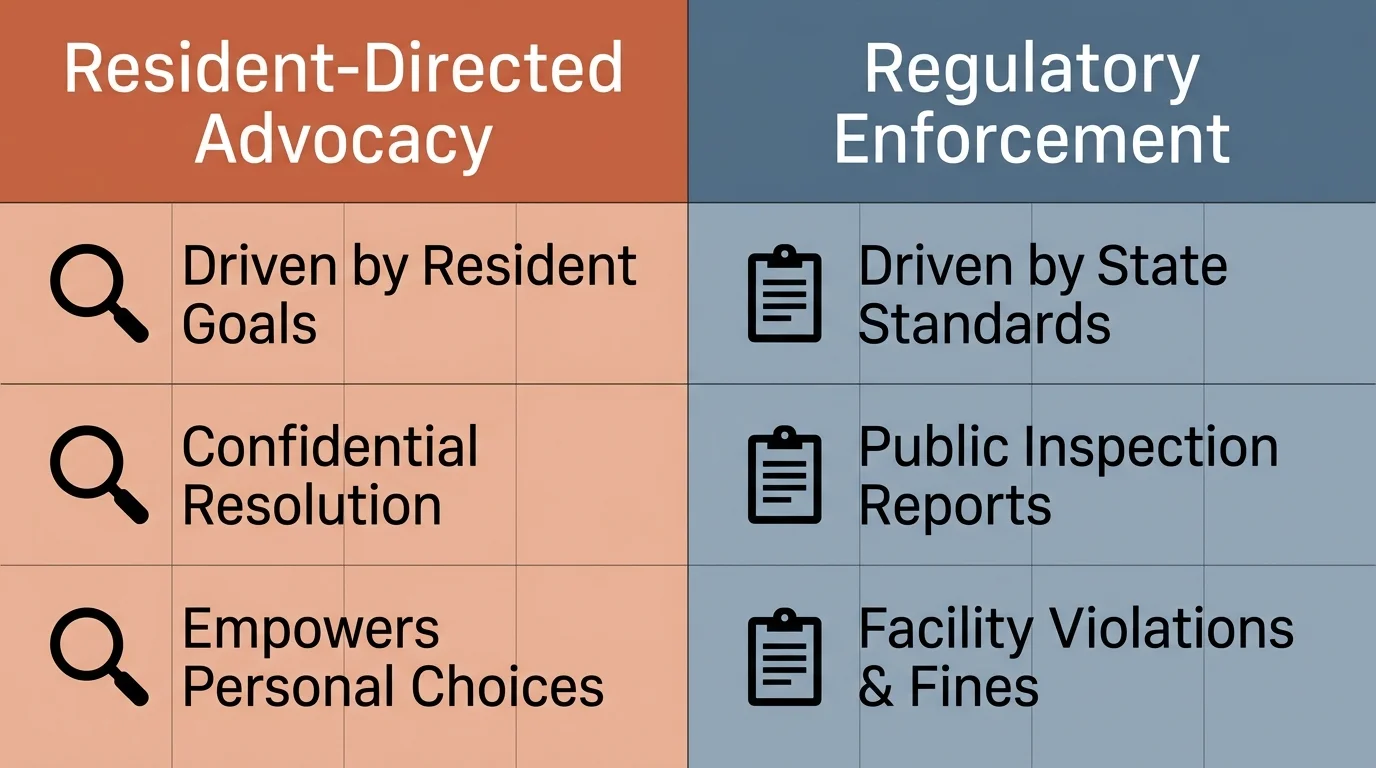
Understanding who to call during a dispute requires recognizing the distinct difference between an ombudsman and a state regulatory inspector. Ombudsmen are independent advocates; state survey agencies and health departments are regulatory enforcers.
According to the Centers for Medicare & Medicaid Services (CMS), state health inspectors enforce compliance with life-safety codes, conduct annual certification surveys, and issue formal state citations or civil monetary penalties against facilities. However, regulatory inspectors operate on behalf of the government, which means they must investigate violations regardless of whether the resident wishes to pursue the matter.
In contrast, an ombudsman takes direction solely from you. Under federal regulations (45 CFR Part 1324), local ombudsmen cannot disclose your identity or take any investigative action without your explicit, informed consent. If you report a problem but instruct the ombudsman to keep the matter confidential without approaching administration, they must honor your request. Ombudsmen use negotiation, mediation, and statutory knowledge to resolve grievances collaboratively before escalating issues to state licensing boards.
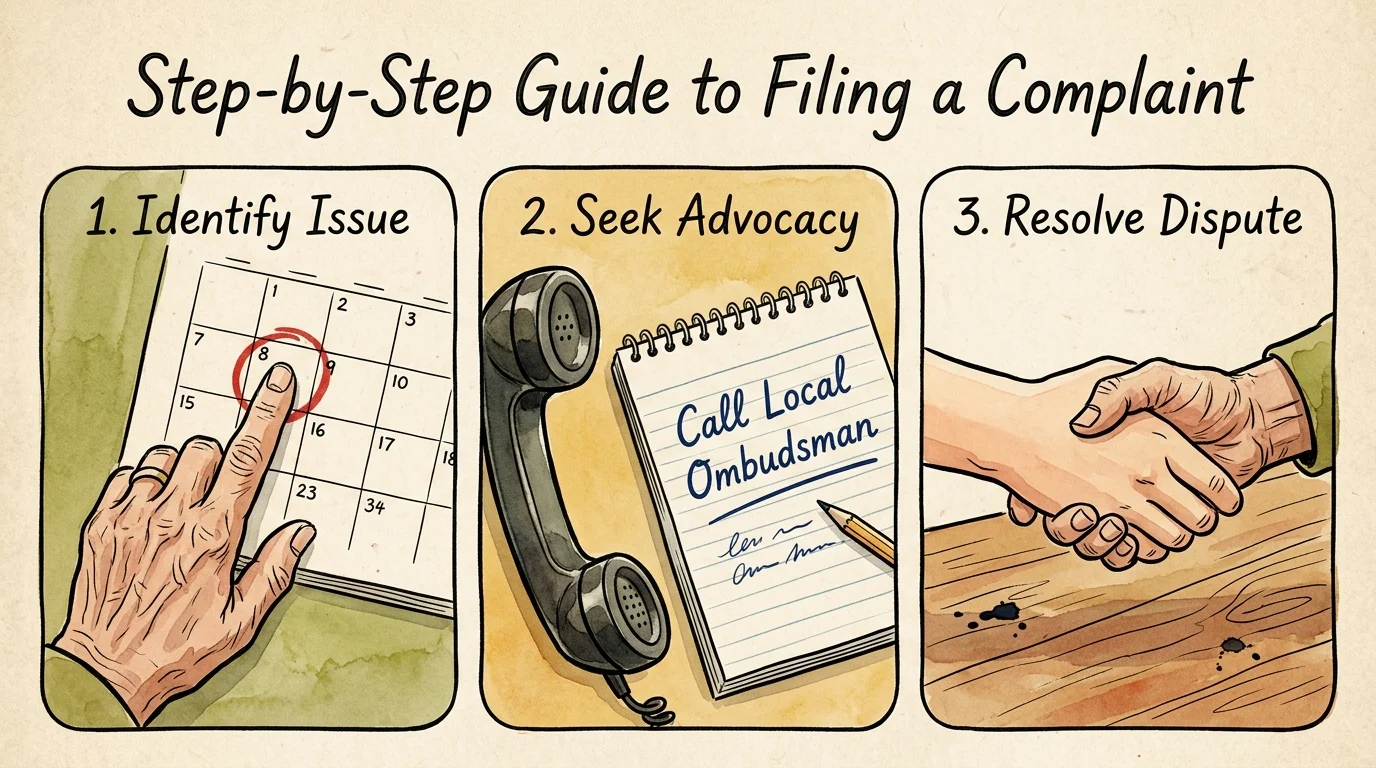
Step-by-Step Guide to Filing a Complaint and Seeking Help
Engaging a local ombudsman is a straightforward, confidential process. Follow these structured steps to ensure your concerns receive prompt attention and thorough investigation.
- Document the Incident or Concern: Write down specific details as soon as an issue arises. Note dates, exact times, staff member names, room numbers, and direct observations (such as a call light left unanswered for 45 minutes). Clear records give your advocate a concrete timeline to review.
- Locate Your Designated Local Ombudsman: Every licensed long-term care facility is required by law to post the direct telephone number of the local ombudsman office in prominent public areas, such as the main lobby, dining hall, and admission packets. You can also search online through national locator directories.
- Initiate Initial Contact: Call or email the local program office. You can make an inquiry yourself, or a family member, friend, or facility staff member can make the call on your behalf. Clearly state whether you wish to remain anonymous during preliminary discussions.
- Participate in a Confidential Consultation: A certified ombudsman will meet with you privately—in person at your facility or over the phone. During this session, the advocate will listen to your perspective, review your goals, and explain applicable rights under state and federal law.
- Define the Action Plan and Grant Consent: The ombudsman will ask you how you wish to proceed. You determine the boundaries: you may authorize the ombudsman to review your medical charts, interview nursing staff, or meet with the facility administrator. Nothing happens without your green light.
- Monitor Resolution and Follow-Up: The ombudsman works through mediation channels to resolve the grievance. After presenting findings to the administration, your advocate checks back with you regularly to confirm that the facility implemented the agreed-upon corrections and that quality of care remains high.
If you cannot locate the ombudsman contact details within your facility, you can connect directly through the Eldercare Locator, a public service supported by the U.S. Administration on Aging that instantly links seniors to their local Area Agency on Aging and designated ombudsman entity.
Common Pitfalls, Retaliation Fears, and Billing Scams
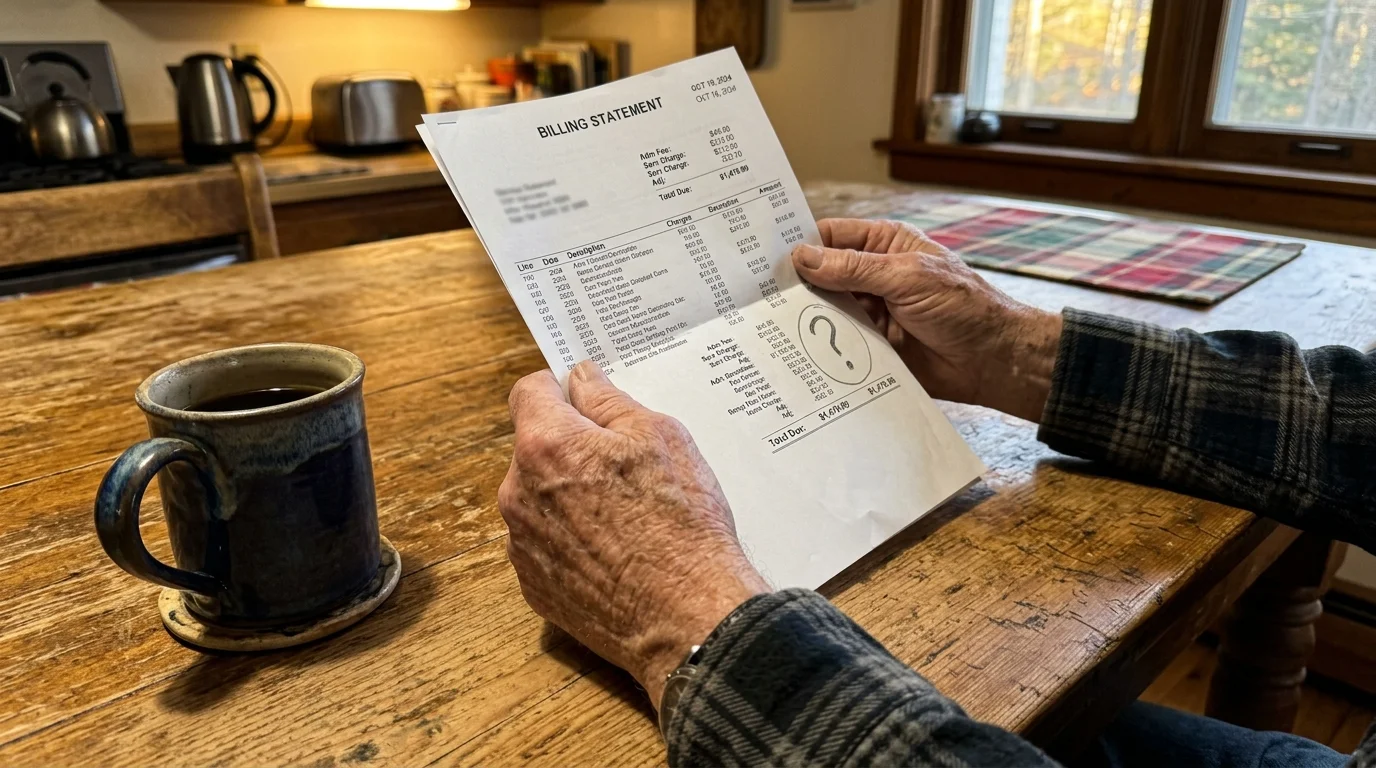
Many seniors hesitate to assert their rights due to common misconceptions or valid fears regarding how facility staff might react. Addressing these concerns directly helps protect both your well-being and your finances.
- Fear of Facility Retaliation: Many residents worry that filing a complaint will cause staff to neglect them or provide poorer care. Federal and state laws strictly prohibit retaliation against any resident or family member who contacts an ombudsman. Because ombudsmen maintain confidentiality, they can address broad operational issues—such as evening staffing levels—without singling out your room.
- Predatory Eviction and Discharge Tactics: Facilities sometimes attempt to discharge residents by claiming they can “no longer meet your level of care” or claiming a resident is “disruptive.” Under federal standards, a facility cannot simply evict a resident without providing thorough clinical documentation, adequate medical notice, and a viable, safe discharge plan.
- Illegal Third-Party Financial Guarantees: During the admission process, facilities cannot legally require a family member or friend to sign a contract making them personally liable for nursing home bills. According to guidance from the Consumer Financial Protection Bureau (CFPB), conditioning admission on third-party financial guarantees violates the Nursing Home Reform Act. An ombudsman can review questionable admission contracts to protect family finances.
- Assuming the Ombudsman Works for the Facility: Ombudsmen do not receive paychecks from care facilities, nor do they answer to nursing home management. They operate completely independently from the facilities they monitor, answering solely to the public and the residents they represent.

Comparing Rights Protections Across Care Settings
The regulatory authority and scope of advocacy services shift depending on where you reside. The following comparison outline illustrates how ombudsman advocacy functions across different residential settings.
| Care Setting | Primary Regulatory Framework | Common Rights Disputes | Ombudsman Advocacy Role |
|---|---|---|---|
| Skilled Nursing Facility (Nursing Home) | Federal (Nursing Home Reform Act / CMS) & State Licensing | Involuntary discharge, chemical restraints, slow call response, pressure sores | Direct mediation, care plan intervention, eviction appeal representation, chart review with consent |
| Assisted Living Community | State Department of Health / Social Services Regulations | Fee increases, changes in level-of-care charges, medication management disputes | Contractual dispute review, negotiation with executive directors, state standard enforcement |
| Board-and-Care / Adult Family Home | State Community Care Licensing Statutes | Social isolation, poor food quality, lack of daily activities, limited staffing | Routine onsite monitoring visits, conflict mediation between resident and owner-operators |
| Continuing Care Retirement Community (CCRC) | State Insurance Commissioners & Public Health Agencies | Contract fulfillment, transfer between independent and skilled nursing units | Interpreting entrance agreements, protecting transition rights between care levels |
Frequently Asked Questions
Are local ombudsman services completely free to use?
Yes. All long-term care ombudsman services are 100% free of charge. The program receives its funding through the federal Older Americans Act alongside state and local allocations. You will never receive a bill, invoice, or fee for any consultation, facility investigation, or mediation conducted by an ombudsman.
Can an ombudsman shut down a dangerous facility or issue fines?
No. Ombudsmen are resident-directed advocates, not regulatory licensing officers. They do not have the statutory power to write fines, issue formal citations, or revoke a facility’s operating license. However, with your permission, an ombudsman can escalate unresolvable safety violations or abuse allegations directly to state licensing investigators and Adult Protective Services (APS) for formal regulatory action.
What happens if a resident has dementia and cannot voice their own complaints?
When a resident cannot personally express their wishes due to advanced cognitive impairment, the ombudsman works closely with the resident’s designated legal representative (such as a healthcare power of attorney or legal guardian). If no representative exists, the ombudsman observes care practices directly, monitors physical well-being, and advocates for the resident’s safety, comfort, and inherent dignity using objective standards of care.
Can an ombudsman help if a facility threatens to evict me for applying to Medicaid?
Yes. Federal regulations strictly prohibit certified nursing homes from evicting or transferring a resident simply because payment transitions from private pay to Medicaid. If your facility issues an eviction notice related to Medicaid pending status, notify your local ombudsman immediately. They can help you file an expedited appeal and ensure the facility follows legal discharge requirements.
Is my conversation with an ombudsman strictly confidential?
Yes. Federal law provides robust confidentiality protections for all ombudsman communications. An advocate cannot reveal your name, the details of your complaint, or your medical information to facility staff, family members, or state agencies without your explicit written or verbal authorization.
For additional senior resources, visit
Eldercare Locator, AARP, Alzheimer’s Association and American Heart Association.
Disclaimer: The information in this article is for educational purposes only and is not intended to be a substitute for professional financial, legal, or medical advice. Always consult with a qualified expert for advice tailored to your personal situation.









Leave a Reply