

In this guide4 sections
Hello, and welcome. As a health professional dedicated to the well-being of seniors, I know that a visit to the doctor can sometimes feel overwhelming.
You might leave an appointment feeling rushed, confused, or like you didn’t get to ask your most important questions. Please know this is a common experience, and more importantly, it’s something you have the power to change.
Good healthcare is a partnership between you and your doctor. But for a partnership to work, both sides need to communicate effectively.
This guide is designed to give you the tools and confidence you need to take an active role in that partnership.
We will walk through, step-by-step, how to prepare for, participate in, and follow up on your medical appointments to ensure your voice is not just present, but truly heard.
Think of this not as a challenge, but as a skill you can learn. By taking these simple, proactive steps, you can transform your doctor visits from a source of anxiety into a powerful tool for managing your health and living your best life.

Before Your Appointment: The Power of Preparation
The single most important part of a successful doctor’s visit happens before you ever step into the office. Being well-prepared turns a short, 15-minute appointment into a highly effective and focused conversation.
It helps you stay calm, remember everything, and show your doctor that you are a serious partner in your own healthcare.

Step 1: Define Your Goal for the Visit
Why this is important: Doctors’ schedules are tight. If you have several concerns, it’s easy to run out of time.
By deciding on your top priority beforehand, you ensure your most pressing issue gets the attention it deserves.
How to do it:
- Ask yourself: “What is the number one reason I am going to the doctor today?” Is it a new pain? A question about a medication? Concerns about recent test results? A referral you need?
- Write this primary goal at the very top of a piece of paper. This is your mission for the appointment. If you only accomplish one thing, this will be it.

Step 2: Create a Prioritized List of Questions and Concerns
Why this is important: It is completely normal to forget your questions in the moment. A list acts as your script, ensuring you cover everything you intended to discuss.
Prioritizing it helps you use the limited time wisely.
How to do it:
- Write it down. Use a notebook or a sheet of paper. Writing by hand can help you remember, and it’s easy to bring with you. Write clearly and in large print so it’s easy to read.
- List your top three concerns. After your main goal, list the two next most important questions or symptoms. You should aim to address these three items first. You can list other, less urgent questions below them.
- Be specific. Instead of writing “feeling tired,” try “I have been feeling too tired to do my grocery shopping for the past three weeks.” Instead of “knee pain,” write “a sharp pain on the right side of my left knee, worse when I walk up stairs.”

Step 3: Gather All Your Health Information
Why this is important: Your doctor needs the full picture to give you the best advice. Providing them with organized information saves time and can prevent dangerous medical errors, especially regarding medications.
How to do it:
- Create a complete medication list. This is not just for prescriptions. You must include everything you take.
- Prescription medications (name, dose, how often you take it)
- Over-the-counter drugs (like aspirin, antacids, or allergy pills)
- Vitamins, supplements, and herbal remedies
- Any creams, eye drops, or patches you use
A simple way to do this is to put all your pill bottles and packages into a bag and bring them with you. This is often called a “brown bag review” and is highly recommended.
- Keep a simple symptom journal. If you’re seeing the doctor for a specific issue, jot down notes for a week or two beforehand. Include details like:
- What does the symptom feel like? (e.g., sharp, dull, aching)
- When does it happen? (e.g., in the morning, after eating)
- What makes it better or worse? (e.g., resting, walking, taking a certain pill)
- How much does it affect your daily life? (e.g., “It stops me from being able to button my shirt.”)
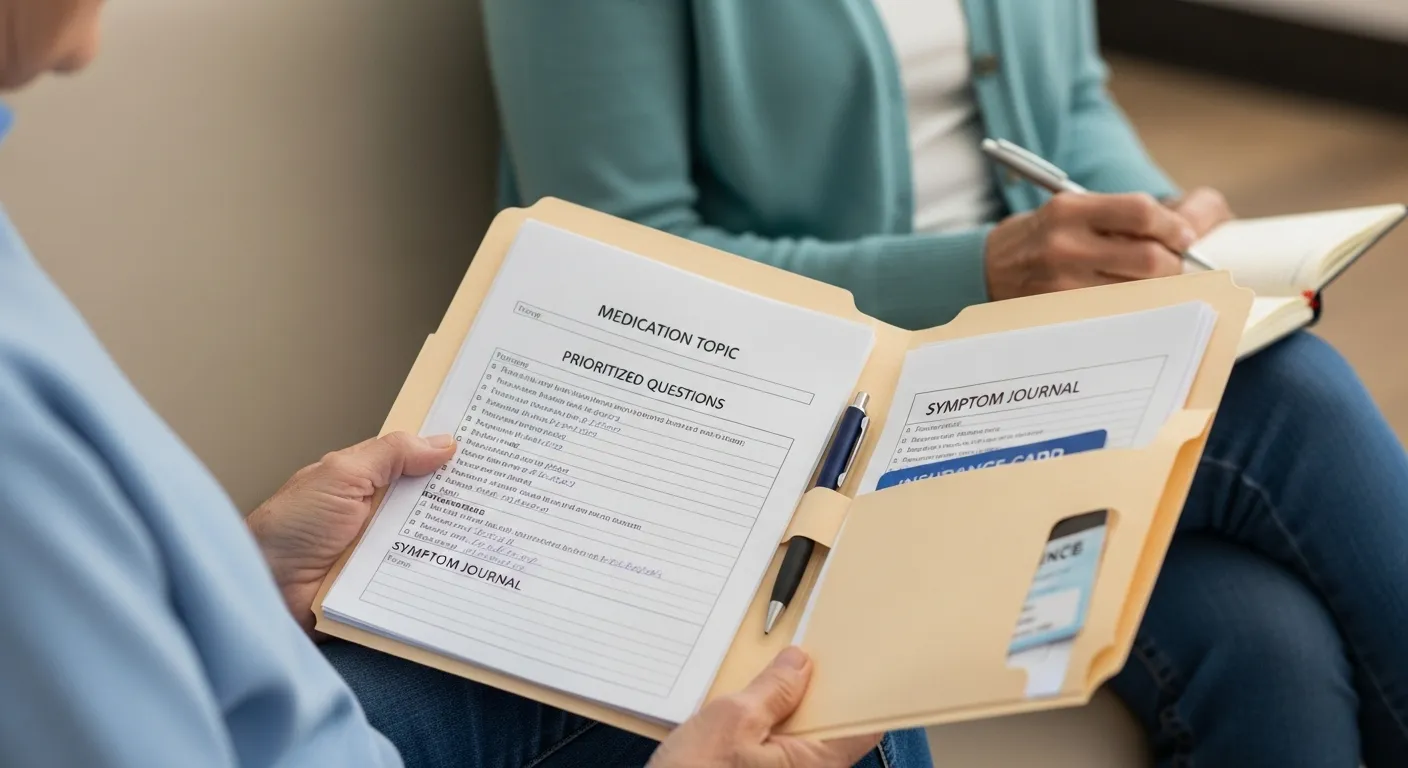
- Bring your “advocacy kit.” Have a folder or large envelope ready with your list of questions, your medication list, your insurance card, a photo ID, and a pen and paper for notes.

Step 4: Consider Bringing a Trusted Companion
Why this is important: This is a cornerstone of senior healthcare advocacy. A second person can act as another set of ears to catch details you might miss, a note-taker so you can focus on the conversation, and a source of moral support.
They can also help you remember what you wanted to ask.
How to do it:
- Choose the right person. Ask a trusted family member or a close friend who is calm, organized, and a good listener.
- Define their role beforehand. Explain to them that their primary job is to listen, take notes, and gently remind you of a question if you forget. It’s important that they understand you are the one who will be speaking to the doctor. They are there to support you, not to speak for you unless you ask them to.
- Give them a copy of your question list. This allows them to follow along and help you stay on track.

During Your Appointment: Making Every Minute Count
You’ve done the preparation, and now you’re in the exam room. This is your time.
Your goal here is to build a rapport with your doctor and get the clear answers you need. Remember, this is a conversation, not an interrogation.

Step 1: Set the Agenda at the Start
Why this is important: Doctors often start with a general question like, “So, what brings you in today?” This is your opportunity to take the lead and frame the entire visit.
It prevents the doctor from focusing on a minor issue while your major concern goes unaddressed until the last minute.
How to do it:
- Use your list. When the doctor asks why you are there, respond confidently and clearly. For example: “Thank you for seeing me. I have three main things I’d like to talk about today. The most important is this new pain in my hip. I also have a question about my blood pressure medicine, and I’d like to get my flu shot.”
- Hand over a copy of your list. You can even say, “To help us stay on track, I made a list of my questions. Here is a copy for you.” This is a very professional and helpful gesture that doctors appreciate.

Step 2: Tell Your Story Clearly and Honestly
Why this is important: Your doctor relies on your description of what’s happening to make a diagnosis. Being honest and direct, without downplaying your symptoms, is critical.
Many people feel embarrassed to discuss certain issues (like incontinence or memory lapses), but your doctor has heard it all before and needs this information to help you.
How to do it:
- Start with your main concern. Refer back to your symptom journal. Describe the “what, when, and where” of your symptoms.
- Be honest about everything. This includes sensitive topics like falls, feelings of sadness, memory issues, or alcohol use. It also means being truthful about whether you are taking your medication as prescribed. Your doctor is there to help, not to judge.
- Don’t downplay your pain or concerns. Avoid saying “it’s nothing” or “I’m probably just getting old.” Be direct. Say, “This pain is new, and it worries me,” or “I am having trouble with my balance, and I’m afraid of falling.”

Step 3: Ask Questions Until You Understand
Why this is important: Medical information can be complex. If you don’t understand a diagnosis, a treatment plan, or instructions, you will not be able to follow them correctly.
It is your right to have a clear explanation. Asking questions is a sign of strength, not weakness.
How to do it:
- Keep it simple. You don’t need to know complex medical terms. Use these simple, powerful phrases:
- “Can you please explain that in a simpler way?”
- “I’m not familiar with that term. What does it mean?”
- “What are my options for treatment?”
- “What are the benefits and risks of that option?”
- “What will happen if we don’t do anything?”
- Use the “Teach-Back” Method. This is one of the most effective communication tools. After your doctor explains something, you repeat it back in your own words. Say, “Okay, just so I’m sure I understand, you want me to take this new pill once a day in the morning, and I should watch out for dizziness as a side effect. Is that correct?” This instantly clears up any misunderstandings.
- Take notes. As the doctor speaks, jot down key words, medication names, and instructions. If you brought a companion, this is their most important job.

After Your Appointment: Ensuring a Successful Follow-Through
Your responsibility for your health doesn’t end when you walk out of the doctor’s office. Following up correctly ensures that the plan you and your doctor created is put into action and gives you a clear path forward.

Step 1: Review Your Notes Immediately
Why this is important: The details of the conversation are freshest in your mind right after the appointment. Reviewing your notes helps solidify the information and identify any gaps in your understanding.
How to do it:
- Find a quiet place. Before you even leave the clinic’s parking lot, or as soon as you get home, sit down with your companion (if you have one) and go over the notes.
- Fill in the blanks. Did the doctor mention a website? A specialist’s name? A type of test? Add these details while you still remember them. Circle anything that is still unclear.
- Organize your “to-do” list. Create a clear list of next steps. For example: 1) Pick up new prescription from CVS. 2) Call the imaging center to schedule a scan. 3) Start walking for 10 minutes every day.

Step 2: Know Who to Call with Questions
Why this is important: Questions will inevitably come up after you leave. Knowing the right person and number to call saves you from frustration and ensures you get accurate information quickly.
How to do it:
- Ask before you leave. At the checkout desk, ask, “If I have a question about my instructions, who is the best person to call?” They will likely direct you to a nurse’s line.
- Get the number. Save this number in your phone or write it on your appointment summary sheet.
- Use the Patient Portal. Many clinics now have online patient portals. These are secure websites where you can view test results, see appointment summaries, and send non-urgent messages to your doctor’s office. Ask the staff how to sign up for it. This can be an excellent tool for patient-doctor communication.

Conclusion: You Are Your Own Best Advocate
Taking control of your healthcare conversations is one of the most empowering things you can do for your well-being. It may feel a little awkward at first, but with each appointment, you will become more comfortable and confident.
Remember that good doctors want you to be an engaged and informed patient. When you come prepared, ask good questions, and participate actively, you make their job easier and help them provide you with the very best care.
You have a lifetime of experience and wisdom. You know your body better than anyone else.
By combining your self-knowledge with the practical steps in this guide, you can build a strong, trusting, and effective partnership with your doctor—a partnership that will serve your health for years to come.
For expert guidance on senior health and finance, visit Social Security Administration (SSA), Consumer Financial Protection Bureau (CFPB) and Administration for Community Living (ACL).
|
Fact-Checked Content
Our editorial team reviews all content for accuracy and updates it regularly. Learn about our editorial process →
|