

You probably know about healthcare premiums and routine home repairs, but hidden retirement costs can still catch you off guard. Surprising service fees often drain fixed budgets faster than standard living expenses.
Many seniors mistakenly assume Medicare covers daily supportive services as they age. Unfortunately, non-medical help and specialized administrative support require 100% out-of-pocket funding.
Learning about these unexpected retirement expenses now gives you the power to protect your savings. Here are four critical services you may eventually need and pay for yourself.
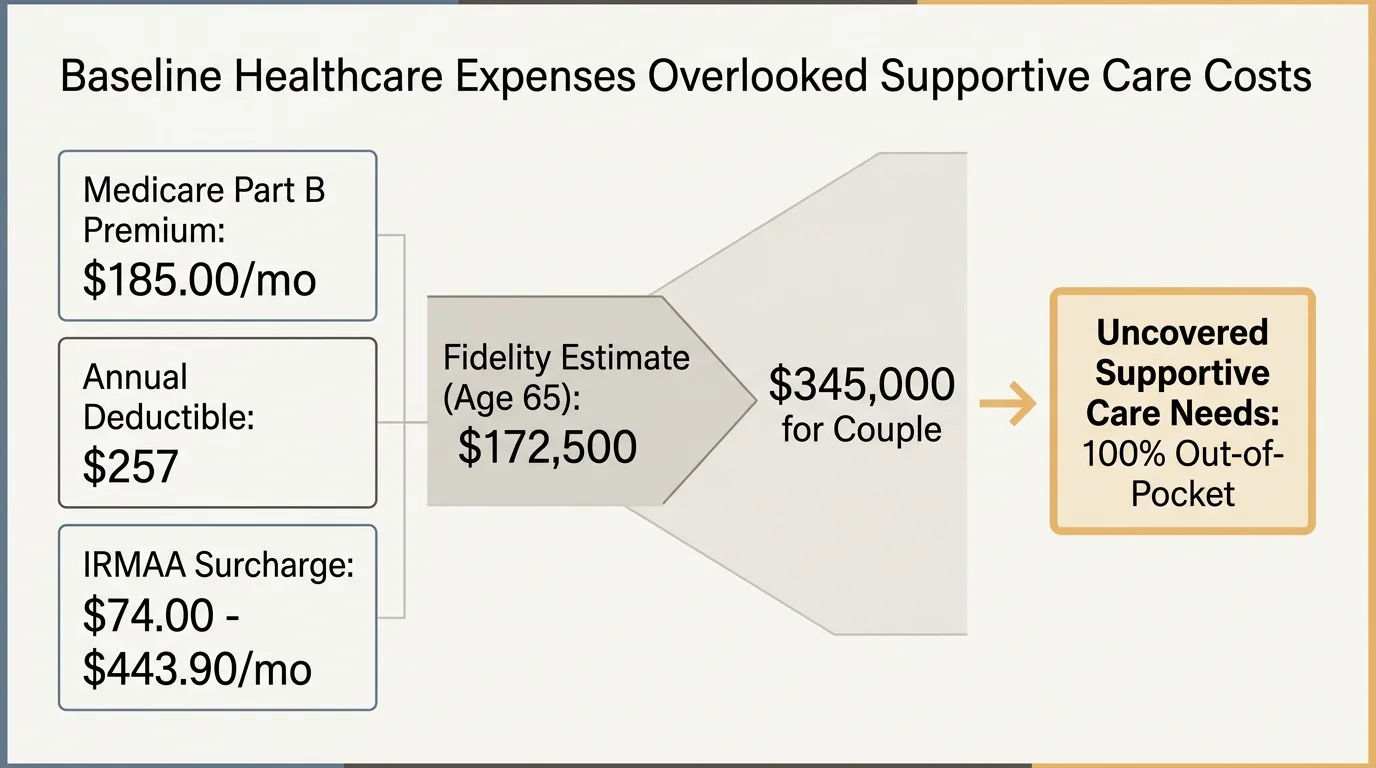
The Hidden Costs of Retiree Independence
Building a realistic retirement spending plan requires looking beyond basic groceries, utility bills, and mortgage balances. Many retirees face significant financial surprises when routine physical tasks suddenly demand professional assistance.
Healthcare expenses also extend far beyond standard Medicare premiums. In 2025, the standard Medicare Part B monthly premium is $185.00, accompanied by an annual deductible of $257.
Higher earners encounter even steeper baseline costs due to federal surcharges. Retirees with a modified adjusted gross income exceeding $106,000 single or $212,000 married face monthly IRMAA surcharges between $74.00 and $443.90.
According to the Fidelity Retiree Health Care Cost Estimate, a 65-year-old retiring in 2025 needs roughly $172,500 for medical expenses. That benchmark rises to $185,500 in 2026, or $345,000 for an average retired couple.
Yet, these staggering health figures do not even include non-medical supportive labor. When physical stamina declines, paying outside professionals for everyday tasks becomes essential for maintaining your independence at home.
Research from the National Institute on Aging (NIA) emphasizes that long-term support needs often arise unexpectedly following sudden illnesses or injuries. Preparing for these retirement services you pay for safeguards your lifelong nest egg.
Many older adults live on fixed incomes that leave narrow margins for error. When new hourly fees enter your monthly ledger, they can quickly deplete your discretionary spending.
Inflation in personal care industries frequently outpaces general consumer price indices. Recognizing these service demands early prevents you from having to make painful financial compromises later.

1. Geriatric Care Management and Care Navigation
Navigating multiple doctors, complex medication schedules, and community housing options can quickly overwhelm families. That is why many seniors hire private geriatric care managers, also known as Aging Life Care professionals.
These experienced specialists act like personal healthcare project managers. They assess your living environment, coordinate medical appointments, advocate during hospital admissions, and create long-term wellness plans.
Families often hire these professionals during sudden medical crises or when adult children live far away. Having an objective, local expert on your side provides immense relief during transitions.
However, this expert guidance comes with a significant price tag. Geriatric care managers generally charge between $100 and $250 per hour for their ongoing coordination services.
Initial family intake assessments are equally costly. You can expect to pay an upfront evaluation fee ranging from $300 to $800 just to evaluate your current care needs.
Many older adults assume Medicare steps in to cover these care management invoices. In reality, neither Original Medicare nor standard Medicaid covers private care management, leaving you responsible for 100% of the bills.
You can search for local aging support programs through the Eldercare Locator to explore free community alternatives before hiring a private firm.
Most certified care managers belong to the Aging Life Care Association. When vetting a manager, confirm whether they hold recognized credentials like Certified Case Manager (CCM) or Certified Care Manager (CMC).
Consider these essential responsibilities that private care managers routinely coordinate on your behalf:
- Conducting comprehensive home safety assessments to identify fall hazards.
- Accompanying you to specialist medical appointments and recording physician instructions.
- Screening, interviewing, and scheduling in-home custodial caregivers.
- Assisting with crisis interventions and evaluating assisted living or memory care facilities.
- Facilitating communication among distant family members regarding evolving care priorities.
Knowing these costs upfront allows you to treat care management as an emergency contingency. Budgeting for a short-term retainer can save your family weeks of chaos.

2. Non-Medical Custodial and Homemaker Care
Remaining in your own home as you age often requires an extra pair of hands. Non-medical custodial care provides vital assistance with basic Activities of Daily Living, such as bathing, dressing, and eating.
Custodial care focuses strictly on supportive personal hygiene and mobility rather than clinical healthcare. While doctors may recommend it, it does not require licensed nursing oversight.
Homemaker services handle essential domestic responsibilities that become physically demanding over time. These duties include cooking nutritious meals, running errands, doing laundry, and performing light housekeeping.
According to Medicare.gov, Medicare does not pay for custodial care when it is the only type of care you need. This statutory exclusion surprises millions of retirees each year.
Medicare only covers short-term in-home healthcare if you are homebound and require skilled nursing or physical therapy. Once your skilled therapy ends, Medicare terminates coverage for home aides immediately.
Paying for home support entirely on your own creates significant retirement budgeting surprises. Rates for personal aides have climbed steadily due to rising labor demand nationwide.
According to the 2024 Genworth Cost of Care Survey, the national median hourly rate for a home health aide is $31.00. That rate translates to an annual expense of $77,792 for 44 weekly hours.
Dedicated homemaker services are almost as expensive. The median rate stands at $30.00 per hour, which totals roughly $75,504 annually for full-time daytime assistance.
Even modest part-time support of just four hours per day can cost you over $3,700 every single month. These steep expenses quickly erode standard retirement portfolios without dedicated long-term care insurance.
If you carry private long-term care insurance, remember that policies typically impose a 30-day to 90-day elimination period. You must pay all custodial bills out of pocket during that waiting window.

3. Daily Money Management and Bill-Paying Assistance
Cognitive fatigue, visual impairments, or complex estate tasks can make tracking monthly finances daunting. Daily Money Managers (DMMs) provide professional bill-paying and administrative support to keep your household solvent.
These professionals balance checkbooks, track recurring utility payments, organize tax documents, and decipher confusing Explanation of Benefits (EOB) statements. They also monitor accounts closely to protect you from fraudulent schemes.
Guidance from the Consumer Financial Protection Bureau (CFPB) highlights how dedicated financial managers help protect older adults from financial exploitation and billing errors.
Many retirees fall behind on property taxes, homeowner insurance renewals, or medical deductibles simply due to organizational challenges. A professional manager prevents costly service interruptions and late penalties.
While daily money management delivers tremendous peace of mind, it is entirely self-funded. Private insurance policies, Medicare, and traditional long-term care plans provide zero coverage for personal financial administration.
Certified managers affiliated with the American Association of Daily Money Managers (AADMM) charge between $75 and $150 or more per hour. In major metropolitan areas, rates frequently climb past $200 per hour.
Most clients require between two and four hours of administrative assistance each month. That routine schedule adds $150 to $600 in overlooked retirement fees to your monthly living costs.
A trustworthy manager will never ask for personal signature authority on your primary accounts. Instead, they organize disbursements for your signature or work alongside your designated power of attorney.
Integrating this administrative expense into your future budget protects both your credit score and your family harmony. It relieves adult children of uncomfortable financial oversight duties.
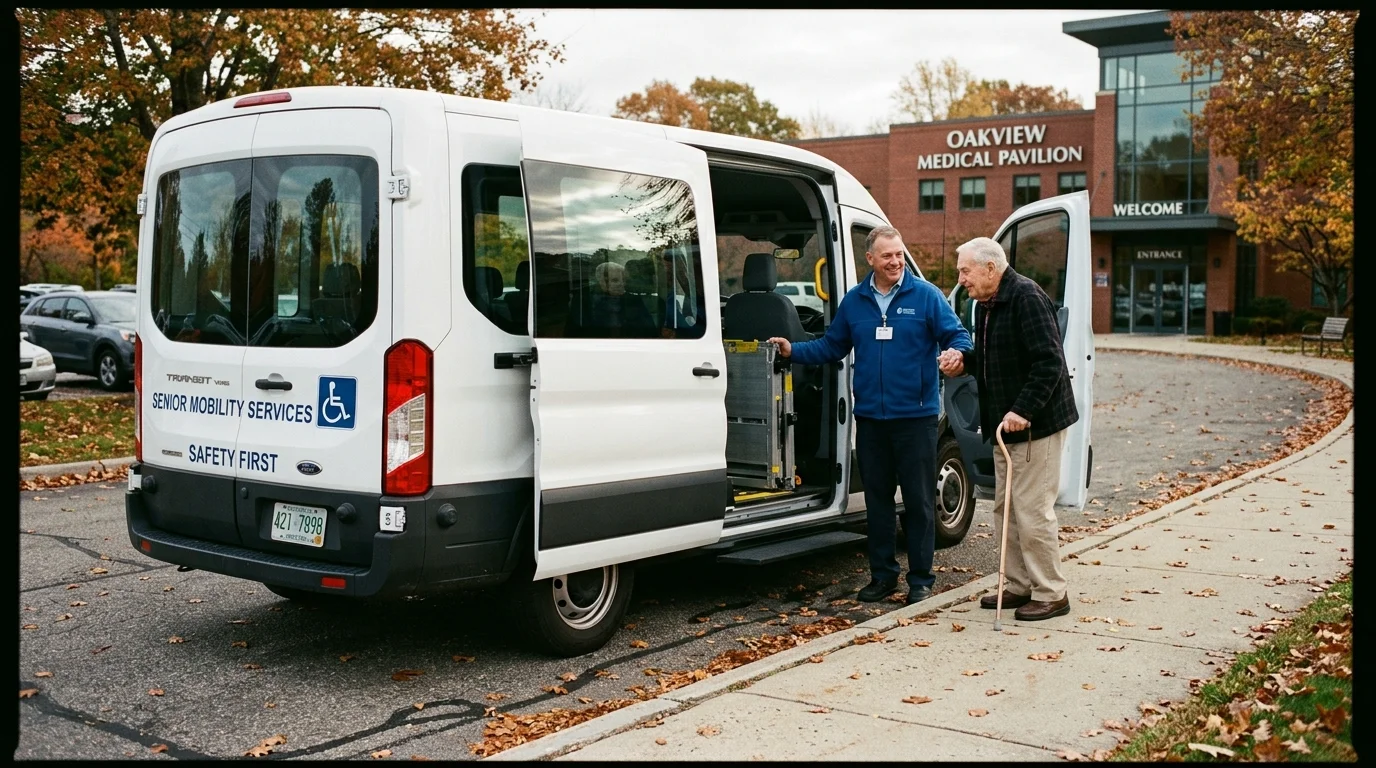
4. Non-Emergency Medical Transportation
Driving retirement is a milestone that nearly every older adult faces eventually. When driving yourself to medical appointments is no longer safe, securing reliable transit becomes an urgent priority.
Routine public transit or commercial rideshare apps often fail seniors who use walkers or wheelchairs. Drivers on standard apps are rarely trained to assist passengers across thresholds safely.
Specialized non-emergency medical transportation (NEMT) companies fill this void with accessible vehicles and trained drivers. They provide essential door-through-door assistance, escorting you directly into clinical waiting rooms.
Many seniors mistakenly assume that healthcare plans provide rides to essential treatments like dialysis or physical therapy. Unfortunately, Original Medicare Parts A and B strictly exclude routine non-emergency medical transportation.
Some Medicare Advantage plans have historically offered limited supplemental ride allowances. However, plan availability for this specific benefit dropped from approximately 30% in 2025 to just 24% in 2026.
Private-pay specialized transportation carries steep prices that accumulate rapidly. Standard wheelchair dispatch fees alone generally range from $50 to $80 per one-way trip.
Providers also assess mileage surcharges of $2.50 to $3.50 or more per mile. If the driver must wait during your appointment, expect standby fees between $25 and $50 per hour.
Frequent visits for specialized therapies can easily create monthly transit expenses exceeding $600. Without careful planning, transportation costs can consume a large portion of your monthly Social Security benefit.
According to AARP, coordinating volunteer driver networks and municipal transit options can help reduce recurring travel expenses. Exploring options early prevents costly emergency transport arrangements.
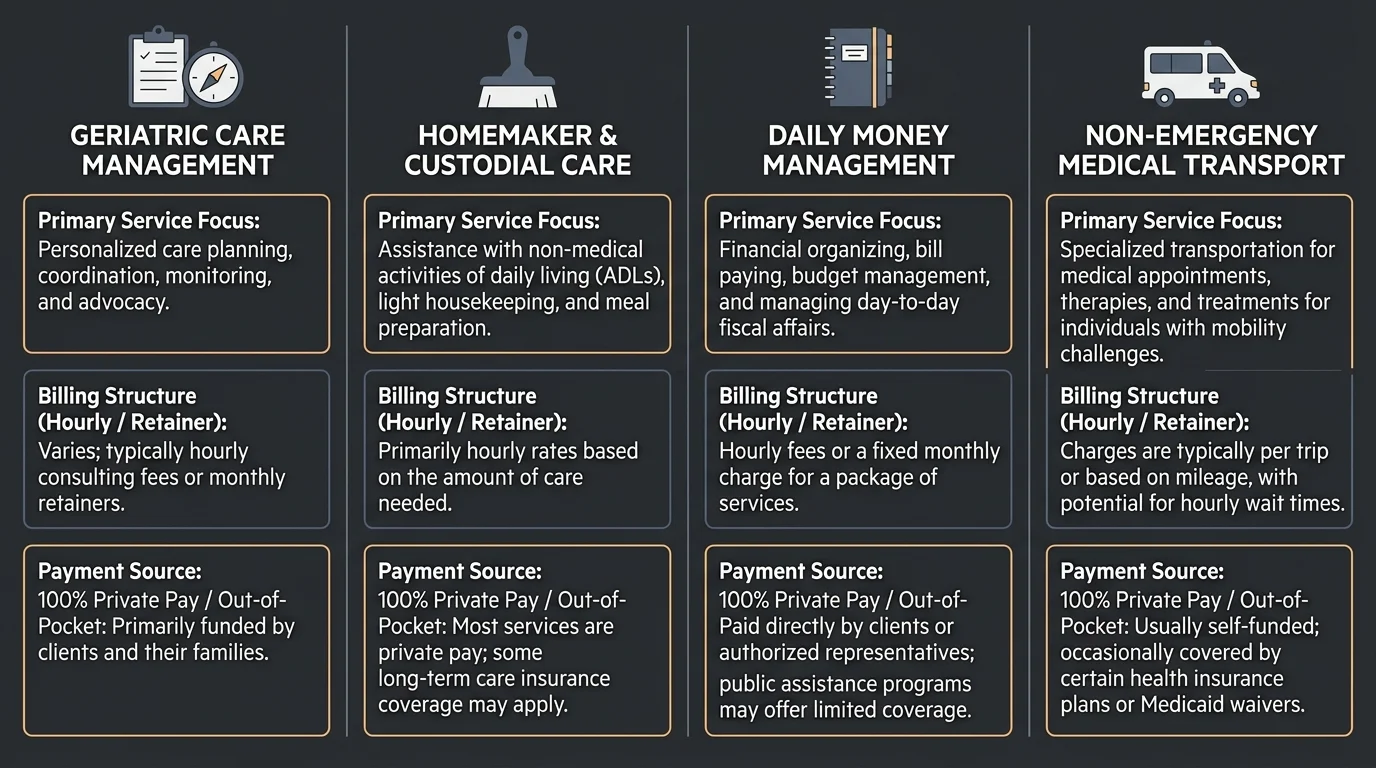
Comparing the Costs of Overlooked Retirement Services
Understanding the full financial scope of these hidden retirement costs allows you to structure your future withdrawals accurately. Each service addresses a unique care barrier but requires disciplined private funding.
Review the estimated pricing benchmarks below to see how these service rates compare across common senior needs.
| Service Category | Typical Out-of-Pocket Rate | Insurance Coverage Status | Primary Purpose |
|---|---|---|---|
| Geriatric Care Management | $100 – $250 / hour ($300 – $800 assessment) | 0% (Medicare and Medicaid excluded) | Care coordination and healthcare navigation |
| In-Home Custodial Aide | $31.00 / hour ($77,792 / year median) | 0% (Medicare excludes non-skilled care) | Help with daily bathing, dressing, and eating |
| Homemaker Services | $30.00 / hour ($75,504 / year median) | 0% (Medicare excludes non-medical care) | Meal preparation, light cleaning, and errands |
| Daily Money Management | $75 – $150+ / hour (up to $200 in metros) | 0% (Entirely self-funded) | Bill paying, insurance auditing, fraud defense |
| Medical Transportation | $50 – $80 base fee + $2.50–$3.50 / mile | Very limited (Excluded by Original Medicare) | Accessible door-through-door clinical rides |
These figures demonstrate how quickly multiple service fees can compound. A senior requiring both homemaker visits and occasional private transportation can easily spend $4,000 monthly out of pocket.
Because these fees rarely decline over time, indexing your future savings for specialized service inflation is critical. Building flexible reserves guarantees that unexpected needs do not disrupt your core lifestyle.

Strategies to Budget for Unexpected Care Costs
Preparing for unexpected retirement expenses requires a proactive financial blueprint. Establishing dedicated funding reserves protects your long-term wealth from sudden care bills.
You can implement several practical measures to absorb these private expenses without destabilizing your household budget:
- Maintain a dedicated care reserve fund in a high-yield savings account or short-term certificate of deposit.
- Leverage unspent Health Savings Account (HSA) balances to pay qualified out-of-pocket medical services tax-free.
- Audit your Medicare Advantage Annual Notice of Change each autumn to monitor transportation and companion benefit shifts.
- Review hybrid long-term care life insurance policies that provide flexible cash indemnities for non-medical services.
- Connect with your local Area Agency on Aging to explore state-funded respite grants and volunteer ride initiatives.
- Draft comprehensive durable powers of attorney early to grant trusted loved ones legal authority before hiring private managers.
Revisiting your financial projections annually allows you to adapt to new health realities. Adjusting your savings buffer periodically keeps your lifestyle secure and stress-free.
Sharing your care preferences and cost expectations with adult children prevents confusion later. Open family discussions ensure everyone understands which services you prefer to fund privately.
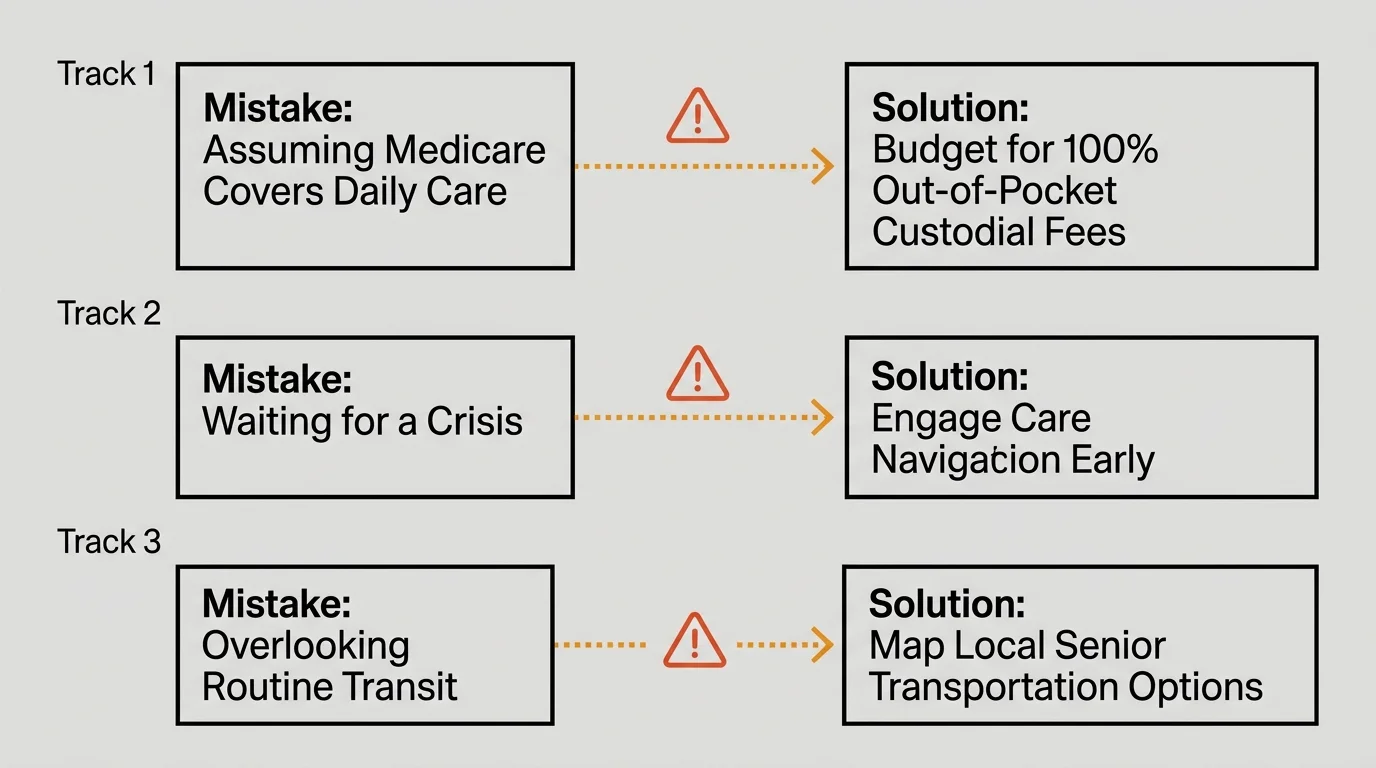
Common Mistakes and Costly Pitfalls to Avoid
The most dangerous pitfall is assuming government entitlements will cover everyday living assistance. Waiting until a physical health crisis strikes leaves you with limited provider options and maximum hourly rates.
Relying entirely on unpaid family members is another common trap. Caregiver burnout often forces adult children to reduce their work hours or sacrifice their own health.
Another frequent mistake involves hiring unvetted independent workers for in-home care to cut upfront costs. If an uninsured caregiver suffers a fall in your home, you could face devastating liability lawsuits.
Always verify that home care agencies carry adequate bonding, general liability coverage, and worker’s compensation insurance. Reputable agencies also perform rigorous criminal background checks on all employees.
Similarly, never hand over financial control without strict accountability measures in place. When hiring a daily money manager, demand independent references, proof of bonding, and active professional liability insurance.
Finally, avoid waiting too long to initiate non-emergency transportation arrangements. Booking specialized rides several days in advance avoids expensive surge pricing or missed medical appointments.
Frequently Asked Questions
Does Medicare ever pay for in-home homemaker services?
Medicare only covers home health aide services on a temporary basis if you are homebound and require skilled nursing or physical therapy. It never covers standalone homemaker services or general custodial care.
How can I find reputable Daily Money Managers in my area?
You can locate certified professionals through the American Association of Daily Money Managers registry. Always verify that candidate managers maintain professional liability insurance and pass rigorous background checks.
Are geriatric care management fees tax-deductible?
Portions of geriatric care management expenses may qualify as deductible medical expenses if they relate directly to medical care coordination. Consult a certified public accountant to confirm your eligibility under IRS guidelines.
Can Medicaid pay for non-emergency medical transportation?
Medicaid does provide non-emergency medical transit benefits for eligible low-income individuals who lack other transportation options. However, eligibility standards and prior authorization rules vary significantly depending on your state of residence.
What is the difference between a home health aide and a homemaker?
Home health aides provide hands-on personal care, including bathing, dressing, and physical transfers. Homemakers focus strictly on household maintenance, such as cooking meals, running errands, doing laundry, and light cleaning.
For additional senior resources, visit National Institute of Mental Health (NIMH), National Institutes of Health (NIH), Centers for Medicare & Medicaid Services (CMS), Social Security Administration (SSA) and Consumer Financial Protection Bureau (CFPB).
Disclaimer: The information in this article is for educational purposes only and is not intended to be a substitute for professional financial, legal, or medical advice. Always consult with a qualified expert for advice tailored to your personal situation.









Leave a Reply