

Planning your retirement strategy requires staying ahead of annual tax law adjustments and cost-of-living updates from the Internal Revenue Service. As you prepare your budget for 2027, understanding projected 401(k) contribution limit changes can significantly boost your retirement savings potential. Recent legislation, including key provisions from the SECURE 2.0 Act, introduced special age-tiered rules that allow older workers to stash away substantially higher tax-advantaged funds. Whether you plan to retire in a few years or keep working past age 65, maximizing your elective deferrals can lower your taxable income today while fortifying your nest egg for the future. Here is what you need to know about projected limits and age-specific rules.
Understanding How 401(k) Contribution Limits Change in 2027
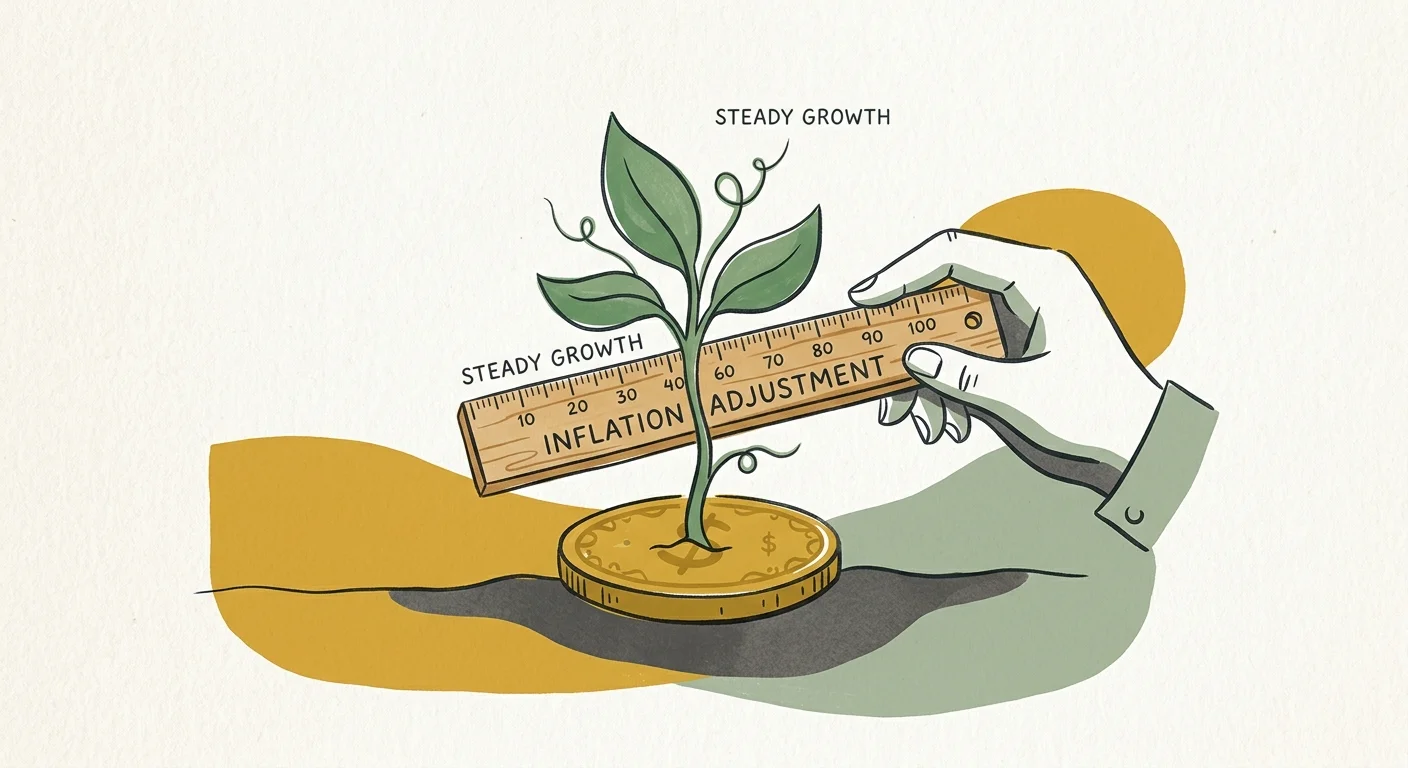
Every year, the Internal Revenue Service evaluates consumer price indices to adjust tax-advantaged retirement accounts for inflation. These adjustments ensure that your money maintains its purchasing power despite rising economic costs. For 2027, economic forecasts and actuarial models indicate steady increases across standard employee deferrals, catch-up contributions, and total annual additions. Understanding these movements gives you a distinct advantage when structuring your household finances.
The IRS traditionally releases official cost-of-living adjustments for the upcoming tax year in late October or early November. For the tax year 2027, expect the official announcement around late October 2026, based on the Consumer Price Index for All Urban Consumers (CPI-U) data gathered through September 2026. Financial industry analysts use ongoing monthly CPI metrics to generate highly accurate estimates well before the IRS publishes its final tables.
As noted by financial planning experts at Consumer Financial Protection Bureau (CFPB), proactive financial management near retirement can reduce tax liabilities and preserve essential income streams. For older adults, tax-deferred growth represents one of the most effective tools available to build a robust financial cushion. Staying informed about age-specific provisions allows you to divert more of your compensation directly into compound-earning assets.
Recent federal legislation transformed how retirement limits function by creating distinct sub-categories based on your exact age. Rather than applying a single universal catch-up allowance for everyone age 50 and older, current rules carve out specialized tiers. Knowing which age bucket you land in during 2027 ensures you contribute every dollar the law permits without exceeding federal statutory caps.

Standard 401(k) Limit Projections for Workers Under Age 50
To evaluate the full landscape of 2027 retirement savings, you must first establish the baseline standard elective deferral limit. In 2026, the IRS set the standard individual deferral limit at $24,500—an increase from $23,500 in 2025. Based on baseline inflation projections from major actuarial firms like Milliman, analysts forecast the standard 401(k) elective deferral limit to rise to $25,000 for the tax year 2027.
This base limit dictates the maximum amount an employee under age 50 can contribute from their salary through payroll deductions. It applies equally to Traditional pre-tax contributions and Roth post-tax contributions, or any combination of the two, provided the total sum does not surpass the single limit. If you have younger family members or colleagues, encouraging them to max out this baseline amount helps them leverage decades of compound interest.
Understanding the standard limit also matters for older workers because all age-based catch-up provisions build directly on top of this foundation. When federal regulators increase the standard limit by $500 increments, that gain boosts the total funding capacity for older age brackets as well. A rising baseline creates a stronger floor for every age demographic participating in employer-sponsored retirement plans.
Standard Catch-Up Contributions for Ages 50 to 59 and 64 Plus
Congress established catch-up contributions through the Economic Growth and Tax Relief Reconciliation Act of 2001 to help individuals accelerate their savings as they approach retirement. If you turn age 50 or older at any point during the calendar year, federal law permits you to make additional elective deferrals beyond the standard baseline limit.
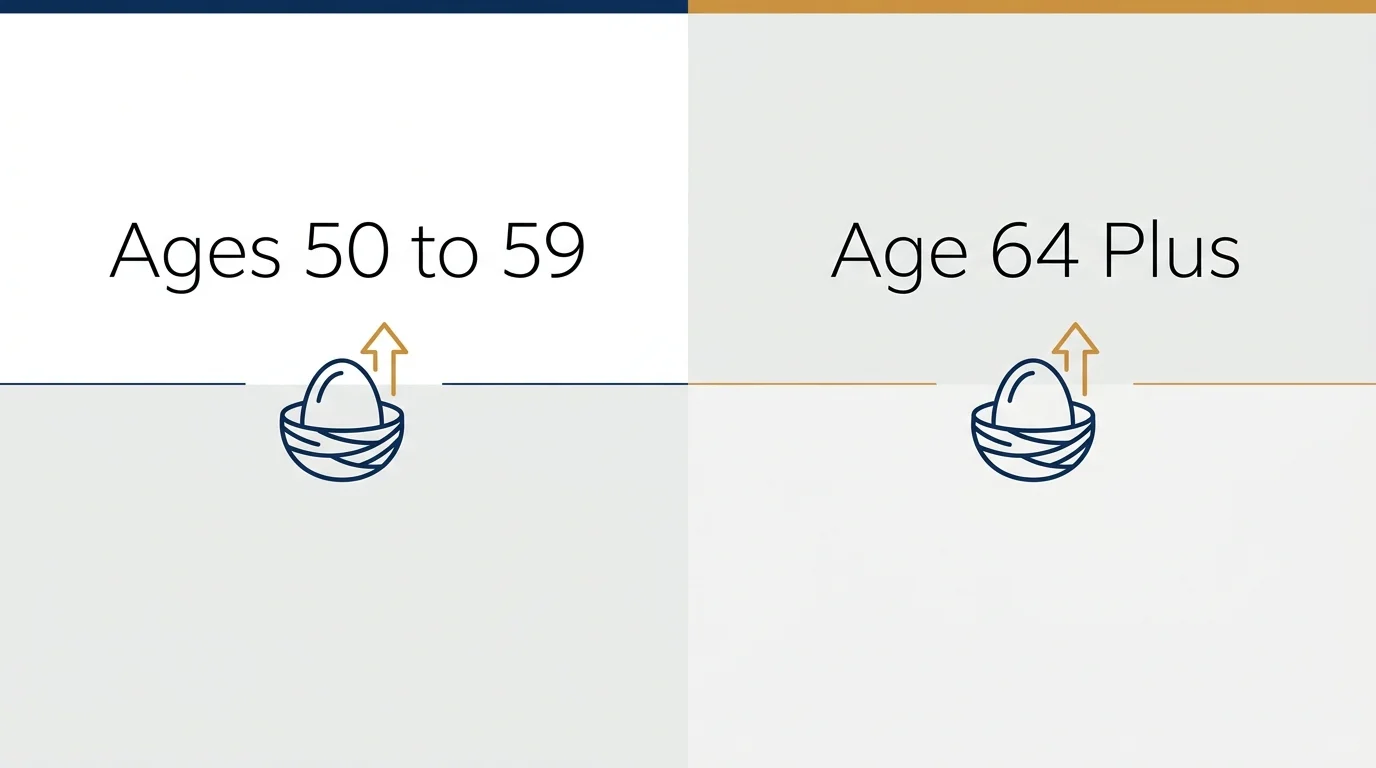
For the 2026 tax year, the standard catch-up contribution allowance stands at $8,000, bringing the total maximum employee deferral for participants age 50 and older to $32,500. Projections for 2027 indicate that the standard catch-up limit will likely hold at $8,000 or nudge upward to $8,500 depending on final inflation figures. Assuming a standard base limit of $25,000 and a standard catch-up limit of $8,500, qualified participants in these age tiers can expect a total employee contribution cap of around $33,500 in 2027.
Research from AARP highlights that many older workers express concern over retirement income adequacy; using these catch-up windows offers a direct remedy. It is important to note that this standard catch-up tier specifically applies to two distinct groups:
- Participants who turn age 50 through 59 during the calendar tax year.
- Participants who turn age 64 or older during the calendar tax year.
If you fit into either of these demographic windows during 2027, your plan allows you to stack the standard catch-up allowance on top of your baseline deferral. This setup allows you to shield thousands of extra dollars from current income taxation while strengthening your long-term balance sheet.

The SECURE 2.0 Super Catch-Up Rules for Ages 60 to 63
The SECURE 2.0 Act introduced a powerful new mechanism designed specifically for individuals on the doorstep of retirement. Known colloquially as the “super catch-up” provision, this rule offers an enhanced contribution limit for employees who reach ages 60, 61, 62, or 63 during the tax year. This special rule acknowledges that these four years often represent an individual’s peak earning power prior to leaving the workforce.
Under the statutory language, the enhanced catch-up limit equals 150% of the standard catch-up contribution limit (or $10,000 baseline indexed for inflation). For 2026, the super catch-up limit sits at $11,250. When added to the 2026 standard base limit of $24,500, eligible participants can defer up to $35,750 of their pre-tax or Roth salary into their workplace plan.
Looking ahead to 2027, economic forecasts project the super catch-up limit to increase to approximately $11,750. Combined with an estimated standard base limit of $25,000, workers aged 60 to 63 could contribute up to an impressive $36,750 directly from their paychecks in 2027. The table below illustrates how these changes stack up across different age categories.
To qualify for this elevated limit, you must reach age 60, 61, 62, or 63 by December 31, 2027. Once you turn 64 during a calendar year, the super catch-up rule no longer applies; your allowance automatically reverts to the standard catch-up limit tier. Tracking your birth date against these federal rules ensures you take full advantage of this lucrative four-year savings window without making payroll calculation errors.

Age-Based Contribution Breakdown for 2026 vs 2027 Projections
Navigating different limits across various age brackets can seem complex. Comparing current 2026 baselines against 2027 forecasts clarifies exactly how much you can direct into your 401(k) plan based on your date of birth.
| Age Group (Tax Year) | 2026 Standard Deferral | 2026 Catch-Up Limit | 2026 Max Employee Total | Projected 2027 Standard Deferral | Projected 2027 Catch-Up Limit | Projected 2027 Max Employee Total |
|---|---|---|---|---|---|---|
| Under Age 50 | $24,500 | N/A | $24,500 | $25,000 | N/A | $25,000 |
| Ages 50 to 59 | $24,500 | $8,000 | $32,500 | $25,000 | $8,500 | $33,500 |
| Ages 60 to 63 (Super Catch-Up) | $24,500 | $11,250 | $35,750 | $25,000 | $11,750 | $36,750 |
| Ages 64 and Older | $24,500 | $8,000 | $32,500 | $25,000 | $8,500 | $33,500 |
Reviewing these numbers demonstrates the significant advantage granted to individuals in the 60-to-63 age range. Over a four-year period, utilizing the super catch-up allowance enables you to accumulate tens of thousands of dollars in extra tax-advantaged capital right before you begin drawing down your portfolio.
The High-Earner Roth Catch-Up Mandate and What It Means for You
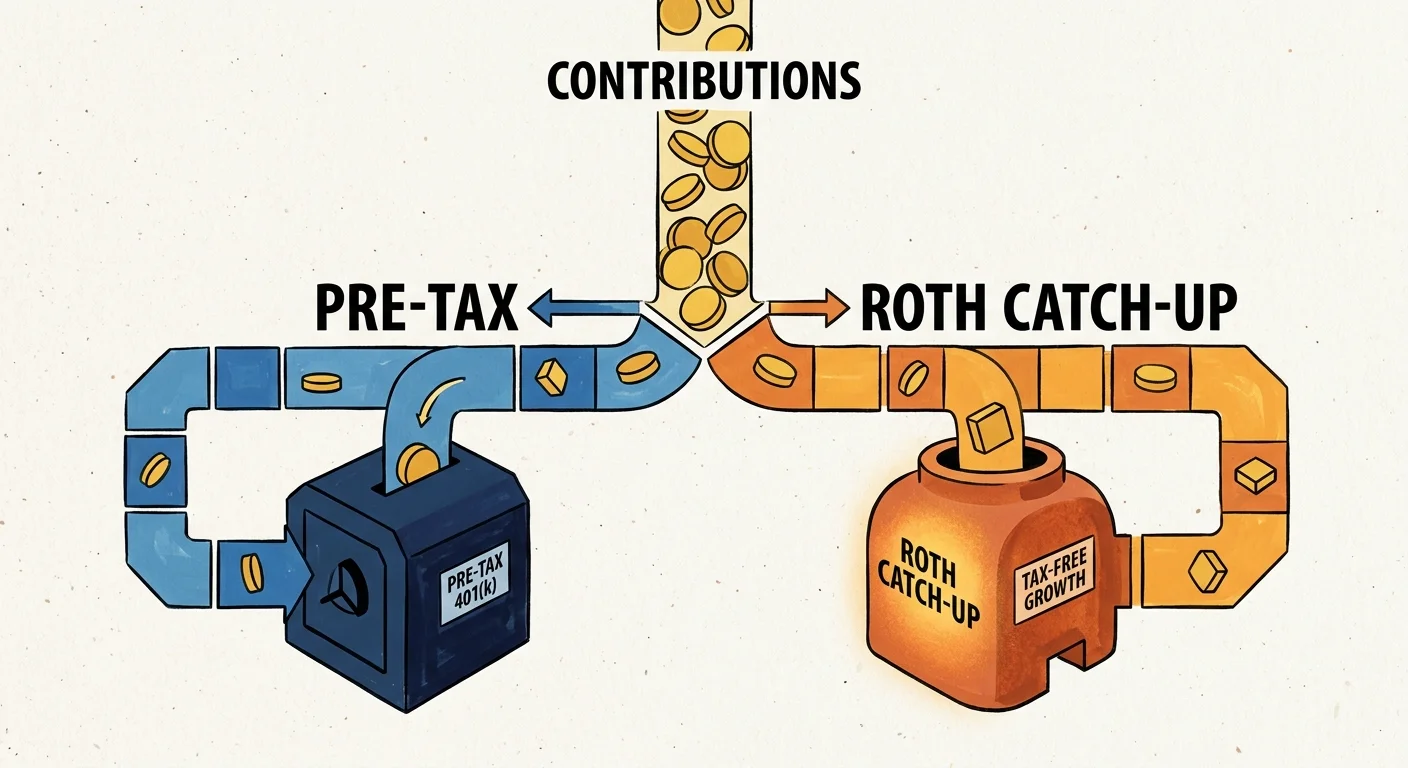
Along with expanding contribution caps, recent federal legislative reforms changed the tax treatment rules for catch-up contributions made by higher-income workers. Under SECURE 2.0 rules taking full effect, participants age 50 and older whose prior-year FICA-taxable wages exceed a specific statutory threshold ($145,000 base, indexed for inflation to over $150,000) must make all catch-up contributions on an after-tax Roth basis.
If your previous year’s W-2 income from the employer hosting your 401(k) exceeds this high-earner threshold, you can no longer deduct your catch-up contributions from your current-year pre-tax gross income. Instead, payroll systems must direct those catch-up funds—whether standard or super catch-up—into a Roth 401(k) account within your plan.
While paying income taxes upfront on catch-up dollars reduces your immediate tax deduction, it offers a major long-term benefit. All qualified distributions from your Roth 401(k) account—including all accrued investment growth and earnings—come out completely tax-free during retirement. Furthermore, Roth 401(k) balances no longer face mandatory Required Minimum Distributions (RMDs) during the owner’s lifetime, aligning them with traditional Roth IRAs.
If your earnings fall below the indexed FICA threshold, this mandatory Roth restriction does not apply to you. You retain full freedom to choose whether your catch-up dollars enter your plan as pre-tax deferrals or post-tax Roth contributions. Review your prior-year W-2 box 5 wages each winter to determine which contribution rules will govern your catch-up choices for the upcoming tax year.

Maximizing Total Combined Contributions Including Employer Matching
When calculating your total 401(k) annual additions, remember that individual employee deferrals represent only one side of the coin. The IRS also enforces an overall cap under Internal Revenue Code Section 415(c), which governs the total combined contributions made by both you and your employer within a single limitation year.
This overall limit includes your standard elective deferrals, employer matching contributions, employer profit-sharing allocations, and any non-elective employer contributions. For 2026, the Section 415(c) total limit stands at $72,000. When adding standard catch-up contributions for workers age 50+, the absolute limit reaches $80,000. For workers aged 60 to 63 making full super catch-up contributions, the total combined cap expands to $83,250 in 2026.
For 2027, projections indicate the baseline Section 415(c) limit will rise to approximately $73,500. Adding age-based catch-up allowances pushes the maximum allowable aggregate inflow for older participants toward $82,000 for standard catch-up earners and over $85,000 for super catch-up qualifiers. As noted by the Social Security Administration (SSA), coordinating workplace pension and retirement plan distributions alongside public benefits provides a far more stable financial retirement baseline.
If your employer provides a generous matching formula or profit-sharing contribution, keep an eye on these cumulative ceilings. While most automated payroll software automatically prevents accidental overfunding, understanding the grand total helps you coordinate overall wealth management strategies alongside external taxable accounts and IRAs.
Common 401(k) Mistakes and Pitfalls to Avoid Near Retirement
Navigating retirement account rules near the end of your career requires careful attention to detail. Even well-intentioned savers frequently fall into administrative traps that can trigger tax penalties or cause them to forfeit employer dollars. Avoiding these common mistakes protects your hard-earned assets.
- Front-loading deferrals too early in the year: If you reach the standard base limit early in the calendar year, your payroll deductions stop. Unless your plan features a “true-up” provision, you may miss out on employer matching dollars for the remaining pay periods of the year.
- Misinterpreting the super catch-up age window: Remember that the enhanced catch-up limit applies strictly to the calendar years in which you turn 60, 61, 62, or 63. Assuming you qualify at age 59 or keeping the higher contribution rate during the year you turn 64 leads to excess deferrals that require corrective distributions.
- Assuming your workplace plan automatically supports super catch-up: Federal law permits enhanced catch-up limits, but individual plan sponsors must adopt the provisions within their specific plan documents. Always verify that your employer’s HR or benefits department updated their plan settings to allow super catch-up contributions.
- Ignoring the high-earner Roth requirement: If your prior-year FICA earnings exceed the statutory threshold, attempting to make pre-tax catch-up contributions creates compliance errors. Ensure your payroll department routes catch-up dollars to a Roth account to avoid tax reclassifications.
- Overcontributing across multiple employers: The statutory individual deferral limit applies to you as an individual across all employer plans combined during a tax year. If you switch jobs midway through 2027, your new employer’s payroll system will not know how much you contributed at your previous job, putting you at risk of exceeding federal caps.
Correcting an excess contribution requires contacting your plan administrator promptly before the tax filing deadline (typically April 15 of the following year) to request a return of excess deferrals plus applicable earnings. Failing to fix an overcontribution in a timely manner results in double taxation on the excess amount.

Actionable Strategies to Optimize Your Retirement Savings in 2027
Maximizing your 401(k) requires a structured approach aligned with your overarching financial roadmap. By taking proactive steps late in the current tax year, you position yourself to capture every dollar allowed under 2027 federal limits seamlessly.
- Audit your current contribution percentage: Calculate whether your current payroll deduction percentage will hit the new projected baseline and catch-up limits for 2027. Adjust your deduction settings during open enrollment or late in the fourth quarter to take effect on your first paycheck in January.
- Confirm your plan’s match schedule and true-up rules: Ask your Human Resources manager whether your company matches contributions on a pay-period basis or offers an annual true-up. Spreading your contributions evenly across all pay periods throughout 2027 ensures continuous, uninterrupted employer matching.
- Coordinate 401(k) strategy with Social Security planning: Align your final working years’ pre-tax savings with your eventual Social Security claiming strategy. Reducing your tax burden during high-earning final years while delaying Social Security benefits creates a highly effective tax-efficient retirement bridge. Official guidance on benefit eligibility and income timing is available via Benefits.gov.
- Review investment asset allocations: Stashing larger dollar amounts into your 401(k) requires periodic portfolio rebalancing. Ensure that money directed toward super catch-up contributions aligns with your personal risk tolerance and time horizon, gradually shifting toward capital preservation assets as retirement approaches.
Implementing these simple steps prevents last-minute administrative headaches and helps you make full use of updated tax regulations designed to enhance your long-term security.
Frequently Asked Questions
When will the IRS announce the official 401(k) limits for 2027?
The Internal Revenue Service typically announces official cost-of-living adjustments and retirement plan limits for the upcoming tax year in late October or early November. For 2027, expect the official notice around late October 2026 after the Bureau of Labor Statistics finalizes September inflation data.
What happens if I turn 60 midway through 2027? Do I qualify for the super catch-up?
Yes. Federal rules base eligibility on your age as of December 31 of the tax year. If you turn age 60 at any point during 2027—even on December 31—you qualify to contribute the full enhanced super catch-up amount for the entire calendar year.
Can I make pre-tax catch-up contributions if I earned over $150,000 last year?
No. Under the SECURE 2.0 Act high-earner rule, participants whose prior-year FICA-taxable wages from their current employer exceed the statutory threshold must make all catch-up contributions on a post-tax Roth basis. Your standard baseline contributions, however, can still remain pre-tax if you choose.
Does my employer’s matching contribution count toward my employee catch-up limit?
No. Employer matching and profit-sharing contributions count toward the overall Section 415(c) combined plan limit ($72,000 in 2026; projected ~$73,500 in 2027). They do not reduce or consume your individual elective deferral limit or your age-based catch-up contribution allowances.
What should I do if I accidentally contribute more than the legal 401(k) limit?
If you overcontribute to your 401(k), notify your employer’s plan administrator immediately. You must request a formal refund of the excess deferral along with any attributed investment earnings before the April 15 tax filing deadline to avoid paying double income tax on the excess funds.
For additional senior resources, visit National Institute of Mental Health (NIMH), National Institutes of Health (NIH) and Centers for Medicare & Medicaid Services (CMS).
Disclaimer: The information in this article is for educational purposes only and is not intended to be a substitute for professional financial, legal, or medical advice. Always consult with a qualified expert for advice tailored to your personal situation.









Leave a Reply