
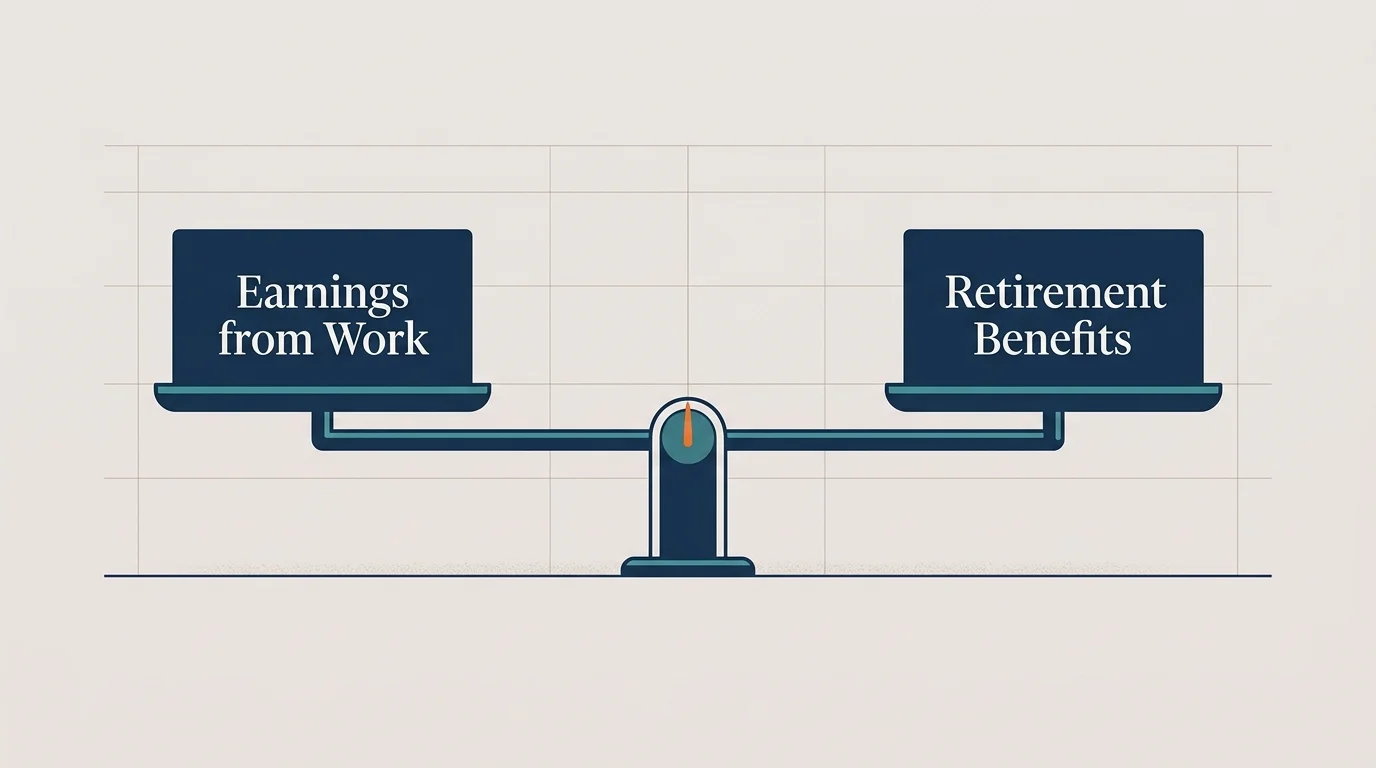
How Working Affects Your Retirement Benefits
Before you accept any new job, you need to understand how earning a paycheck will impact your existing retirement income and healthcare benefits. This requires a careful look at your specific age and tax situation.
The most important factor is your age relative to your Social Security Full Retirement Age (FRA). According to the Social Security Administration (SSA), if you claim benefits before your full retirement age and continue to work, your earnings are subject to a strict limit. If you earn more than this annual limit, the SSA will withhold a portion of your monthly benefits.
However, this money is not lost forever. Once you reach your full retirement age, your benefit amount will be recalculated upward to account for the months your benefits were withheld. More importantly, once you reach your full retirement age, the earnings limit disappears completely. You can earn as much money as you want without facing any reduction in your Social Security checks.
Your new income might also push you into a higher tax bracket. Because part of your Social Security benefits can become taxable depending on your combined income, a new job could increase your tax liability. It is highly recommended to consult a tax professional to determine exactly how much of your new paycheck should be set aside for taxes.
Healthcare is another critical consideration. You should review information from Medicare.gov to understand how extra income affects your premiums. High earners sometimes face the Income-Related Monthly Adjustment Amount (IRMAA), which adds a surcharge to your Medicare Part B and Part D premiums. While a part-time job rarely pushes a retiree into the IRMAA brackets on its own, it is a factor to monitor if you have other substantial sources of income like required minimum distributions or large capital gains.
Frequently Asked Questions
Do I need advanced computer skills for entry-level remote jobs?
No, advanced skills are generally not required. Most entry-level remote jobs only require you to know how to navigate the internet, use email, and type at a moderate speed. Companies will provide training on their specific software programs. If you are comfortable using a smartphone or writing an email to a friend, you have the baseline skills needed to start.
How do I explain my long gap in employment during an interview?
Be honest and frame it positively. You can simply state, “I took time off to enjoy my retirement, but I miss the routine and social interaction that comes with working.” Employers appreciate candidates who are eager to return to work for personal fulfillment. Focus the conversation on your reliability, your lifetime of experience, and your readiness to contribute.
Are gig economy jobs safe for older adults?
Yes, gig economy jobs can be safe, provided you take standard precautions. For rideshare driving, the apps track your location and provide emergency contact features. For task-based work, you always have the right to decline a job if you feel uncomfortable with the location or the physical demands. Always prioritize your personal safety over a paycheck.
Will working part-time affect my private pension?
In most cases, working a new job will not affect a private pension you have already started receiving from a previous employer. However, if you attempt to return to work for the exact same company or government agency that issues your pension, there may be strict rules or restrictions. Always review your specific pension plan documents or contact your plan administrator before accepting a new job.
What if I have physical limitations but still want to work?
There are plenty of opportunities that require zero physical exertion. Remote roles like data entry, virtual assistance, and customer service are performed entirely from a seated position. If you prefer to get out of the house, consider roles like a museum ticket taker, an information desk attendant, or a testing center proctor, which allow you to sit for most of your shift.
For additional senior resources, visit
National Institute of Mental Health (NIMH),
National Institutes of Health (NIH),
Centers for Medicare & Medicaid Services (CMS),
Social Security Administration (SSA) and
Consumer Financial Protection Bureau (CFPB).
Disclaimer: The information in this article is for educational purposes only and is not intended to be a substitute for professional financial, legal, or medical advice. Always consult with a qualified expert for advice tailored to your personal situation.









I have interest in delivery driver
i have interest in any driving jobs
I have an interest in dog/pet sitter or walker!
Looking for driving job
I have interest in data entry.