
Helpful Resources for Seniors
Helpful Resources for Seniors Navigate life's next chapter with confidence
  • Home
  • Lifestyle
  • Well-Being
  • Finance

9 Free Museum Passes Seniors Can Use Across America

May 13, 2026 · Uncategorized
An older couple looking at a large blue and gold glass art installation in a bright, modern museum gallery.

Retirement offers the perfect opportunity to explore art, history, and culture, but admission fees at major institutions can quickly drain a fixed income. Fortunately, you do not have to spend a fortune to enjoy world-class exhibits. Across the United States, numerous programs, library networks, and corporate sponsorships provide seniors with entirely free access to museums, botanical gardens, and cultural centers. Whether you want to view ancient artifacts, stroll through modern art galleries, or learn about local history, these specialized passes and programs make cultural enrichment accessible. By utilizing these nine free museum passes and access methods, you can stay socially engaged, keep your mind sharp, and experience America’s greatest treasures without opening your wallet.
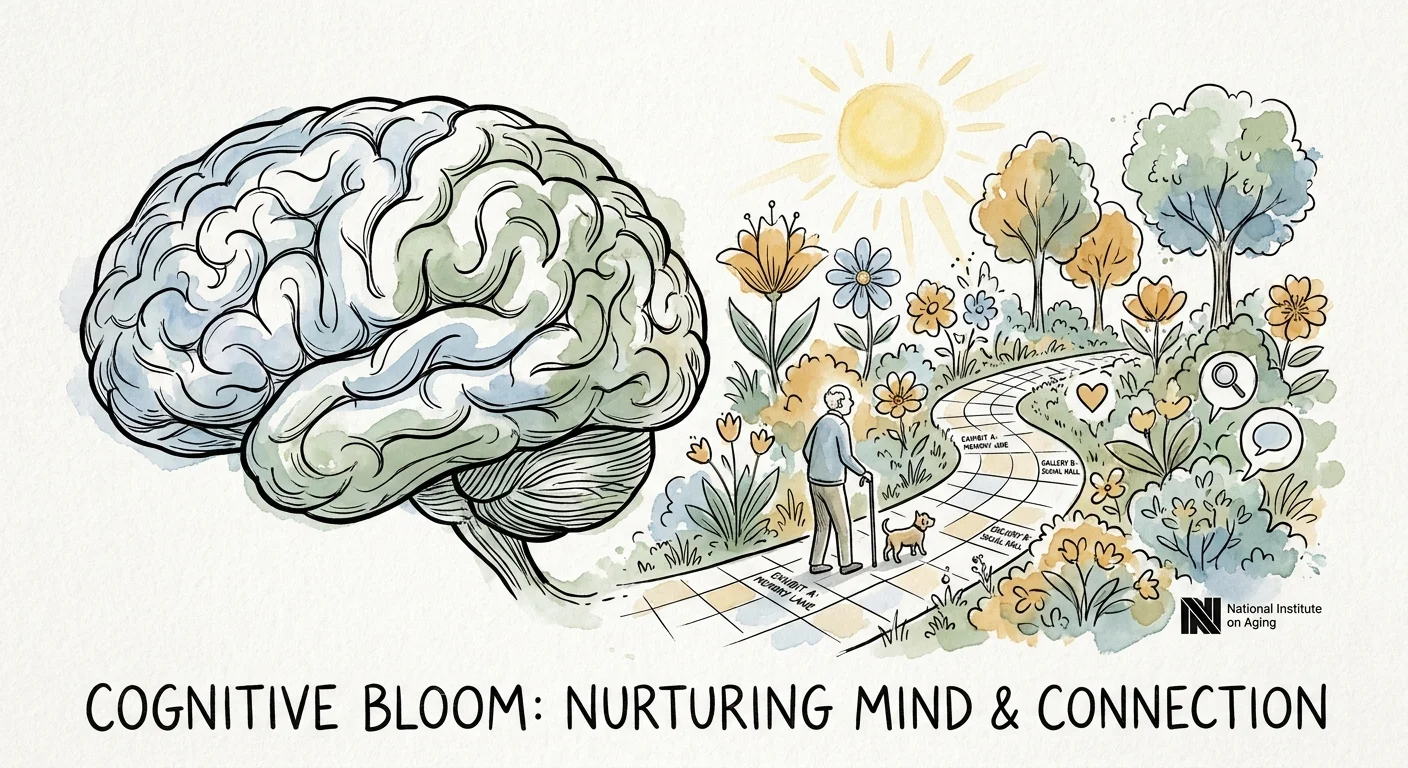
Table of Contents

  • The Health Benefits of Museum Visits
  • 1. The Public Library Museum Pass
  • 2. Museums for All Program
  • 3. Bank of America “Museums on Us”
  • 4. The Culture Pass Network
  • 5. Smithsonian Institution Free Access
  • 6. State-Sponsored Senior Free Days
  • 7. Corporate-Sponsored Community Days
  • 8. University and College Museums
  • 9. Veterans and Military Retiree Passes
  • Museum Pass Comparison Guide
  • Common Pitfalls When Using Free Passes
  • Frequently Asked Questions
Watercolor illustration of a brain turning into a museum garden, symbolizing cognitive health and social engagement.
A senior walks a garden path toward museum exhibits, connecting a healthy brain to cultural exploration.

The Health Benefits of Museum Visits

Visiting museums provides much more than a simple afternoon of entertainment. For older adults, walking through galleries and learning about new subjects actively stimulates the brain and preserves physical mobility. According to the National Institute on Aging (NIA), participating in meaningful social and productive activities can lower the risk of health problems and improve overall well-being. When you walk through a museum, you absorb new information, piece together historical timelines, and analyze visual art, all of which keep your cognitive functions sharp.

Furthermore, taking advantage of free museum passes gives you an excellent reason to leave the house, interact with docents, and invite friends or grandchildren along. According to the Administration for Community Living (ACL), staying engaged in your community helps combat social isolation, a common challenge many seniors face after retirement. By turning museum visits into a regular, cost-free habit, you protect your mental health while enjoying your local community’s rich cultural offerings.


Close-up of a senior's hands holding a printed library museum pass at a wooden library counter.
Hands hold a museum pass voucher at a library desk, offering seniors free access to local culture.

1. The Public Library Museum Pass

Your local public library card unlocks far more than just books; it serves as a golden ticket to your city’s cultural institutions. Thousands of libraries across the United States operate museum pass programs. These programs allow library cardholders to “check out” free admission passes to local museums, zoos, science centers, and botanical gardens.

The system works quite simply. You browse your library’s online catalog or visit the reference desk to see which museum passes they offer. You select the date you wish to visit and reserve the pass. Some libraries provide digital passes that you can print at home or display on your smartphone, while others require you to pick up a physical laminated card and return it after your visit.

  • Action Step: Visit your local library’s website and search for “museum pass” or “museum checkout.”
  • Things to Remember: Popular museums often book up weeks in advance, especially during school holidays. Reserve your pass early, and check the rules regarding how many people the pass covers. Many library passes grant entry for two adults, making them perfect for a date or an outing with a friend.
Ink and watercolor drawing of people entering a museum under a 'Museums for All' sign.
Diverse seniors and a child enter a museum under the welcoming Museums for All banner.

2. Museums for All Program

If you live on a tight fixed income and receive Supplemental Nutrition Assistance Program (SNAP) benefits, you automatically qualify for the “Museums for All” program. This incredible nationwide initiative provides free or heavily discounted admission (ranging from completely free to a maximum of $3) to more than 1,200 museums across the country.

The process requires no advance paperwork or complex registration. You simply arrive at a participating museum and present your Electronic Benefits Transfer (EBT) card along with a valid photo ID. The discount instantly applies to you and up to three guests. This feature makes it highly affordable to take your grandchildren to children’s museums or science centers without worrying about exorbitant family admission fees.

If you need help determining your eligibility for food assistance programs that might qualify you for this pass, you can find official guidelines and resources at Benefits.gov.

A senior presenting a bank card at a museum ticket counter with a 'Museums on Us' sign visible.
A visitor presents a Bank of America card to a smiling staff member for free museum admission.

3. Bank of America “Museums on Us”

If you hold a Bank of America, Merrill, or Bank of America Private Bank credit or debit card, you can take advantage of the “Museums on Us” program. This corporate initiative grants cardholders one free general admission to over 225 cultural institutions nationwide.

The free admission applies exclusively to the first full weekend (Saturday and Sunday) of every month. Whether you enjoy the Art Institute of Chicago, the Museum of Fine Arts in Boston, or the Los Angeles County Museum of Art, you likely have a participating institution near you. You simply present your active credit or debit card alongside your photo ID at the ticket counter.

  • Action Step: Check the calendar at the beginning of the year and mark the first full weekends of each month.
  • Things to Remember: This program provides one free entry per cardholder. If you plan to attend with a spouse, they must possess their own Bank of America card with their name on it to receive free entry; otherwise, they must pay standard senior admission.
An illustrated map showing a network of cultural icons connected by dotted lines to a library.
This illustrated map highlights the Culture Pass Network, connecting museums, botanical gardens, and science centers.

4. The Culture Pass Network

Several major American metropolitan areas operate unified “Culture Pass” programs designed to ensure all residents have free access to the arts. These programs operate slightly differently than standard library passes because they pull together massive networks of local institutions under one centralized digital platform.

For example, if you live in New York, the NYC Culture Pass allows residents with a Brooklyn, Queens, or New York Public Library card to reserve free entry to dozens of elite locations, including the MoMA and the Guggenheim. In California, the “Discover & Go” program serves residents across the state with a similar model. Phoenix, Dallas, and Seattle also boast robust regional culture pass networks.

To use these systems, you log into the designated Culture Pass portal using your library card credentials, browse the available dates, and secure a digital ticket. Because these programs operate digitally, you do not need to worry about returning physical passes to a desk.

A wide-angle photo of a senior man looking up at a massive aircraft in a Smithsonian museum hall.
A senior man gazes at a massive space shuttle, one of many free Smithsonian Institution exhibits.

5. Smithsonian Institution Free Access

The Smithsonian Institution remains the crown jewel of American museums, and it fundamentally operates on a policy of free admission. If you plan a retirement trip to Washington, D.C., you can enter any of the 21 Smithsonian museums, including the National Museum of American History and the National Museum of African American History and Culture, completely free of charge.

However, you do not necessarily need to travel to the nation’s capital to benefit. The Smithsonian operates two free museums in New York City (the National Museum of the American Indian George Gustav Heye Center and the Cooper Hewitt, Smithsonian Design Museum). Additionally, the Smithsonian maintains an extensive “Affiliate” network spanning 46 states. While affiliates typically charge their own admission fees, they frequently host Smithsonian-sponsored free community days, traveling exhibits, and local lecture series that cost nothing to attend.

Watercolor illustration of a calendar with 'Senior Free Day!' circled in red, next to a pair of glasses.
A watercolor calendar marks a state-sponsored senior free day next to reading glasses and a postcard.

6. State-Sponsored Senior Free Days

Many prominent museums receive state or county funding, and in exchange, they must provide free access to local residents or older adults. These specialized “Senior Free Days” or “Resident Free Days” represent one of the most reliable ways to enjoy top-tier art and history locally.

For instance, the Los Angeles County Museum of Art (LACMA) offers free admission to all LA County residents after 3:00 PM on weekdays. The Metropolitan Museum of Art in New York maintains a “pay-what-you-wish” policy (which means you can enter for free or for just a few coins) for all New York State residents. Many regional historical societies designate specific days of the month—often a quiet Tuesday or Wednesday morning—specifically for seniors aged 65 and older to enter for free.

  • Action Step: Make a list of your top five local museums. Call their visitor services desk or check their website’s “Admission” page to look for hidden resident discounts or senior-specific free days.
  • Things to Remember: You will almost always need to prove your residency or age, so keep your driver’s license or state ID handy when approaching the ticket counter.
A group of seniors laughing and talking at a museum cafe table during a community event day.
Four seniors enjoy coffee and conversation near a banner welcoming all ages to a community day.

7. Corporate-Sponsored Community Days

Major corporations frequently underwrite the cost of museum admissions to generate goodwill within their communities. These sponsorships result in “Free First Fridays,” “Target Free Family Sundays,” or “Ford Free Days.”

During these events, the museum drops its general admission fee entirely for all visitors, regardless of age or residency. These days often feature extra perks, such as free guided tours, live classical music in the atrium, or complimentary lectures by curators.

Because these days are open to the general public, they can draw large crowds. If you prefer a quieter experience or have mobility concerns, plan to arrive exactly when the doors open in the morning. Getting there early allows you to view the most popular galleries before the afternoon rush begins.

Ink and gouache illustration of a senior and a student walking near a historic university museum building.
An older woman and student stroll past a grand university museum on a beautiful, sunny campus.

8. University and College Museums

Some of the country’s most impressive, yet overlooked, art and history collections reside on college campuses. Universities build these museums primarily to educate their students, which means they operate with different financial pressures than commercial museums. Consequently, a vast majority of university museums offer completely free admission to the general public year-round.

Institutions like the Harvard Art Museums in Massachusetts recently eliminated their admission fees entirely. The Blanton Museum of Art at the University of Texas at Austin and the Hammer Museum at UCLA also provide excellent, free cultural experiences. These museums feature incredible accessibility, fewer crowds, and highly knowledgeable student docents eager to discuss the exhibits.

A senior veteran wearing a military cap, looking thoughtfully at a historical museum exhibit.
A World War II veteran gazes at a folded American flag inside a museum display case.

9. Veterans and Military Retiree Passes

If you served in the armed forces, your veteran status frequently unlocks free museum admission. While the famous “Blue Star Museums” program primarily targets active-duty military families during the summer months, hundreds of individual museums voluntarily extend these free entry policies to military retirees and senior veterans year-round.

Military history museums, aviation museums, and naval ship exhibits are especially generous with free veteran admissions. Furthermore, many general art and science museums offer free entry to veterans on specific patriotic holidays, such as Veterans Day, Memorial Day, and Independence Day.

To claim these passes, carry your Veteran Health Identification Card (VHIC), a state driver’s license with a veteran designation, or your military retiree ID card. Presenting this ID at the admissions desk easily secures your complimentary ticket.

A horizontal infographic chart comparing different museum pass types and their benefits.
This comparison chart details different museum pass options, their target audiences, and potential cost savings for visitors.

Museum Pass Comparison Guide

To help you decide which program best fits your needs, use this quick reference table to compare the options discussed above.

Pass / Program Name Eligibility Requirements Best Feature
Public Library Pass Local library cardholder Usually covers 2-4 people per pass.
Museums for All Seniors receiving SNAP / EBT Provides access for up to 4 people at $3 or less.
Bank of America Active BofA credit/debit card Valid at 225+ premium museums nationwide.
Culture Pass Network Local library card (in specific cities) Fully digital, easy to reserve online from home.
Smithsonian Access Open to everyone World-class collections with zero entry fees.
State/Senior Free Days Local state/city residents, or 65+ Great for frequent, spontaneous local trips.
Corporate Free Days Open to everyone Often includes special lectures and live music.
University Museums Open to everyone Quiet, highly accessible, and uncrowded.
Veteran Passes Military retirees, veterans Honors service with year-round respect and access.
Watercolor illustration of an 'Expired' notice on a phone and a clock, representing common pass pitfalls.
An expired digital pass and a closed museum sign highlight common pitfalls to avoid when using passes.

Common Pitfalls When Using Free Passes

While taking advantage of free museum access stretches your retirement dollars, a few common oversights can lead to frustration at the ticket counter. Keep these pitfalls in mind to ensure a smooth visit.

First, understand the difference between “general admission” and “special exhibits.” Most free passes, including library passes and Bank of America weekends, only cover the museum’s permanent collection. If the museum hosts a temporary, traveling exhibit (like a rare collection of Egyptian artifacts or a special Van Gogh gallery), you will likely need to pay a supplemental fee to enter that specific wing.

Second, never assume a pass guarantees immediate entry on crowded days. Since the pandemic, many museums implemented timed-entry ticketing to manage crowds. Even if you hold a free pass, you may still need to go to the museum’s website, select your entry time, and apply your pass discount in the digital cart to secure your spot.

Finally, always protect your personal data. As noted by experts at AARP, verifying the terms of discounts directly through the official museum or library website helps you avoid third-party scams. Never pay a “processing fee” to a third-party website claiming to secure a free pass for you. Legitimate programs like Museums for All or local library passes will never ask for your credit card to reserve a free ticket.

Frequently Asked Questions

Do I need a specific “senior card” to claim these free passes?

No, you do not need a specialized national senior card. For age-based discounts or senior free days, a standard state-issued driver’s license or ID card with your date of birth works perfectly. For library passes, you only need your local library card. For the Museums for All program, you must present your state-issued EBT card.

Can I bring my grandchildren for free using these passes?

It depends entirely on the pass you use. The “Museums for All” (EBT) program allows you to bring up to three guests for free or up to $3 each, making it perfect for grandchildren. Public library passes also usually cover two adults and up to two children. However, the Bank of America “Museums on Us” pass only covers the single cardholder, meaning you would need to buy tickets for your grandchildren.

Are these passes available in rural areas, or only in big cities?

While massive museums tend to sit in metropolitan areas, the programs reach far beyond city limits. The Museums for All network includes hundreds of smaller historical societies, arboretums, and local nature centers in rural counties. Additionally, county library systems in rural areas frequently offer passes to the nearest state parks and regional cultural centers.

What if I cannot physically walk through a massive museum?

Museums place a high priority on accessibility. The vast majority of institutions covered by these passes offer free manual wheelchairs or motorized scooters on a first-come, first-served basis. If you reserve a free pass, simply call the visitor services desk a day before your arrival to reserve a wheelchair and ask about the most accessible routes to the main galleries.

Will free days be too crowded to enjoy?

Corporate-sponsored free days (like Target Free Sundays) tend to draw large crowds, especially families with young children. If you prefer a quiet, contemplative environment, aim to use a library pass on a weekday morning. Alternatively, seek out university museums, which remain notoriously peaceful and uncrowded regardless of the day of the week.

For additional senior resources, visit
Medicare.gov, National Institute of Mental Health (NIMH), National Institutes of Health (NIH), Centers for Medicare & Medicaid Services (CMS) and Social Security Administration (SSA).

Disclaimer: The information in this article is for educational purposes only and is not intended to be a substitute for professional financial, legal, or medical advice. Always consult with a qualified expert for advice tailored to your personal situation.

Share this article

Facebook Twitter Pinterest LinkedIn Email

Leave a Reply Cancel reply

Your email address will not be published. Required fields are marked *

Search

Latest Posts

  • A warm watercolor illustration of a church steeple, a car wheel, a bowl of soup, and hands shaking, symbolizing community help. 9 Free Services Churches Offer Seniors That Many Families Overlook
  • A senior woman laughing gently at a small birthday cupcake with a single candle in a sunlit home. 9 Freebies Seniors Can Get On Their Birthday
  • A senior man returns a borrowed extension ladder to a local community tool sharing shed during a sunny afternoon. 9 Free Things Seniors Can Borrow Instead Of Buying
  • 9 Senior Discounts Hidden In Popular Chain Restaurants 9 Senior Discounts Hidden In Popular Chain Restaurants
  • Four older adults laughing together around a patio table during a morning social gathering. 9 Community Programs That Help Seniors Meet New People
  • An older man in his kitchen smiling while looking at a grocery receipt that shows a senior discount subtraction. 9 Senior Perks Hidden In Grocery Stores
  • An older couple looking at a large blue and gold glass art installation in a bright, modern museum gallery. 9 Free Museum Passes Seniors Can Use Across America
  • A group of active seniors gardening together in a sun-drenched community plot, symbolizing the joy and connection found in volunteering. 9 Volunteer Programs Seniors Say Changed Their Lives
  • An older man with a messenger bag and textbook walks across a sunny college campus quad filled with students. 9 Free College Programs Seniors Can Join
  • A senior woman at a wooden desk highlighting a newspaper, symbolizing the discovery of hidden savings. 9 Senior Discounts Hidden In Plain Sight

Newsletter

Get the latest posts delivered to your inbox.

Related Articles

Four older adults laughing together around a patio table during a morning social gathering.

9 Community Programs That Help Seniors Meet New People

Discover nine excellent community programs that help seniors build meaningful friendships, stay active, and enjoy…

Read More →
9 Senior Discounts Hidden In Popular Chain Restaurants

9 Senior Discounts Hidden In Popular Chain Restaurants

Discover nine hidden senior discounts at popular chain restaurants and learn practical strategies to maximize…

Read More →
A senior woman at her kitchen table highlighting a list of medications, creating a sense of organized healthcare planning.

10 Prescription Discounts Seniors Forget To Use

Discover 10 powerful prescription discounts, including manufacturer assistance and federal subsidies, to help seniors dramatically…

Read More →
A senior woman sits peacefully at her kitchen table looking out at her garden, symbolizing the security of staying in one's home.

9 Property Tax Relief Programs Seniors Should Check Right Now

Discover nine essential property tax relief programs for seniors to help lower housing costs, protect…

Read More →
A senior man returns a borrowed extension ladder to a local community tool sharing shed during a sunny afternoon.

9 Free Things Seniors Can Borrow Instead Of Buying

Discover 9 essential things seniors can borrow instead of buying, from medical equipment and tech…

Read More →
An older man in his kitchen smiling while looking at a grocery receipt that shows a senior discount subtraction.

9 Senior Perks Hidden In Grocery Stores

Discover nine hidden grocery store perks for seniors that help you stretch your retirement budget,…

Read More →
10 Senior Discounts Hidden In Plain Sight

10 Senior Discounts Hidden In Plain Sight

Discover 10 hidden senior discounts that can stretch your retirement budget, plus practical tips on…

Read More →
An older woman sits at her kitchen table looking at a tablet with relief, with a stack of bills and a warm mug nearby.

9 Utility Assistance Programs Seniors Often Overlook

Discover nine overlooked utility assistance programs designed to help seniors lower heating, cooling, and phone…

Read More →
An older man with a messenger bag and textbook walks across a sunny college campus quad filled with students.

9 Free College Programs Seniors Can Join

Discover nine excellent free college programs for seniors that waive tuition costs, allowing you to…

Read More →
Helpful Resources for Seniors Helpful Resources for Seniors

Navigate life's next chapter with confidence

Urban Pulse Management, L.L.C-FZ
Dubai, UAE

contact@helpfulresourcesforseniors.com

Explore

  • Home
  • About Us
  • Editorial Policy
  • Terms and Conditions
  • Subscribe
  • Unsubscribe
  • Contact
  • Request to Know
  • Request to Delete
  • CA Private Policy

Categories

  • Finance
  • Lifestyle
  • Well-Being

© 2026 Helpful Resources for Seniors. All rights reserved.