
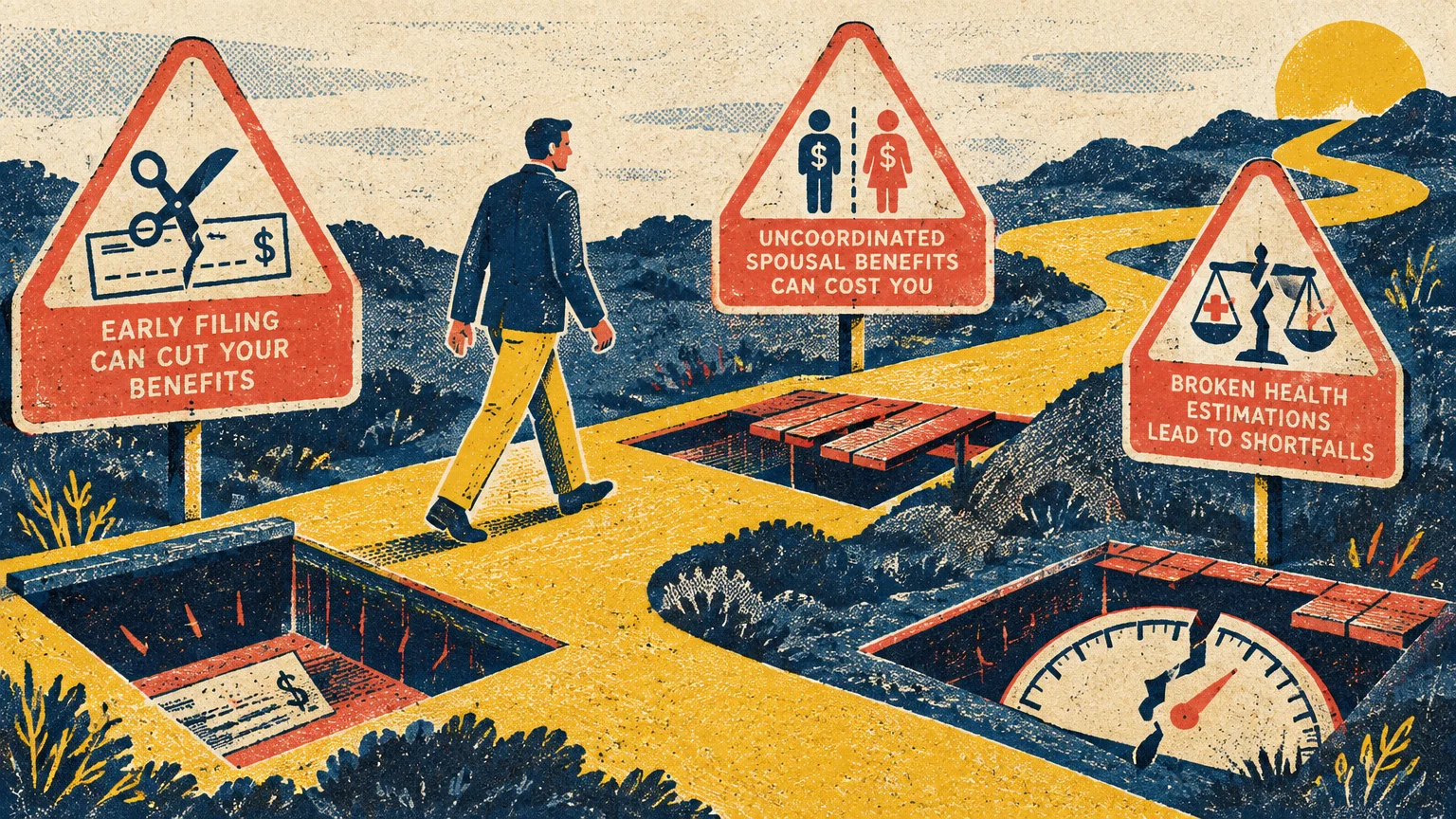
Critical Mistakes to Avoid When Claiming
Rushing into a filing decision without exploring the rules can cost you thousands of dollars. Avoid these common missteps before submitting your application.
One widespread error involves confusing Social Security claiming with Medicare enrollment. Guidance on Medicare.gov emphasizes signing up at age 65, even if you plan to delay Social Security until 70.
Missing your Medicare Initial Enrollment Period can trigger lifelong premium surcharges. Always coordinate your health insurance timeline separately from your pension decisions.
Another major mistake involves overlooking survivor benefits for a spouse. If you are the higher-earning spouse, claiming at 62 permanently caps the survivor check your partner inherits later.
Retirees also frequently forget about federal income taxes on benefits. Up to 85% of your Social Security income becomes taxable if your combined provisional income exceeds statutory thresholds.
Finally, stay alert against phone and email impersonation scams targeting seniors. According to consumer alerts from the Consumer Financial Protection Bureau (CFPB), official agencies never call to demand money or threaten your benefits.

How to Decide Your Best Claiming Age
Finding the right claiming age requires balancing personal health, career plans, and household cash needs. No single claiming age fits every older American.
Consider your family health history and personal longevity projections first. If longevity runs in your family and you enjoy strong health, delaying payments offers powerful longevity insurance.
Evaluate your other financial assets, such as traditional IRAs, 401(k) accounts, and home equity. Drawing down private savings between 62 and 67 allows your guaranteed benefit to grow.
Review your spouse’s earning history and age difference carefully. A coordinated claiming strategy often involves having the lower-earning partner claim early while the primary earner delays until 70.
Follow these practical steps to prepare your filing plan:
- Create a personal account on the official Social Security portal to inspect your recorded earnings history.
- Review your estimated benefits at ages 62, 67, and 70 to identify discrepancies or missing working years.
- Audit your recurring monthly living expenses to calculate your baseline income floor.
- Speak with a fiduciary financial advisor to model federal tax obligations on your future checks.
Taking control of these figures early removes guesswork and secures your standard of living throughout retirement.
Frequently Asked Questions
Can I change my mind after claiming benefits at age 62?
Yes; you have a one-time option to withdraw your application within 12 months of filing. You must repay every dollar received, which resets your earnings record for future increases.
Do annual cost-of-living adjustments apply if I wait until age 70?
Yes; Cost-of-Living Adjustments (COLA) apply to your underlying benefit regardless of whether you claim. All annual inflation increases compound into your eventual check starting at age 62.
How many months before my chosen retirement date should I file?
You should submit your formal application three months before you want your first benefit check to arrive. This lead time gives the agency sufficient window to process paperwork smoothly.
Does claiming early reduce my spouse’s future survivor benefit?
Yes; a surviving spouse inherits the exact monthly payment the deceased worker was receiving. Filing early permanently reduces the financial lifeline your spouse receives if you pass away first.
Will my monthly benefit check increase if I delay past age 70?
No; delayed retirement credits terminate completely upon your 70th birthday. Delaying beyond age 70 provides no benefit increase and results in the permanent loss of monthly checks.
For additional senior resources, visit
AARP, Alzheimer’s Association, American Heart Association and Benefits.gov.
Disclaimer: The information in this article is for educational purposes only and is not intended to be a substitute for professional financial, legal, or medical advice. Always consult with a qualified expert for advice tailored to your personal situation.









Leave a Reply